

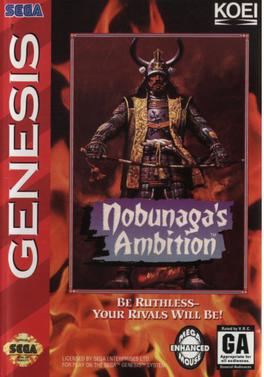

When a series begins in 1983 and still shows up on store shelves nearly two decades later, it has earned the right to be treated with a certain reverence - or, at the very least, a healthy dose of professional suspicion. Nobunaga no Yabou (Nobunaga's Ambition) is one of those rarities in the video-game business: a venerable strategic franchise that has quietly taught generations of players that governing peasants, balancing a treasury and ordering an ambush are, in practice, the same skill applied with different verbs. Ranseiki, the ninth numbered entry in the saga, arrives on the PlayStation 2 as the franchise's steady, workmanlike chapter: no radical reinventions, no fireworks, but the same stubbornly deep system design that made Koei a byword for historical simulation. For players who measure entertainment in provinces rather than polygon counts, it will look familiar and feel dependable; for everyone else, it will feel like a lecture delivered by a kindly but unshowy scholar of war.
Ranseiki's claim to interest is not a flashy new combat engine but a conscious return to province-taking mechanics and a refinement of the series' strategic scaffolding. Players select from one of four campaign scenarios - evocative labels such as "Battle for the East" (1560) and "Road Towards Unification" (1582) place you squarely in the Sengoku era - and are entrusted with the twin tasks of building an economy and building an army. Each season is a turn on the strategic map; each day is a turn in tactical engagements. Victory can be achieved in multiple styles: force an enemy to retreat, eliminate the opposing command unit, outlast an invader or grind down an opponent until his supply lines collapse. The designer's point, plain and insistent, is that there is more than one way to unify a country and fewer good ways to do it cheaply. The elegance of Ranseiki lies in the sheer alphabet of options on offer. Attention to domestic governance is not window dressing; it is the foundation upon which campaigns are built. You will shuffle rice among fiefs, raise - and raise again - the tax rate until the peasants sob in the fields, invest in flood control, cultivate land, expand towns and, yes, occasionally steal peasants from a neighboring daimyo like a very medieval shoplifter. There are marriages to arrange and nonaggression pacts to sign. Merchants can be hired to buy and sell rice, weaponry and loans. Ninja and soldiers can be recruited; soldiers can be trained. You can spy, distribute food to lift morale, or simply give up a fief to the computer because you are tired of watching harvest numbers flicker in a window all evening. These choices add up to a distinct personality system beneath the strategy: each daimyo or persona is characterized by statistics - health, ambition, luck, charm and IQ among them - and the passage of time matters. A turn-based calendar ages your lord; death by old age is a real possibility, which invests the long campaign with an underlying human fragility. The time-as-character mechanic is a classic Koei flourish and keeps you thinking about succession as well as expansion. Battles take place on provincial maps (Ranseiki departs momentarily from the castle-siege emphasis of some predecessors) and play out on a hex- or grid-like theater where terrain, route of invasion and deployment matter. Combat is less about twitch than about positioning and composition. If you prefer waving a sword with frantic joy, this is not the game for you; if you relish the chess-like calculation that turns a skirmish into a campaign swing, Ranseiki is in its element. There is variety in campaign design: different scenarios alter starting positions and available powers, and the game introduces systems of varying powers that modify the behavior and options of factions over time. Multiplayer options are present too, which, in classic fashion, are more about the shared experience of governance than frantic head-to-head violence. If the list of available actions sounds intimidating, then congratulations - you have understood Koei's entire pitch. The interface is a menu-heavy thing, precise and efficient when you accept its rhythms, maddening when you expect the immediacy of console-first interfaces. Ranseiki is a thinking person's game. It invites long sessions and rewards players who enjoy the deliberate, accumulative pleasure of administrative competence. It will punish impulsiveness without moral comment; it will simply leave you outbred and outmatched.
Ranseiki is unashamedly functional. The PlayStation 2 incarnation does not strive for spectacle: it gives you readable maps, clear unit icons and the occasional vignette to animate domestic events - peasants accepting grain, daimyo dispatching envoys - but if you're here for motion blur and cinematic camera sweeps you will leave disappointed. This is a series whose graphic ambitions have historically been to render complexity legibly rather than to impress with polygon budgets. That conservative aesthetic has its virtues: the strategic map is uncluttered, the terrain is easily parsed, and the presentation never competes with the game for your attention. On the subject of audio and production touches, Ranseiki follows the Koei maxim of discreet competence. Sound effects are unobtrusive; battle music provides a modest but serviceable accompaniment. The overall effect is of a museum exhibit with decent lighting: pleasant to inspect, not trying to be a blockbuster. For players coming straight from western console epics of the era, the visuals will feel modest. For those who grew up on strategy games and appreciate that a well-designed interface will save you hours of tedium, the visual package is perfectly adequate.
If you evaluate games by the yardstick of reinvention, Ranseiki is a conservative work - it prefers to refine rather than overhaul. Taken on its own terms, though, the title is a commendable example of what Koei has always done best: design a multi-layered strategic simulation that insists domestic policy matters as much as battlefield heroics. It is patient, sometimes austere, and built for the long, absorbing sessions that reward planning and patience. There are caveats. The menu-driven interface and the deliberate pace feel like fingerprints of a prior era; some console players will find the experience too academic for its own good. Critics have, over the years, pointed out that console versions of Koei's great strategy dramas can feel like a coat of polish over familiar systems - a criticism that applies here if you are looking for dramatic tech leaps. On the other hand, if you are the sort of strategist who enjoys orchestrating exports of rice as much as cavalry charges, if you want to be a ruler as well as a general and you have the appetite for methodical macro-play, Ranseiki rewards carefully applied attention. In short: Nobunaga no Yabou: Ranseiki on PlayStation 2 will not lure lovers of immediate spectacle, but it offers a rich, sober, deeply playable experience for those who want a strategic simulator that remembers how to be both domestic and martial at once. For the boardroom of war - the treasury office, the granary ledger and the map room - it remains, even in the 21st century, an unostentatious standard-bearer. A 7.5 out of 10 is a score that acknowledges its occasional crustiness while commending the depth and steady design that veterans of the series have come to expect.
 Nobunaga no Yabou Online: Souha no Shou on PS2
 Nobunaga no Yabou Online on PS2
 Nobunaga's Ambition: Iron Triangle on PS2
 Coloball 2002 on PS2
 Nobunaga's Ambition: Rise to Power on PS2












 Another SquareThought Site