

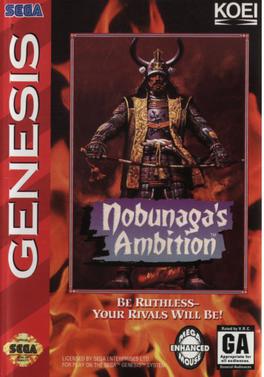

Nobunaga no Yabou: Sōtenroku is the kind of game that assumes you enjoy spreadsheets that smell faintly of samurai. It sits comfortably in Koei's long-running Nobunaga's Ambition series, a franchise that has been convincing people to unify sixteenth-century Japan since 1983 by offering them complex menus and the occasional vignette of peasants crying. Sōtenroku is the tenth main entry, originally released for Windows in 2002 and later ported to PlayStation 2. This entry leans into the series' strengths: careful micromanagement, long seasonal turns, and the slow, proud throttle of empire-building. It also returns to castle-taking battles and expands a modest innovation: you can play not only as a roaming daimyo but as a castle lord. That means there are more walls to stare at, more moats to plan around, and more opportunities to feel personally affronted when a general you trained for three seasons decides to walk into a river for reasons known only to game AI and poor life choices. If you've played any Koei historical sim before, you already know the sales pitch: pick a scenario, pick a lord, allocate resources, and gradually convince or crush your neighbours until the map reads "Japan (unified)". If you haven't, Sōtenroku is an exacting tutor in the fine arts of taxation, rice redistribution, arranged marriage as geopolitical tool, and turning boring logistics into a satisfying little loop of power. If that doesn't sound thrilling, consider that some people find setting marginal tax rates to be cathartic. You will either be those people, or you will be rightfully puzzled by your own fascination within a few in-game years.
At heart Sōtenroku is a turn-based seasonal strategy. Each turn on the strategic map represents a season, during which a daimyo can perform a handful of actions in each fief he personally controls. Battles happen on a different scale: sieges and field fights are resolved in day-by-day turns, and victory conditions vary - force a retreat, kill the enemy commander, outlast an invader, or simply let the opposition run out of supplies while you sip green tea and check your ledger. The scenarios are the usual generous buffet of starting conditions. Choose "Battle for the East" if you like beginnings with momentum, or opt for a later scenario if you want to start with more consolidated territory and correspondingly more things that can go wrong. The game gives you the palette of medieval statecraft: allocate soldiers between fiefs, move rice and gold around like a frugal monk, increase or decrease taxes and watch peasant loyalty respond with predictable resentment, or invest in flood control and then smugly watch your coffers stabilize - until a neighbouring warlord remembers taxes exist. Sōtenroku's command list is long enough to be impressive and organized enough to remain useful. You can raise armies, recruit ninja (because espionage is always a good idea when your opponent sleeps in chain mail), train troops to increase combat efficiency, and send merchants to buy and sell rice or borrow funds if your ambitions temporarily outstrip your treasury. Agricultural investment (cultivate) increases productivity at the cost of peasant loyalty, which is a polite way of saying "bend the economy, but do not snap it." You can expand towns to collect more taxes at the cost of social unrest, arrange marriages for alliances, make non‑aggression pacts, or spy on rivals to learn which general will inevitably betray you once you promote him. The personality system gives each persona statistics like health, ambition, luck, charm, and IQ. It is an elegantly blunt instrument: high stats make generals competent; low stats turn them into amusing anecdotes. The game ages characters over a time system where each turn represents a season and years pass, so your veteran generals will grey out and leave you with a choice: beg them to keep working, or start the slow process of grooming replacements. Battles in Sōtenroku return to castle-focused engagements. Sieges are their own microcosm of decision-making: position, supply lines, morale, and the weather of tactics all matter. Terrain is straightforwardly meaningful - hills, rivers, villages, plains, and castles change how you deploy, which is reassuring after a long sequence of menus. The combat resolves on a grid (the series has used hexes in earlier iterations), but the feel is less about twitchy micro and more about setting up the right general in the right situation and trusting your logistics. There is also an element of administrative choice that rewards patience. You can hand a fief to the computer for administration if you want to stop babysitting swamps and rice production. This is the video game equivalent of saying "I delegate; I also hope you don't burn my village." You can train soldiers relentlessly and then find yourself short on rice, or you can hoard food and watch your military power atrophy. Sōtenroku punishes ideological purity: a devotion to war will starve your people; total civic focus will leave you a polite, powerless landowner. The sweet spot is a pragmatic tyranny wherein you tax enough, build enough, and occasionally send an assassin to a rival's garden. For those who enjoy multiplayer, the engine can be accommodating; the series has not forgotten the joy of pitting friends against one another in slow, polite warfare. For solo players, the AI provides a competent challenge but also proves fond of the occasional bold, baffling decision that will make you laugh and then resent it. If the gameplay has a personality, it is patient, slightly superior, and inclined to reward planning over reaction. Combat feels consequential because you spent entire seasons preparing for it. The trade-offs - economy vs. army, loyalty vs. productivity, short-term gain vs. long-term stability - are the meat of the experience, and Sōtenroku cooks those ingredients with the care of a chef who will remind you that undercooked rice is an actual problem.
Sōtenroku does not pretend to be a graphical poster child for the PlayStation 2 era. Its strengths lie in clarity and function rather than spectacle. The series has historically earned praise for tasteful presentation - maps that convey information and occasional little vignettes that illustrate policy effects (peasants weeping when taxes rise, a lord handing out rice) - and Sōtenroku continues that tradition. You will spend most of your time looking at maps, numbers, and portraits, and those elements are rendered with the competence you'd expect from a developer obsessed with detail. Where later Koei titles flirted with full 3D administration screens and more elaborate siege models, Sōtenroku occupies a sensible middle ground: menus that are not pretty but are quick to read, unit icons that tell you what you need to know, and battle screens that get to the point without distracting fireworks. The castle siege sequences have more personality than a pure map overlay: there is enough animation to feel alive without slowing down the strategic rhythm. If you are the kind of person who buys strategy games for cinematic explosions, this will not be the one; if you want legible tactical information and the occasional charming tableau, the visuals are entirely suited to the task. In short: competent, clear, occasionally charming, and never trying to be something it isn't. Which is a quality I appreciate in games and in most relationships.
Nobunaga no Yabou: Sōtenroku on PS2 is a patient, slightly ascetic exercise in historical statecraft. It asks you to care about rice, loyalty, marriage alliances, and whether your general has enough IQ to avoid walking into a river. In return it gives you deep systems, satisfying trade-offs, and the peculiar pleasure of watching an empire take shape because your spreadsheet diplomacy was effective. This is a niche game, in the best sense: not every player will be seduced by its slow burn, but those who are will find a title that rewards foresight, tolerates nuance, and occasionally lets them play the role of a benevolent tyrant. The interface and graphics are functional rather than flashy; the game is not trying to win awards for spectacle but rather for the quality of its strategic systems. If you enjoy grand strategy and can accept weeks of in‑game seasons for the payoff of a perfectly timed siege, Sōtenroku is worth your attention. If you require instant gratification and explosions on demand, you will be bewildered and possibly offended. I give it a 7.5 out of 10: a smart, dependable friend who will help you conquer Japan if you feed it rice and occasionally let it make awkward marriage pacts. It does not sing, but it will unify the country with the kind of clinical efficiency only spreadsheets and samurai can provide.
 Nobunaga no Yabou Online: Souha no Shou on PS2
 Nobunaga no Yabou Online on PS2
 Coloball 2002 on PS2
 Nobunaga's Ambition: Iron Triangle on PS2
 Nobunaga's Ambition: Rise to Power on PS2
 Hyrule Warriors: Age of Imprisonment on Switch 2
 Aoki Ookami to Shiroki Mejika: Genchou Hishi on PlayStation
 Daikoukai Jidai II on PlayStation
 Nobunaga's Ambition: Awakening Complete Edition on Switch 2
 Wild Hearts S on Switch 2












 Another SquareThought Site