

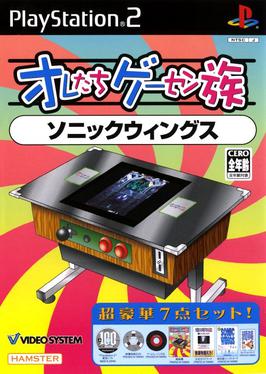

Oretachi Gēsen Zoku is, on paper, a tidy anthology: 19 emulated arcade titles bundled and sold by Hamster Corporation for the PlayStation 2. Volume 7 in that lovingly curated parade of pixels is BurgerTime, a 1982 Data East arcade relic reborn under the emission lamp of 2005's retro revival. The collection doesn't just thrust games onto a disc; for ¥2,000 each it packages an attitude - a seven-piece shrine that includes the emulated disc, a miniDVD of trailers and a Masterplay video, a mini CD soundtrack, instructional ephemera about the arcade PCB, a mini strategy guide, a replica display card and a reproduction arcade flyer. Treated like artifacts rather than disposable code, these releases give each titular game a sense of personhood. In this review I'll do something mildly silly but sincere: I will treat BurgerTime like a cast of characters and trace their story arcs from neon-illuminated cabinet to PS2 menu, because the best retro reissues don't just port code, they resurrect personalities.
If you're looking for a blow-by-blow list of moves, inputs and frame-perfect tricks, this review politely nudges you toward the included strategy booklet - one of the collection's charming extra 'characters' - which exists to hold your hand. For the purposes of our character-focused reading, think of the gameplay as the protagonist's internal life: simple tools, relentless stakes, and rules that sculpt personality. Our protagonist is the unnamed chef avatar - the underdog with a spatula and a mission. In the arc implied by the game's presence in the Oretachi Gēsen Zoku lineup, he begins as an arcade-era concept: single-minded, iconic, and immediately readable. The PS2 release is his middle-age renaissance. Hamster's emulation treats him not as a relic to be mocked but as a cultural elder whose compact life philosophy - do one thing, do it well, and expect to be interrupted by bizarre food-hostile forces - still reads as sharply as ever. The supporting cast is glorious in its absurdity. The various physical items bundled with the release each play a role. The miniDVD is the wise mentor: it offers trailers and a Masterplay video that shows the expert path, a demonstration of how the chef behaves when someone has actually mastered his arc. The mini CD soundtrack is the chorus, setting mood and cadence for the chef's struggles; the original compositions and arranged remixes give emotional color even to mechanics that could otherwise be described as purely utilitarian. The instruction booklet and the mini strategy guide are the old sages: they translate arcade mystique into reproducible tactics, preserving the game's lore for new players who only know high-definition convenience. Narratively, BurgerTime on PS2 is a short, intense fable about perseverance. It doesn't pretend to be an epic, and that's part of its charm: the conflict is compressed, the stakes immediate, and the resolution is often simply 'survive' or 'complete the order.' The arcade-to-PS2 conversion supplies a sequel-like layer: the chef's original 1982 origin story now has a documented rebirth in 2005, with Hamster functioning as archivist and midwife. For fans of character arcs, the dramatic interest comes not from plot twists but from transformations of context. The chef's heroism is reframed by packaging - the replica display card and collection flyer treat his original cabinet art as historical artifact, elevating his humble quest into museum piece and collectible alike. There's also an implied social arc. The Oretachi Gēsen Zoku series itself is a troupe, and BurgerTime's entry in that troupe suggests a shift from anonymous arcade evenings to curated domestic nostalgia. The chef becomes someone you play in your living room rather than someone you feed coins to in a smoky hall. That shift is, in narrative terms, a relocation: our hero leaves the altar of arcade rooms and enters the lounge rooms of the mid-2000s. He learns to be appreciated in a different register - not for the bravado of a high score displayed on a cabinet bezel, but for the reverence of a boxed release that includes liner notes and a soundtrack. It's a small, bittersweet character beat: the tiny champion who once lived on quarters is now memorialized on a mini CD and boxed with a glossy replica card. For players who care about development arcs, two other characters are worth attention. First, Hamster Corporation as the curator-figure: the company acts more like a literary editor than a game porting house, selecting and framing each title with extras that imbue it with personality. Their presence rewrites the chef's fate from 'forgotten arcade icon' to 'carefully archived classic.' Second, the Masterplay video on the miniDVD plays the role of the mythic ideal - the perfect run against which all lesser attempts are measured. Watching it, new players observe the culmination of the chef's possible arc: precision, calm under pressure, mastery of the game's tempo. That tempo is the game's voice. It's tight and efficient; it expects repetition to breed competence. The chef's triumphs are immediate and tactile, and the game's design rewards incremental learning. If you want an emotional arc, it's here: embarrassment to competence to the smug satisfaction of finishing a level while the soundtrack hums like a benediction.
Because BurgerTime is part of a strictly emulated series, the visual identity is preserved rather than 'remastered.' That makes the graphics a character of conservative taste: pixel-era aesthetics, sharp high-contrast sprites and arcade color palettes that don't try to be anything other than themselves. There's an honesty to that restraint. Instead of smoothing or reinterpreting, the PS2 compilation acts like a film restorer: presenting the original image clearly, warts and all. The result is a kind of visual nostalgia that reads properly on a modern TV because it hasn't been gaslit into glossy irrelevance. The extras help the presentation too. The replica display card and reproduced flyer give context to the original cabinet art and marketing, something that matters to anyone who treats visual design as biography. The mini CD's arranged tracks sometimes make you look at a static sprite and imagine choreography; the Masterplay video demonstrates how movement and timing were the game's aesthetic lifeblood. Emulation here functions like a conservator's varnish - it keeps original textures visible while allowing a new generation to inspect them. If you need a caveat, it's that this fidelity is intentionally limiting. Players who expect swept-up HD makeovers will find none of that here. The game doesn't pretend to be modern. Instead it leans into being classic, which will delight purists and mildly confuse players who judge by the screen-splattered spectacle of contemporary design. If you appreciate character, you learn to love the personality dots and the way sprites declare their intentions instantly. For those who value how visuals inform gameplay and identity, BurgerTime's graphics are a historically faithful portrait rather than a glamor shot.
Reading BurgerTime through the lens of characters and arcs turns what could be a terse historical note into a modest myth. Hamster's Oretachi Gēsen Zoku release treats the chef and his supporting materials as a compact ensemble: the protagonist (our spatula-wielding underdog) is given a small but dignified second life, the miniDVD and mini CD act as mentor and chorus, and the physical ephemera function as relics that document the journey from arcade cabinet to curated shelf. As an actual playable experience the game is representative of its era: concise, demanding in its own low-key way, and immediately communicative. As a package, it is an exercise in affectionate archivalism. If you're an 18-year-old with an appetite for history, a sense of humor and a willingness to appreciate design that predates polygonal drama, this BurgerTime will feel like discovering a cheeky ancestor in a trunk of family relics. If you crave modern bells and whistles, the PS2 emulation and the period visuals might read as austere. Ultimately the release scores well for what it sets out to be: a faithful, lovingly packaged preservation of a quirky arcade personality. It's not trying to reinvent the character's arc into something grander; it's celebrating what made him memorable in the first place. That restraint and respect are worth applause. For fans of character-driven retrospectives and anyone who thinks game preservation can be as dramatic and moving as any story, BurgerTime in the Oretachi Gēsen Zoku series is a compact, characterful experience worth the modest price. Final score: 7.5/10 - nostalgic, well-curated, and quietly heroic in its devotion to the past.
 Press Your Luck on PS3
 Oretachi Game Center Zoku: Trio the Punch on PS2
 Oretachi Game Center Zoku: Rabio Lepus on PS2
 Oretachi Game Center Zoku: Quarth on PS2
 Oretachi Game Center Zoku: Thunder Cross on PS2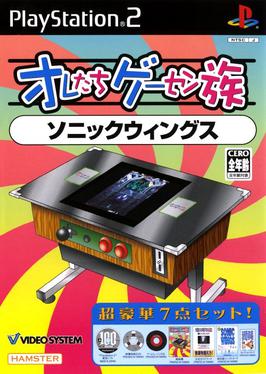












 Another SquareThought Site