

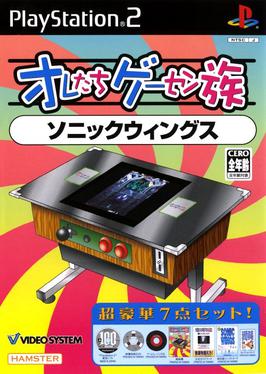

If you judge a game's emotional depth by how many bullets it fires per second, Thunder Cross is basically Dostoevsky with lasers. Officially presented on PS2 as Volume 18 in Hamster Corporation's Oretachi Gēsen Zoku series, Thunder Cross arrives here as an emulated arcade relic rescued from the dustbin of time and slapped into a collector's-friendly package. The series itself-aptly named "Our Game Center Family"-was Hamster's hobbyist love letter to arcade culture, offering each title on PS2 for ¥2,000 with a bizarrely generous seven-item physical bundle (disc, miniDVD of trailers and a "Masterplay" video, a mini CD soundtrack, an instructions booklet, strategy guidelet, replica display card, and a collection card reproducing the arcade flyer). That tactile care is the first character trait of this release: it's sentimental, tactile and slightly needy, like that friend who still prints mixtapes. Thunder Cross the game predates this PS2 package by nearly two decades-Konami's original 1988 arcade shooter never saw home consoles until it joined the Oretachi lineup. On the surface, it's a tight, vertically scrolling shoot 'em up: you pilot a futuristic craft through waves of alien nastiness, collect power-ups, and memorize bullet patterns. Below the surface, if you squint and anthropomorphize like a suspiciously romantic game critic, there's a tiny soap opera of characters: the lonely pilot, the modular sidekicks, and the antagonistic swarm. This review goes deliberately, perhaps absurdly, deep on those personalities while also covering gameplay and the visual presentation of the PS2 emulation package. Expect heartfelt metaphors, some arcade-collector gloating, and enough analysis of a spaceship's emotional arc to make its HUD blush.
Thunder Cross plays like a Zen koan wrapped in an action movie: simple controls, hyper-focused risk-reward, and that old-arcade charm of "one more try" guilt. At its core you have one playable craft (the player ship) sporting a forward blaster and a modular support system. The support modules are the real supporting cast-literal wingmen with distinct personalities. They begin as blank-slate drones but evolve into characters as you power them up: they can be coaxed into aggressive frontal fire, defensive shielding, or wide-area suppression depending on the upgrades you collect. The game dares you to treat them like friends: lose a module and you can feel the ship's loneliness. The player ship is the protagonist in a surprisingly readable three-act structure compressed into arcade stages. Act I is the origin: the ship wakes up on a standard stage, shoots some mid-level grunts, and learns the mechanics. It's naive, eager, and slightly underpowered-much like any hero at the start of a Konami arcade title. Act II ramps up the stakes: enemy formations become choreographed antagonists that test more than reflexes; they test strategy. Transitioning missiles force the ship to reconfigure its modules, making you think of them less as pickups and more as companions whose talents you must manage. The way the game encourages re-acquaintance with modules after deaths reads like a bittersweet memory sequence: "Remember when you had that double-shot wing? Why did you let it go?" Act III is the boss gauntlet, where the ship faces monstrous mechanized constructs that are almost mythic in scale. These bosses have their own arcs-initially cocky, then painful, then catastrophically theatrical. Defeating them is less a mechanical achievement than an emotional reconciliation: you coax the lumbering antagonist into predictable rage patterns, exploit its one soft spot, and then watch the cinematic collapse as if the final monologue were subtitled in pixels. The difficulty curve is classic arcade: unforgiving but fair. Lives and continues are scarce; you will die a lot; each death is a punctuation mark in the ship's maturation. Power-up systems reward situational thinking: some stages favor concentrated forward power, others demand wide-angle coverage. The scoring system pushes mastery, and the inclusion of a "Masterplay" miniDVD in the PS2 release package is a sly wink-Hamster gives you a model performer to study, because the characters in Thunder Cross are not merely sprites, they're lessons in perseverance. Multiplayer doesn't exist in the PS2 emulation, at least not in any modern couch-coop sense, which forces the narrative focus inward. The solitary pilot's arc benefits from this: without a second player, your bond with the support modules deepens. You become a one-man band and a tragically dependable commander. The game's shortness-typical of arcade titles designed for coin-op-turns into a deliberate novella of compressed character development. The tension of limited continues and the psychological weight of each module loss convert button-mashing into a morality play. If Thunder Cross sometimes feels like a non-verbal melodrama, that's because it is. It expresses its story through design: enemy placement reads as antagonism, power-up timing as friendship, and boss patterns as stubborn, stage-finale monologues. This read is playful, but it works: when you finally clear a stage after a string of failed attempts, you experience legitimate narrative closure. That catharsis is the secret plotline Konami snuck into a 1988 shooter, and the PS2 Oretachi package makes that intimacy tangible by wrapping the release in items that encourage study and nostalgia.
Graphically, Thunder Cross wears its arcade pedigree like a vintage bomber jacket-worn, confident, and somehow cooler for the scuffs. The emulation on PS2 via Hamster is respectful rather than transformative: pixels are preserved, sprite animations are retained, and the stage backgrounds, while not jaw-dropping by modern standards, possess a purposeful density. Konami's late-80s aesthetic favors layered parallax backgrounds, chunky sprite work, and bosses that occupy half the screen and several nightmares. These visuals age like vinyl-certainly not high-def, but characterful. Hamster's PS2 release doesn't throw in modern filters or high-res redraws; it's an emulation meant for collectors who want authenticity. That means aliasing and scanline artifacts are present depending on your setup, which can be charming if you buy into the retro vibe or irritating if you expect smoothing. The included mini DVD and the replica display card lean into the perceived value: the package says, "We know you like boxes with things in them." The Bluish CRT-like bloom you remember from play in the '80s is simulated by the game running in a near-original resolution window, so expect a mix of nostalgia and pixel appreciation. Sound is worth mentioning because Thunder Cross's music and effects are functional and retro-catchy. The PS2 package's mini CD includes the original soundtrack and Super Sweep arrangements-this is a direct invitation to psychoanalyze the pilot's mood by adjusting the music track. A pounding 8-bit bassline equals determination; a sudden cymbal crash equals moral crisis. The audio presentation is faithful and crisp, and the presence of the soundtrack in the physical bundle elevates the emotional resonance of the in-game moments. Listening to the arranged tracks while rewatching the Masterplay gets oddly moving: the ship's arc becomes a scored film. Visually, the characters are basically modular metal and programmed menace, but the art direction gives them readable motifs. The player ship's silhouette is clean, the enemy drones are visually distinct, and the bosses are memorably grotesque in their mechanical design. The PS2 emulation preserves that design, which in turn preserves the small, almost theatrical character beats planted into enemy movement and explosion choreography.
Oretachi Gēsen Zoku's PS2 presentation of Thunder Cross is a lovingly packaged nostalgia trip that doubles as an unexpected small-scale character study. The game itself is classic Konami: sharp, demanding, and concise. As a shoot 'em up, it delivers the expected thrills-tight controls, satisfying power progression, and bosses that demand pattern mastery. Where it surprises is in how it invites emotional projection onto extremely non-human entities: your ship, its modular companions, and the pattern-driven bosses coalesce into a compact dramatic arc. Hamster's release strategy-selling each title for ¥2,000 with a seven-item bundle that includes a miniDVD Masterplay and soundtrack miniCD-frames Thunder Cross as both a historical artifact and a living performance to study. That packaging choice is a character-building move too: it makes the release feel like a museum exhibit curated by an obsessive friend. If you're a collector or a shoot 'em up enthusiast, the PS2 Thunder Cross is a meaningful acquisition. If you're a casual modern gamer expecting widescreen remasters and multiplayer options, the game will charm you only if you let it: you have to be willing to see the humanity in a spaceship. Score: 7/10. This reflects Thunder Cross's excellence as an arcade classic preserved faithfully, its surprising narrative warmth when examined as more than a score grinder, and the high collector value of Hamster's physical package. It loses points only for not modernizing accessibility (no re-mapping, no optional difficulty scaling) and for being niche by design. Ultimately, Thunder Cross on PS2 is a nostalgic novella in bullet form-short, occasionally brutal, and weirdly heartfelt. Treat your support modules kindly; they have feelings, and so does the pilot inside your controller.
 Press Your Luck on PS3
 Oretachi Game Center Zoku: Trio the Punch on PS2
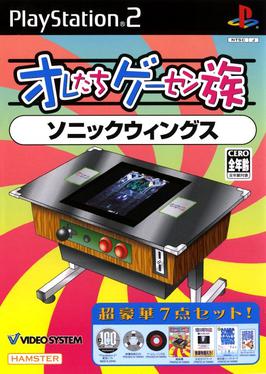 Game Dev Story on PS4
 Oretachi Game Center Zoku: Rabio Lepus on PS2
 Oretachi Game Center Zoku: Quarth on PS2
 Time Crisis on PlayStation
 Ninja Assault on PS2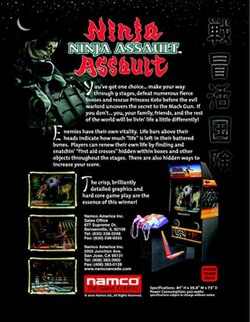












 Another SquareThought Site