


 Aug 2025
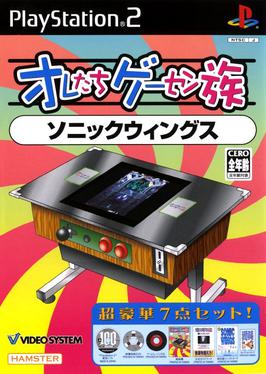

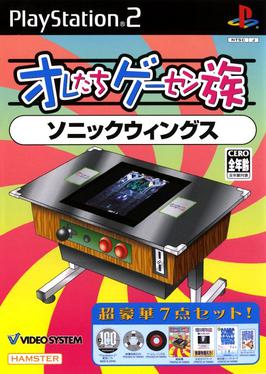
Oretachi Gēsen Zoku might translate to something wholesome like "Our Game Center Family," but when you pop the PS2 disc for Nekketsu Kouha Kunio-Kun into the tray you discover a family reunion where everyone still remembers how to throw down. This re-release - one installment in Hamster Corporation's retro-collector series for PlayStation 2 - packages the 1986 arcade classic (originally from Technōs Japan) as an emulated experience complete with all the trimmings the Gēsen Zoku line promised: the arcade game on CD-ROM, a miniDVD with trailers and a masterplay video, a soundtrack mini CD with original and arranged tunes, a tiny strategy booklet, replica flyer and display cards. In other words, it's nostalgia served with a side of lovingly curated merch, which is useful because the game itself tells its story in knuckles and punchlines rather than exposition. On the surface this is a straightforward brawler: you are Kunio, the short-fused but strangely charismatic schoolyard avenger, and the city is a gauntlet of gangs, goons and the kind of macho posturing only 1980s arcs could stage. The plot is lean - a revenge/justice-through-fists premise - but read it like pro wrestling and it blooms into melodrama. Kunio's arc is the sort of thing that would get a counselor worried if it were real life: he starts as a hot-headed kid defending honor and ends as a walking statement about loyalty, consequences, and the psychosocial benefits of a well-timed haymaker. The enemies are not mere punching bags; they're the beats of Kunio's coming-of-age, from stooge to rival to boss, and the game's brevity means each encounter is a compact chapter in a loud, pixelated novella. If you're buying this entry for preservation and packaging, the Gēsen Zoku extras are delightful. For players wanting a slice of arcade history, the emulation is faithful, the soundtrack CD is a treat, and the Masterplay video on the miniDVD teaches you to stop flailing like someone in a midlife crisis trying tai chi. All of which is to say: the PS2 release respects the title's past while packaging it like a tiny museum exhibit you can beat up.
At heart, Nekketsu Kouha Kunio-Kun is an arcade school's semester in violence. The control scheme is mercifully simple: move, punch, jump - with grabs and throws as your answer to stubborn goons. This simplicity is not a limitation but the game's secret syllabus. Each enemy is an exam question; you learn the rules by getting smacked in the face until you stop making the same mistakes. The pacing is brisk. Enemies come in recognizable types - the swivel-kicking punk, the bulky charger who mistakes your ribs for a door, and the boss who arrives with theme music and the moral conviction of a soap-opera patriarch - and each type forces you to refine your timing. Kunio as protagonist is less a fully rounded person and more an archetype auscultated for maximal arcade satisfaction. He begins every level with a chip on his shoulder and a health bar that represents youthful hubris. Mid-level confrontations are the game's character beats: a pair of rival brothers who fight like they have something to prove, a former ally turned antagonist whose betrayal happens between two screen flashes, and the bosses who function like the adults that kids imagine running the city. The arc of Kunio is elastic: he's the same stubborn fist at beginning and end, but the stakes feel raised each time you clear a stage. There is an implied moral education in the order of the levels - juniors, mid-tier thugs, upper-level gang lieutenants and finally that boss who has been metaphorically (and sometimes literally) looming in the background - and every victory is an earned line in Kunio's report card. What the game lacks in plot pages it makes up in choreographed interaction. Crowd dynamics shape the story: you don't only fight enemies, you fight the flow of bodies, which forces improvisation. Environmental items (trash cans, pipes, occasional motorcycles) are the props of a theater where Kunio's solos turn into ensemble pieces. The boss fights are the real character arcs in condensed form: they introduce personality - a rhythm, a favored attack pattern, a recoverable defeat - which you discover, accept, and then exploit. That patterning is the narrative engine. By the last act, Kunio's victories feel like reconciliations; he hasn't philosophically changed, but the city recognizes him differently. Friends become reluctant acquaintances; rivals gain nuance as you learn their move sets; even the faceless mooks feel like nodes in a social web that Kunio is slowly unwinding. If you want depth, look for the implied relationships rather than explicit cutscenes. The game's writing is terse - congratulations to Mitsubishi for staying on-message - but character development happens between punches. The enemy types are archetypal storytellers. A thin, sneering punk who taunts Kunio before a fight is shorthand for jealousy; the silent, hulking boss is an embodiment of a system Kunio seeks to upend. Even the smallest encounter can be read as a micro-arc: a thug who taunts and then receives a lesson in humility is a complete narrative beat compressed into eight seconds of gameplay. When you string those beats together through the stages, Kunio's arc emerges not as a transformative psychological case study but as an evolving reputation: reputation in 8-bit, if you will. And reputation matters - it is the currency by which the arcade adjudicates who's allowed to walk the city without getting jumped. The PS2 package's Masterplay video is a bizarrely intimate way to study these arcs, because you can watch an expert glide through the choreography and see where Kunio's personality is implied by decisions: which enemy to knock down, when to run, when to tag-team a boss. The included strategy booklet and arrangement soundtrack add extra context - the booklet is the marginalia that turns a punching spree into a syllabus for the Kunio curriculum.
Graphically this is a time capsule. The arcade sprites are chunky, joyful and designed to be readable at a glance: Kunio's square jaw and pompadour read like a manga column in motion. Backgrounds are minimal but effective - alleys, neon signs, rooftop edges - and the limited color palette forces the characters to scream their intentions with every pixel. On PS2 the emulation preserves that aesthetic without smoothing it into modern art; there's a fidelity to scanline flicker and sprite edges that feels honest. Some players may find the art primitive by modern standards, but there's an argument to be made that the graphics are intentionally theatrical: the world is lit like a stage so Kunio's actions are always legible. The miniDVD and soundtrack help the visuals by adding audio texture: original tunes that loop with the perfect amount of urgency, and arranged versions that reimagine the themes in a slightly more polished register. The included replica flyer and display card act as visual footnotes, reminding you that Kunio's universe is a designed product of an era where style was a shorthand for intention. If the PS2 version had one flaw visually, it's the lack of optional filters or presentation modes; the emulation is pure and faithful, but a 'modernizer' toggle (soft scanlines, CRT shader, or a widescreen-friendly border) would have let the aesthetic play to different tastes without committing sacrilege.
To call Nekketsu Kouha Kunio-Kun "just a beat-'em-up" is like saying a wrestling promo is "just talking." It's reductive but not entirely wrong. What makes this PS2 reissue endearing is less the novelty of playing as a pixelated delinquent and more the way the game compresses character, conflict and community into brawling mechanics. Kunio's arc - stubborn protector, city-recognized legend, and frankly a human metronome of punches - is a surprisingly coherent narrative if you read it at the rhythm of the enemy spawn. The Gēsen Zoku package is pitched squarely at collectors and nostalgia pilgrims: the extras (miniDVD, soundtrack CD, booklets and cards) are thoughtful, and the emulation respects the original artwork. If you're the sort of person who delights in historical preservation, or you want to show a friend what arcade simplicity can still teach about pacing and character beats, this release is a guilty pleasure you can justify with the included soundtrack. If you demand modern conveniences like online leaderboards, re-tuned difficulty curves, or extensive story content, you may find the experience thin. For a younger gamer who grew up on long, cinematic campaigns, Kunio's storytelling will feel like a novella written in uppercuts and jump kicks - short, blunt, and oddly sentimental. Ultimately, this is a love letter to the idea that characters can be made of actions as much as dialogue. Kunio doesn't need a soliloquy to be compelling; he needs a street, a gang, and the player's thumbs. The PS2 Oretachi Gēsen Zoku release packages that phenomenon with reverence and a few collectible trinkets, and if you let yourself read between the pixels, Kunio's rise from hot-headed kid to neighborhood legend is as satisfying as any epic - just with more spandex and fewer monologues. Recommended for collectors, retro fans, and anyone who thinks emotional arcs can be delivered in the form of a perfectly timed combo.
 Press Your Luck on PS3
 Oretachi Game Center Zoku: Trio the Punch on PS2
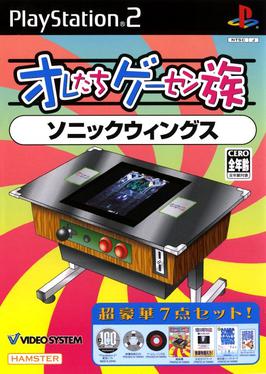 Oretachi Game Center Zoku: Rabio Lepus on PS2
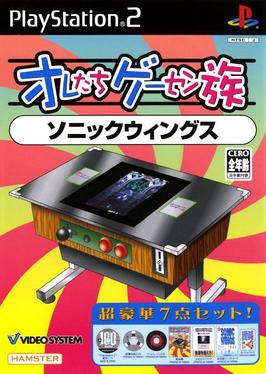 Oretachi Game Center Zoku: Nekketsu Koukou Dodge Ball Bu on PS2
 Time Crisis on PlayStation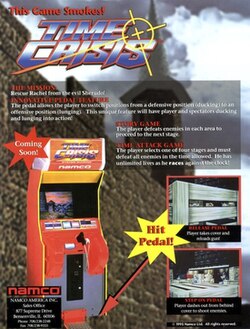










 Another SquareThought Site