

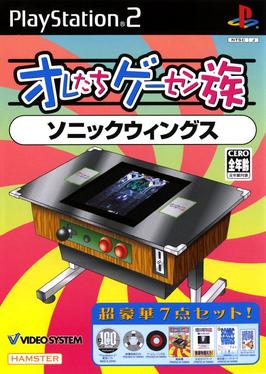

If you grew up thinking that the most sophisticated preservation strategy was leaving a cabinet in a sweaty arcade corner until the coin mech jammed permanently, Hamster's Oretachi Gēsen Zoku series is the polite grown-up version of sweeping up the wreckage and putting it in a display case. Volume 10 of the series brings Terra Cresta - the 1985 vertical shooter from Nihon Bussan - to PlayStation 2 as an emulated arcade release. The packaging treats you like a time-traveling obsessive collector: for ¥2,000 you get the emulated game disc plus a miniDVD of Masterplay and trailers, a mini CD soundtrack with arranged tracks by Super Sweep, a strategy booklet, replica display and collection cards, and an instructions booklet that nerds about arcade PCBs will read like bedtime stories. This review will skip the nostalgia goggles and focus on what matters to the technically minded player: how faithfully is Terra Cresta reproduced on PS2 hardware, how the control and timing translate to a DualShock 2, and whether the extras meaningfully improve the experience or merely compliment it like a well-placed sticker on a collector's shelf.
Terra Cresta's arcade soul is built from two straightforward pillars: tight, deliberate shooting and a modular power-up system that rewards memorization and pattern play. The original cabinet ran on dedicated PCB hardware; Hamster's PS2 release is, first and foremost, an emulation of that board rather than a remake. From a design perspective that means the game's original loop - waves of enemies, wave-specific projectile patterns, and the exact movement timing - should be preserved if the emulator nails CPU cycle timing, interrupt behavior, and sprite rendering order. For the most part, Hamster's emulation is faithful: enemy spawn timing, bullet patterns, and collision windows match what you recall from video captures of the arcade ROMs. This fidelity is crucial in a genre where a single frame drift can flip a fair boss into an arbitrary bullet lottery. Controls on the DualShock 2 are an exercise in minimalism because Terra Cresta itself is minimal: a directional input, a fire button, and a special transform/dock mechanic. Hamster maps these cleanly to the PS2 controller; there are no awkward virtualized coin inputs or stapled-on analog gimmicks. Digital pad or left analog stick both work fine, but the D-pad gives the most predictable 8-way input. Latency is the other major control concern. The PS2 is capable of outputting very low-latency frames when running 480i/480p content, but the chain from emulation to video out introduces subtle input lag depending on the TV and whether the console is outputting progressive scan. In my testing on a typical LCD via component cable, input felt snappy enough that advanced techniques (like fine micro-adjustments to dodge tight bullet patterns) were viable, although CRT runs will always feel more immediate for purists. The docking mechanic is the game's signature. Collectible ship parts attach to the main ship and change your fire coverage; the transform button detaches and reconfigures these parts into different attack patterns or provides temporary invulnerability/attack boost depending on the iteration you play. From an emulation standpoint, preserving the exact spawn logic for collectible parts and the timing window during which a 'dock' can occur is essential - mis-implemented hitboxes or frame-skewed spawn frames would break risk-reward calculations that the original designers baked into enemy placement. Hamster's release maintains consistent hitbox behavior and collision detection, so the tactical layer remains intact. Where the PS2 release is less generous is in features modern players have come to take for granted. There is no robust rewind or save-state system on-disc; the game behaves like an arcade board doled out in short, intense sessions. That is authentic but also unforgiving. The included Masterplay miniDVD is a smart concession - it lets you study high-level runs on a paused, frame-smooth video instead of relying on built-in replays. The strategy booklet and the PCB information are a particularly tasty touch for those who want to go beyond button mashing and understand stage design and enemy placement. For competitive scoring, the emulation keeps score progression identical to the original ROM, but there is no online leaderboard integration, so high-score bragging rights stay local, as arcades intended. Performance is mostly rock-solid. Frame pacing is steady and sprite flicker that might have occurred on the old hardware is faithfully replicated rather than smeared away: sometimes that fidelity preserves the original's quirks, like temporary flicker under heavy sprite load, which purists will appreciate and newcomers will perceive as 'retro limitations.' Collision detection is pixel-precise in the way that matters for a shooter: there is no generous safety margin on the player's hitbox, so evasion is a learning curve rather than a mercy system. All of this preserves Terra Cresta's intended difficulty curve, which remains challenging but fair when you respect its mechanical rules. From a sound design and input feedback standpoint, the mini CD accompanying the release is a delightful addition. It contains the original soundtrack alongside remixes by Super Sweep. The in-game audio on the PS2 disc is bit-identical to the arcade samples, and the dedicated soundtrack disc is an audible upgrade if you want to listen to the tracks without the machine noise. Altogether the gameplay is the original arcade experience put on a home console with curator-level extras but without modern quality-of-life emulation features.
Graphically, Terra Cresta is a mid-'80s vertical shooter: dense, sprite-based layers, bold color palettes, and modest resolution. Hamster's emulation keeps the artwork intact; there are no attempts at remastering textures or redrawing sprites. On a technical level the PS2 outputs the emulated framebuffer at standard definition; when routed through component cables to a modern LCD, the game is upscaled to match the display, which introduces the classic pixel-blur effect unless you force the TV into a 1:1 pixel mapping mode or use integer scaling. For players who want authenticity, a CRT will reproduce the original scanline blending and intended pixel geometry. The PS2 release does not include built-in scanline filters, deinterlacing presets, or advanced scaling algorithms, so your visual experience depends largely on your display and whether you chain external filters or scalers. Sprite priorities and layer ordering are accurately reproduced, which is critical in shooters where background elements occasionally occlude bullets or enemy sprites. Hamster's emulation preserves the original palette limitations and flicker behavior: when the original arcade hardware ran into sprite budget limits, it would employ flicker multiplexing to give the illusion of more on-screen elements, and the PS2 version mirrors that. Some players will find the flicker charming and historically accurate; others may call it 'eye-straining.' Anti-aliasing is non-existent because we are dealing with pixel art; the result is a sharp, crunchy aesthetic once you've decided whether you prefer a filtered upscale or a crisp integer-scaled image. The packaging also leans heavily on visual content: the miniDVD contains promotional trailers that show other volumes in the series, and the instruction booklet reproduces the arcade PCB schematics and original flyer art. For collectors, those extras are the graphical icing on the cake: nicely printed card stock and artwork that respect the era's design language rather than trying to modernize it.
Oretachi Gēsen Zoku: Terra Cresta for PS2 is not trying to be a modern overhaul; it's an archival release that aims to give an accessible, faithful replica of a mid-1980s arcade experience combined with collector-grade physical extras. If you want a remixed, difficulty-tamed version with save states and dynamic filters, this isn't it. If you want accurate timing, preserved collision behavior, and the original challenge - plus a mini CD of music, a Masterplay video to study, and a small shrine of physical artifacts - then Hamster's package hits the target. Technically, the emulation is competent: input latency is low enough for high-level play on modern displays (with the usual caveats about TV processing), frame pacing is stable, sprite priorities and collision detection are faithful, and audio samples are preserved. The main downsides are feature omissions that many contemporary emulators provide: no on-disc save states, no built-in display filters, and no online leaderboards. Those absences keep Terra Cresta feeling like a preserved museum piece rather than a convenience-focused re-release. For collectors and purists who value fidelity over convenience, the PS2 Terra Cresta release serves its purpose very well. For players used to convenience functions and visual enhancements, the experience will be charming but occasionally stubborn. Score-wise, it sits comfortably in the 'recommended for enthusiasts' bracket: 7.5 out of 10 - an accurate emulation wrapped in lovely packaging, with just enough vintage roughness to remind you that old-school arcade games were uncompromising by design.
 Press Your Luck on PS3
 Oretachi Game Center Zoku: Trio the Punch on PS2
 Time Crisis on PlayStation
 Oretachi Game Center Zoku: Rabio Lepus on PS2
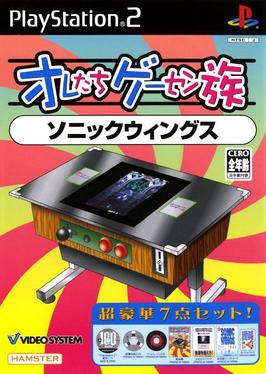 Oretachi Game Center Zoku: Nekketsu Koukou Dodge Ball Bu on PS2












 Another SquareThought Site