

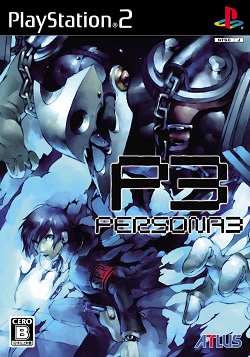

Persona 3 FES is the director's-cut plus epilogue reissue of the PS2 cult classic Persona 3. On paper it's a typical mid-2000s Atlus package: a JRPG grafted to a calendar-driven social sim and wrapped in anime styling, but what makes FES interesting to a tech-minded player is how it juggles a bunch of systems - AI-driven party behavior, a pressure-heavy combat loop, a deterministic Persona fusion economy, and an audio/UISkin that punches above the PS2's hardware class. FES does two things: it irons some rough edges of the original 'Journey' and then layers on 'The Answer,' an epilogue that trades the simulation engine for a more old-school, grind-and-dungeon experience. That trade-off is the heart of any technical evaluation: enhancements in structure and closure versus the deliberate removal of mechanics that made the original feel novel.
Atlus stitched two gameplay paradigms together in Persona 3: daily-life simulation and dungeon-crawling RPG. The sim side divides days into time slices (school periods, after-school, evening) and ties available activities to three player stats: Academics, Charm, Courage. From a systems perspective that's a compact implementation of gating - each activity either consumes a time resource or requires thresholds to unlock other nodes in the social graph (Social Links). Social Links are not just narrative flourishes: they are mechanical levers. Each Link is mapped to a Major Arcana and grants fusion XP bonuses when you create Personas of that Arcana. That creates an elegant feedback loop: spend time building relationships to accelerate your Persona economy, which in turn improves combat throughput. Combat is where the PS2-era engineering shows its teeth. The game uses a 'Press Turn' style turn economy: exploit weaknesses or crits and you gain bonus turns; fail to do so and the enemy gains tempo. It's a deterministic, high-payoff design that rewards elemental matchups and status awareness. Abilities are split between three physical types and six elements; physical skills cost HP while elemental/support skills consume SP - a deliberate design choice that forces trade-offs mid-battle. Knockdowns open an All-Out Attack prompt, a cinematic but mechanically useful burst that punishes poor enemy placement. The protagonist's Wild Card ability to hold multiple Personas is the other core mechanical pillar. Persona creation happens in the Velvet Room via fusion. Fusion inherits moves from parent Personas, and the player's level caps the available fusion results. There are multiple acquisition vectors: Shuffle Time rewards, Velvet Room quests, and the Persona Compendium (a fee-based summon pool). This makes progression semi-plannable: if you understand Arcana pairing and inheritance rules you can engineer Personas to have very specific skillsets, which is satisfying from a systems perspective. Where Persona 3 becomes divisive is how secondary party members are controlled. FES retains the AI-based tactics system: you set high-level behavior profiles for party members rather than micromanaging them during combat. Director Katsura Hashino framed this as a stylistic choice - party members are autonomous characters with personality - but it has real technical implications. On one hand the approach reduces interface complexity and turns party composition into an optimization problem (who synergizes with whom), but on the other it prevents precise execution in difficult encounters; reviewers and players noted that it could lead to frustrating deaths and perceived "stupidity" in AI decisions. Persona 3 Portable would later add direct control, vindicating the complaints of players who prefer deterministic control loops. FES's headline addition is 'The Answer,' an epilogue that gives narrative closure. From the technical design angle The Answer is almost a different game: the daily-life calendar is stripped away, and the systems tilt heavily toward dungeon design and grinding. That makes it mechanically consistent with classic RPGs but less interesting for players who appreciated the hybrid simulation-RPG tension. FES also introduces a Hard difficulty, which adjusts enemy stats and forces more rigorous use of Personas and elemental exploitation. Finally, from a QA and UX perspective, the FES release model is worth noting. Atlus shipped FES as both a Regular Edition (two discs: updated Journey, separate epilogue disc) and an Append Edition that required the original Persona 3 disc initially, later becoming standalone after save creation. There's also PSN distribution (PS2 Classic) later in 2012, and an option to import compendium and some social stats from original saves, which demonstrates Atlus' attention to preserving player investment across iterations.
Technically speaking, Persona 3 is very much a PS2-era hybrid: low-to-mid poly 3D environments for Tartarus and character models, layered with high-resolution 2D portraits and full-motion anime cutscenes produced by Point Pictures. The art direction - Shigenori Soejima's character work and the blue-hued UI skin - does a lot of the presentation heavy lifting. On the PS2, polygon budgets were modest; Tartarus's floors are built from repeated modular geometry and tile sets. That repetition feeds into the criticism that the tower becomes visually monotonous after dozens of hours. Animations are serviceable, and the Evoker sequences (characters raising a gun to their head) are implemented as short, punchy cut-ins - controversial in subject but technically consistent and reusable across hundreds of encounters. Where the PS2 hardware impresses is audio streaming. Shoji Meguro's soundtrack leans heavily on vocal tracks and synth textures that were hard to achieve on previous-generation hardware; the PS2's audio streaming allowed real-time playback of richer samples and arrangements, giving battles a swagger that boosts perceived polish. FES added new tracks and remixes, so the audio memory pipeline had to accommodate extra assets. Loading behavior is typical of the era: discrete zone loads between field and dungeon, and between floors in Tartarus, but Atlus does a reasonable job of masking loads with UI overlays and music continuity. Overall, the game looks like a finely painted cardboard set from afar - distinct silhouettes, compelling 2D art, but technically obviously constrained in geometric variety and draw distance compared to later hardware.
Persona 3 FES is a textbook case of iterative design on constrained hardware: Atlus pushed a lot of ideas into a PS2 package and made trade-offs that reward different player tastes. If you are a systems player who enjoys managing resources, optimizing fuse outcomes, and exploiting a press-turn combat economy, FES offers a deep, deterministic playground with a soundtrack that belies the console's age. If you are attached to the daily routine and social-simulation glue that made the original Persona 3 feel novel, The Answer's removal of those simulation elements will feel like a deliberate narrowing of scope. On the technical merits alone, FES is polished - tight UI, solid audio streaming, and a combat loop that scales well into very long play sessions. Its weaknesses are architectural: repetitive dungeon geometry, an AI scheme for party members that some players find frustrating, and the epilogue's deliberate sidelining of the social sim. At 8.9/10, FES is an essential study in how mechanical decisions (AI control, fusion economics, time-gated activities) interact with presentation constraints to form a distinctive player experience - a must-play for anyone interested in how JRPG systems can be engineered to produce emergent, emotional narratives.
 Persona 4 Arena Ultimax on PS3
 Persona 4: Arena on PS3
 Combat Elite: WWII Paratroopers on PS2
 Gnosia on Xbox Series X/S
 Predecessor on PS4
 Persona 4 Golden on Xbox Series X/S
 Radiant Historia on DS
 Catherine: Full Body on PS4
 Persona 5 Tactica on Xbox Series X/S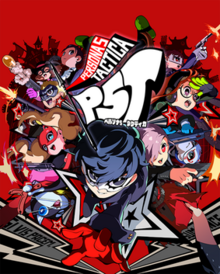












 Another SquareThought Site