

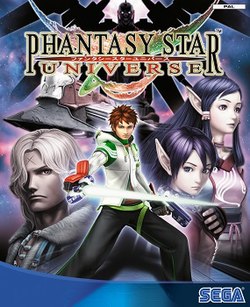

If you ever wanted to be a spacefaring hero who spends half their time saving the galaxy and the other half arguing with NPCs about archaic artifacts, Phantasy Star Universe (PSU) for the PS2 will make that wish come true - with a side of online nostalgia. Built by Sonic Team and published by Sega, PSU tried to wear two hats at once: a cinematic single-player RPG with a proper story, and a persistent online playground in the tradition of Phantasy Star Online. The result is a game that, like a crowded space station, is full of interesting nooks, occasionally excellent design, and the odd bit of bureaucratic friction.
PSU splits its personality between a story-driven single-player mode and a multiplayer, persistent online mode. In story mode you follow Ethan Waber (and his sister Lumia), starting at a 100th-anniversary celebration that gets rudely interrupted by a meteor shower and some very rude monsters called the SEED. The narrative bounces you through a sci-fi soap opera involving GUARDIANS, rogue CASTs, ancient tech called A-Photons, and the kind of family revelations that usually require an emotional monologue and at least one dramatic flashback. The main beats are satisfyingly dramatic: the meteor shower catastrophe, Ethan joining the GUARDIANS thanks to Leo, training with Karen Erra, uncovering the SEED's attraction to A-Photons, and a final confrontation with Magashi - who is not what he seems. If you like RPG stories that mix military sci-fi with melodrama and occasional resurrection twists, PSU's plot will keep you engaged long enough to level a little and learn the meat of the combat system. Gameplay-wise, PSU wears its Phantasy Star Online roots on its sleeve. Combat is action-oriented rather than strictly menu-based, and missions tend to be compact, objective-driven expeditions against enemy hordes, culminating in boss fights. That makes the single-player experience feel a bit like a sequence of polished co-op sessions played alone: it's brisk, enjoyable, and very mission-focused. Where PSU really stretches its legs is in multiplayer: a persistent online world where you could team up with others, grind missions, and show off the weirdly satisfying loot loop that keeps you going. Expansion content - notably Ambition of the Illuminus - added new weapons, Photon Arts, missions, clothing, and enemies, refreshing the loop and giving players actual reasons to come back. The game also dresses up its systems with social trimmings: different races, factions, and the customary "I am better than you" banter between groups keep the universe feeling populated. For players who like character-building and gear collection over long sessions, PSU delivers. The downside is that single-player can sometimes feel like a trimmed-down version of the online experience: it gives you the storyline but not the full, chaotic joy of playing with human teammates who forget what a health potion is for. Critics at the time noted the game sometimes felt like an update to older PSO ideas rather than a sparkling reinvention. If you're coming in expecting a fresh revolution in action-RPG mechanics, you may be underwhelmed; if you're here for a solid mission-based grind with a sci-fi plotline, you'll be right at home. There's also a legacy side to the gameplay: PSU's setting and mechanics continued into PSP titles and the universe popped up later in Phantasy Star Online 2 events. While official servers were eventually shut down - North American and PAL PC/PS2 servers closed in March 2010, Japanese PS2 support ended in April 2011, and Xbox 360 servers followed in 2012 - the fan community has kept the spirit alive on private servers. That says something: a game whose core loop inspires a dedicated afterlife probably did more right than wrong.
On PlayStation 2 hardware, PSU looks like a late-era PS2 game: competent, occasionally pretty, and sometimes pushed to the edge of what the console could manage. Environments capture the three-planet Gurhal system (Parum, Neudaiz, Moatoob) and the GUARDIANS space station with a respectable variety of locales and enough visual detail to make exploration pleasant. Character models and animations do their job, especially during combat where the action-RPG perspective benefits from readable animations and flashy Photon Arts introduced in later content. The Xbox 360 and PC versions aimed higher on the fidelity front, but the PS2 release holds its own as the console's workhorse performance version. The stylistic choices lean anime-adjacent: colorful outfits, dramatic hairstyles, and an overall sense that everything was designed to be binge-watched at 30 frames per second while you yell at a boss's weak point. Certain set-pieces and boss designs are memorable, and the soundtrack delivered earworms (the track "Guardians" even made a cameo on a playlist during the 2020 Tokyo Olympics Parade of Nations - yes, really). Critics were mixed: some praised the production values and immersive worlds, while others argued the visuals and presentation felt like adjustments to older tech rather than a new standard. Famitsu loved the PS2 package enough to give it a high score (35/40), which suggests that for many players the style and scale were right on the money.
Phantasy Star Universe on PS2 is an earnest, sometimes brilliant space-RPG that split its heart between single-player storytelling and a deep online loop. If you were around in the mid-2000s and miss that specific blend of mission-based co-op, loot chase, and melodramatic sci-fi, PSU will feel like a warm, slightly dusty blanket. The game doesn't always reinvent the wheel - in fact, it leans on the Phantasy Star Online formula a lot - but it polishes that wheel enough to be entertaining. Reviewers at the time were split, giving the PS2 version generally better marks than the PC release, and the game even snagged a D.I.C.E. nomination for Role-Playing Game of the Year. So who should play it? If you want a story-first experience with tasty combat and don't mind the occasional repetition, PSU will scratch that itch. If you're chasing cutting-edge mechanics or the latest AAA spectacle, this isn't the place to spend your next impossible number of hours. Scorewise, it lands around a solid 6.8/10: not flawless, but definitely worth a trip back to the guardians' lounge - especially if you're nostalgic for early online RPGs and space opera drama served with a side of loot. And if you're the kind of person who likes to keep communities alive, there's a little reward in knowing fans kept the game breathing long after the servers officially went dark.
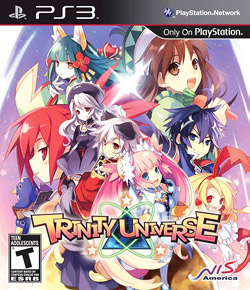 Phantasy Star Universe: Ambition of the Illuminus on PS2
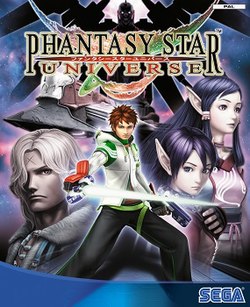 Lego Star Wars II: The Original Trilogy on PS2
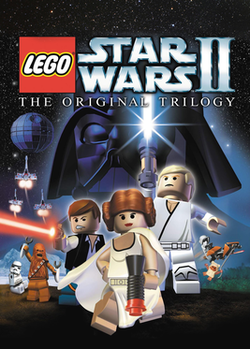 Combat Elite: WWII Paratroopers on PS2
 Onimusha: Dawn of Dreams on PS2
 Action Man: Operation Extreme on PlayStation
 Project Sakura Wars on PS4
 Puyo Puyo! 15th Anniversary on DS
 Sonic Frontiers on PS5
 Sonic Frontiers on Xbox Series X/S
 Sonic X Shadow Generations on PS5
 Sonic Racing: CrossWorlds on Switch 2












 Another SquareThought Site