



PopStar Guitar arrives on the PlayStation 2 as a late-2000s entry in the rhythm/guitar genre, pitched at players who want the party-room experience without the extracurricular investment in a premium peripheral. Developed by Broadsword Interactive and published by XS Games, it offers a familiar 'press-the-button-when-the-note-hits-the-line' gameplay loop, a career ladder that climbs from garage-band humility to a global Battle of the Bands, and a 60-track playlist that mixes legitimate master recordings with a healthy chunk of indie or non-mastered material. This review looks at PopStar Guitar through a technical lens: input fidelity, chart and audio quality, gameplay systems, and how the PS2's hardware constraints shape the end product-sprinkled with sarcastic commentary for the sake of sanity.
On paper PopStar Guitar follows the blueprint set by the major players: scrolling note highways, one-to-one button presses, and a career progression that unlocks venues and tracks. Career mode tasks you with taking a garage band through 25 venues and eventually into a Battle of the Bands, with 12 selectable characters (six male, six female) and basic customization for appearance and instrument choice. The PS2 version supports standard guitar controllers, which is the critical technical detail for anyone planning to actually 'play' rather than mime. From an input systems perspective, PopStar Guitar does what rhythm engines need to do first and foremost: register button presses and map them to note events. The game uses a simple detection window for hits and misses and a combo/scoring mechanic typical of the era. There's not much innovation in the latency compensation or adaptive timing; you either get the timing window or you don't. That means the perceived tightness of the controls relies heavily on controller quality and the player's setup. Cheap third-party PS2 guitars-common in this budget space-introduce variability in button travel, switch debounce, and connector stability, and PopStar Guitar doesn't offer any in-game calibration beyond the usual 'audio/visual offset' slider. Players who care about 1-2 frame timing precision will find the options sparse. Note charting is uneven. The library of 60 songs includes well-known master recordings for acts such as 3 Doors Down, The All-American Rejects, Fall Out Boy, Maroon 5, Rihanna, Blink-182, and Paramore, among others. For these tracks, the note charts tend to be reasonable transcriptions focused on rhythm guitar lines and vocal cues converted into guitar-friendly lanes. For the non-master or indie tracks, charts are often shallower and sometimes feel generic-more filler than an arranged counterpart. This inconsistency alters the learning curve: mastering a well-charted master track feels rewarding, while many indie cuts offer less nuance and fewer rhythmic challenges. The difficulty curve is serviceable for casual parties and newcomers. Early stages are forgiving with wide timing windows and simple chord patterns; higher difficulties add note density, double-hits, and more syncopation, but rarely approach the complexity of the top-tier music titles. Multiplayer exists, but it's pared down: sessions are essentially competitive score battles rather than a full-band simulation. That keeps scope manageable for a PS2 budget release, but it also limits replayability for players who want depth. Audio playback is a mixed bag technically. Master recordings provide recognizable feel and frequency content, which aids player timing because the transient cues (snare hits, guitar attacks) are intact. Conversely, non-mastered tracks can suffer from flatter mixes and compressed stems that make transient detection harder by ear. The result is a gameplay experience where timing and musicality vary significantly from song to song-technical audio fidelity directly influences playability. The game does include an offset control to help align audio and visual cues, which is essential for setups with non-zero display lag or older TVs. On the systems and UX side, the menus are utilitarian and fast, but the feedback loop for player performance could be clearer. Score breakdowns are basic, and the game doesn't do much to teach advanced techniques-there is no in-depth tutorial for hammer-ons, pull-offs, or alternate strumming patterns because the mechanics simply aren't present. For players expecting the feature set of contemporaries with elaborate skill trees and modifiers, PopStar Guitar is lean.
Graphically, PopStar Guitar on PS2 is consistent with a game built to fit a modest dev budget and the console's aging hardware. Character models are low-to-mid polygon, animation cycles are repetitive, and stage lighting is functional rather than cinematic. Textures are compressed and occasionally muddy on close inspection; materials lack specular richness and the camera framing rarely attempts dramatic cinematography. Given the PS2's GPU and memory constraints, the art team made predictable choices: smaller draw distances, baked lighting where possible, and a focus on readable UI elements. From a performance standpoint, the game prioritizes stable frame pacing and note sync over visual fidelity, which is the right call for this genre. A jittery frame rate would directly harm timing, and PopStar Guitar avoids that pitfall by keeping particle and post-processing effects minimal. The result is a visually modest product that doesn't distract or compromise the timing engine. UI clarity is a strength; the note highways and hit windows are high-contrast and legible, which is vital for a game where milliseconds matter. If you were hoping for eye candy, you'll be disappointed; if you want straightforward legibility and a rock-club vibe that doesn't interfere with play, the graphics do the job.
PopStar Guitar on PS2 is a pragmatic, no-frills rhythm title. Technically it gets the essentials right: clear note highways, stable performance, and a tracklist with enough recognizable master recordings to make sessions fun in short bursts. Its weaknesses are also technical in nature-limited calibration options, inconsistent charting between mastered and non-mastered songs, and sparse gameplay systems that don't reward high-skill play. The PS2 implementation benefits from guitar-controller support (unlike the Wii's AirG-only shipping bundle), but you'll be limited by the physical controller hardware and a lack of advanced input tuning. For someone who wants a casual party-guitar experience and already owns a PS2 guitar, PopStar Guitar is an inexpensive way to get a 60-song playlist without the weight of a franchise ecosystem. For rhythm veterans chasing tight timing windows, sophisticated chart design, or production values on par with the big-name series, this title will feel shallow. IGN's reception of the Wii version called it shovelware with a bottom-shelf soundtrack (they awarded 3.5/10), and while the PS2 port irons out platform-specific oddities by relying on conventional guitar controllers, the core design choices remain budget-minded. My score of 4/10 reflects a game that functions and occasionally entertains but lacks the technical polish and depth to be recommended above more complete alternatives. PopStar Guitar is playable, sometimes pleasant, and ultimately forgettable-like a cover band that plays all the hits but forgets to put any riffs of its own on the setlist.
 Dance Dance Revolution: Disney Channel Edition on PS2
 Power Gig: Rise of the SixString on PS3
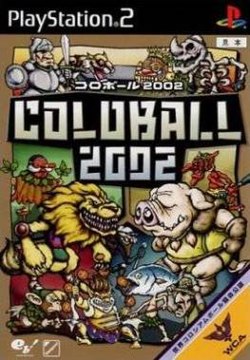
 Coloball 2002 on PS2
 Press Your Luck on PS3
 Game Dev Story on PS4
 Mom Hid My Game! on Switch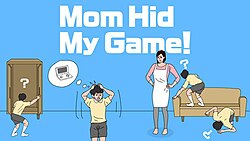
 Paris-Dakar Rally on PS2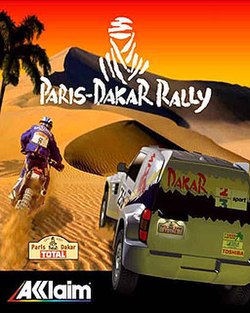












 Another SquareThought Site