



Power Rangers: Dino Thunder for the PlayStation 2 is the console-sized answer to the question nobody asked after watching adults pilot giant robot dinosaurs on a school night: "Can I make the stomp bigger?" THQ's home-console take (developed under the Pacific Coast Power & Light / Locomotive Games banner) translates the television season's stomp-and-save formula into a game where you pilot the team's Zords, free auxiliary machines and smash enemy facilities until the objective marker politely blinks green. If you liked the idea of being a dinosaur-themed heavy machine with attitude, this will hit the spot. If you liked subtlety, diplomacy or nuanced storytelling, this may feel like bringing a sledgehammer to a book club. The game leans hard into its premise: you are essentially in control of very large prehistoric vehicles, and your job is to make them very destructive in the service of videogame mission structure.
At its core, Dino Thunder on PS2 gives you control of the Rangers' Zords and turns them loose across a string of mission types that mostly boil down to: find objective, destroy objective, occasionally tussle with something big and punchy. The home-console version (as documented by the show's release notes) lets players pilot the team's Zords with the explicit goal of freeing auxiliary machines and taking down enemy facilities. There are unlockable Zords tied to previous seasons - Wild Force and Ninja Storm - which exists to satisfy collectors, completionists and people who enjoy three dozen different ways to stomp a pixel. Missions are intentionally straightforward. The level design resembles a checklist more than a narrative arc: move to waypoint, destroy structure, escort small vehicle, face a boss. The variety is in the hardware. Each Zord handles like a chunky, slightly uncooperative truck with superpowers. Speed and turning are tuned to evoke mass; these things do not pirouette, they pivot with the solemnity of a museum exhibit deciding to fight back. Primary attacks tend to be a mix of melee slams and large, slow projectile attacks. Secondary systems - like temporary shields, charged attacks or auxiliary-weapon use - add small windows for tactical thinking but rarely upend the basic loop of smash, repeat. The game earns the right to be simple because it captures the fantasy of piloting gargantuan dinosaurs. When you lock onto a target and bring down a tower with a single stomp, there is a satisfying physics-adjacent whump that the PS2-era engine sells reasonably well. There are also mission types where you must free auxiliary machines: these play as small mini-goals hidden inside larger levels, and they give a sense of progression. Freeing enough auxiliaries tends to unlock new toys and sometimes changes available loadouts, which is the closest the game comes to a reward economy beyond the immediate gratification of demolition. Unlockables are a key part of the package and a smart inclusion. Bringing in Zords from Wild Force and Ninja Storm pads the roster and extends playtime for people who enjoy unlocking cosmetic-but-functional toys. It's also the sort of meta-pleasing fan service that says, in no uncertain terms: "Yes, we remember you liked that other dinosaur-shaped thing from 2002." Controls are competent but not immaculate. The PS2 controller maps do the job; the response is forgiving rather than razor-sharp. The camera, a perennial bully in vehicular combat games, occasionally loses track during tight fights or when you're trying to position a heavy Zord in a narrow space. The enemy AI is functional and sometimes enthusiastic, but rarely bafflingly clever; it prefers brute-force approaches. Boss encounters are serviceable climaxes rather than dramatic tests of skill - their job is to be large and resistant, which they accomplish. For comparison, THQ also released a Game Boy Advance version developed by Natsume Atari that plays as a side-scrolling beat 'em up. That is a different toybox entirely - one is handheld street-fighting, the other is big, stompy vehicular action. If you are choosing between them based on subtlety of mechanics, the PS2 game is the louder sibling with bigger toys. Long-term, the gameplay loop becomes repetitive. Repetition is mitigated by unlockables and occasionally by set-piece mission variety, but if the idea of repeating the stomp-to-objective arc more than a handful of times sounds tiresome, the game will not change your mind. If, however, the concept of being a walking, roaring demolition derby holds perennial appeal, the simplicity is a feature, not a flaw.
Graphically, Dino Thunder wears its PS2-era roots with pride and a dash of polygonal nostalgia. Zords are chunky and bold - which is appropriate because you are supposed to be driving something with the mass of a small building. Colors are bright and faithful to the TV show's palette: reds punch, blues glint, and metallic bits gleam enough that you occasionally forget polygons are involved. Textures are serviceable rather than showy. Close-ups reveal the usual 2004-era compromises: repeated texture tiles, a modest level of detail on models, and a few jagged edges where modern anti-aliasing would have saved everyone a little dignity. Particle effects for explosions and stomps are sprightly; the camera likes to accentuate impact with a brief cinematic wobble that sells weight well. The levels feel like scaled-down cities and bases: buildings you can demolish, objective markers that glow politely, and occasional background set pieces that establish the world without ever needing to explain it. There is some pop-in and the occasional clipping issue when two oversized things love each other too much and try to occupy the same space. Cutscenes and menus are functional and clear; the production values lean toward competent television tie-in rather than aspirational art-house ambition. If your metric for good looks is fidelity to the source and the ability to make a giant dinosaur robot look imposing on a 640x480 screen, Dino Thunder mostly delivers. If your benchmark is photorealism, you are in the wrong century.
Power Rangers: Dino Thunder on PS2 is an exercise in licensed straightforwardness. It does not overreach. It gives players the core fantasy - control of massive dinosaur Zords, smashable environments and a tidy progression of unlockables - and it does so without pretending to reinvent vehicular combat. The controls are forgiving, the camera can be occasionally frustrating, and the mission design trends toward repetition, but the moments where everything clicks - a perfectly timed stomp, a freed auxiliary joining the fray, an unlocked Zord appearing on the roster - are legitimately fun. This is a nostalgia-forward title best enjoyed by younger players, fans of the show and anyone who thinks piloting a dinosaur-shaped machine is an excellent way to spend an afternoon. It's not a benchmark for the genre, but it is a competent, occasionally charming licensed game. If you want the full-package cinematic Zord simulator, lower your expectations for depth and raise them for stompy satisfaction. Score: 6/10 - reliable, fun in short bursts, and exactly the kind of game you buy if you ever imagined yelling "Dino Thunder!" at your living room TV while driving a mech that is frankly overqualified for city maintenance.
 Power Gig: Rise of the SixString on PS3
 Power Pro Kun Pocket 14 on DS
 Power Pro Kun Pocket 10 on DS
 Disney's Chicken Little: Ace in Action on PS2
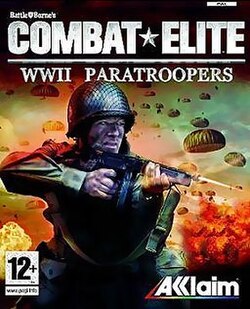
 Combat Elite: WWII Paratroopers on PS2
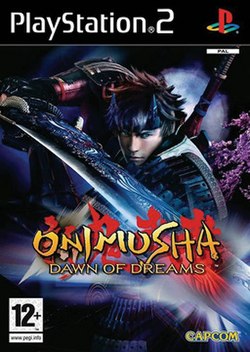
 Onimusha: Dawn of Dreams on PS2
 Orphen: Scion of Sorcery on PS2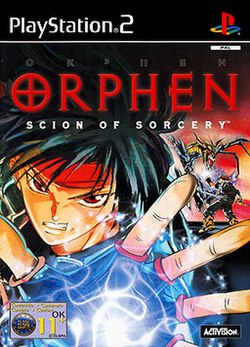












 Another SquareThought Site