

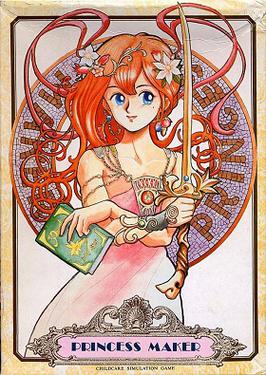

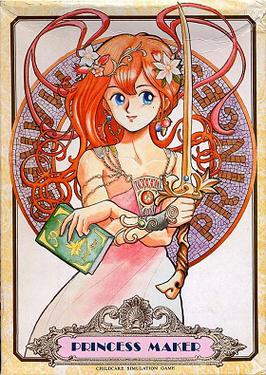
You inherit a war orphan, some vaguely mystical backstory, and the crushing responsibility of shepherding a small human (named Maria by default) through childhood into whatever kind of grown-up the game decides she becomes. Princess Maker's PS2 Refine Edition dresses up that basic premise with improved visuals and voice work, but underneath the satin gowns and helpful voice cues is a delightfully unforgiving system of numbers, timers, and social expectations. This is not a life-sim for the hands-off monarch; it's more like running a miniature kingdom of stat bars, seasonal wardrobes, and the occasional combat tournament. If you enjoy long-term planning, probabilistic outcomes, and the perverse joy of discovering one of 74 wildly divergent endings, this is a parenting sim that will sharpen your strategy skills - and your guilt-management algorithms.
At its core Princess Maker is a strategy puzzle dressed in frilly dresses. The challenge is less about reflexes and more about mastering constraints: time, actions, and limited funds. You don't micromanage every breath the daughter takes; instead you decide how to allocate her weeks, which courses she attends, which jobs she takes, and how to respond to events. Every choice nudges a web of stats - strength, intelligence, charm, piety, and popularity among others - and those numbers determine which of the 74 possible endings you'll unlock. The game rewards foresight. Set a goal (archbishop, general, cat-princess, or, yes, the occasional dark-side outcome) and map a path backward: what stats does that job require? Which seasonal event gives the best boost? Can you afford the extra course this term or do you need the income from a side job? Learning to reverse-engineer your desired ending is the primary cognitive task here. Resource management is the bread and butter challenge. In the original mechanics you can't bluntly buy affection with pocket money - that particular lever doesn't exist in the first game - so you must rely on scheduling, clothing choices, and events to swing popularity or mood. Money, however, remains vital: job wages buy training, clothing, and festival entries that unlock contests like the Harvest Festival's Combat Tournament and Miss Kingdom Contest. Those festivals are high-stakes gambits. Entering the Combat Tournament can raise combat-related stats and reputation if you win, but it's also a risk of injury or setback if you miscalculate. Likewise, the Miss Kingdom Contest is a popularity multiplier if your timing and dresses are right. Pattern recognition and statistical thinking are invaluable. After a few playthroughs you'll start to read the game's rhythms: which seasons favor certain training, when rivals or mentors appear, and how the daughter reacts to success or failure. The Refine Edition's added voice lines and visuals help interpret feedback, but it's still mostly about reading numbers and event text. There's a meta-skill to develop: hypothesis testing. Try a schedule that focuses on strength for a year, note outcomes, then reset to test charisma-focused training. The game practically begs you to experiment because those 74 endings aren't a list you can unlock without playing chess with the underlying systems. Decision-making under uncertainty is also a recurring test. Event outcomes, NPC opinions, and the daughter's mood can add randomness to otherwise sensible plans. You learn to hedge: diversify her training so a single failure doesn't collapse a career path, or bank reputation before attempting a risky contest. Emotional intelligence becomes an in-game skill too - responding to your daughter's mood can stabilize her attitude and avoid spirals into rebellion or stress that would sap training effectiveness. This isn't just window dressing; mood states feed back into performance, and ignoring them is a reliable route to mediocre endings. Long-term planning is rewarded but not guaranteed. Many endings are gated not only by stats but by the timing of choices and the presence or absence of specific events. The wardrobe system - surprisingly deep for a 1991-origin title - matters. You've got four outfits per season and clothes change with age, adding up to around 28 sets across the years. Dress choices influence contest outcomes and popularity checks; one of the more satisfying microchallenges is curating seasonal looks so that your daughter stands a fighting chance in a Miss Kingdom run while still maintaining enough coin for training and festival fees. There's also an element of social puzzle-solving. The daughter's marriage prospects, job success, and whether she ends up with children are all affected by a constellation of choices. Some endings are prestige-heavy (archbishop, prime minister), others are low-status or 'dark-side' outcomes (prostitute, crime lord), and figuring out the exact path to a rare ending requires both experimentation and a willingness to accept failure as data. The game's learning curve is steep but rewarding: a failed run isn't punishment so much as new information for the next attempt. Skill-wise, the game trains planning, budgeting, pattern recognition, risk management, and a kind of empathetic micromanagement. If you can tolerate spreadsheets with personality, you'll enjoy sharpening those skills here. For players expecting action or continuous hand-holding, the challenge can feel slow and opaque at first; for those who like figuring out systems and seeing a plan bear fruit over years in simulated time, it's a quiet masterpiece of emergent difficulty.
The Refine Edition on PS2 gives the original game a cosmetic polish that actually matters for gameplay clarity. Enhanced graphics and added voice work don't change the math, but they make feedback about events and character state easier to parse - which, in a stat-heavy game, is invaluable. Portraits and seasonal outfits look cleaner, and voice cues help you detect mood shifts you might have missed in the older text-only builds. The presentation isn't trying to wow you with 2000s-era spectacle; it's a tasteful facelift that improves readability and charm, which are the two visual skills this series needs most.
Princess Maker on PS2 is a strategy-sim masquerading as a fairy-tale parenting exercise. Its greatest challenge is mastering a dense, interlocking system of stats, events, and timing while working within tight resource and action constraints. You'll fail a lot, learn to read the game's feedback, and slowly build the intuition needed to steer Maria toward a desired outcome. The Refine Edition's audiovisual polish helps, but the core test is still cerebral: can you juggle training, money, social standing, and the occasional risky contest without breaking the metaphorical nanny? If that sounds like a good time, you'll find Princess Maker's difficulty deeply satisfying and frequently hilarious - especially when your well-laid plan collapses because you forgot to buy a seasonal dress. Score: 7/10 - clever, challenging, and oddly parental.
 Princess Debut on DS
 Fat Princess Adventures on PS4
 Princess Natasha on DS
 Persona 3 FES on PS2
 Pro Evolution Soccer 2015 on PS4
 MotoGP 19 on Switch
 Derby Stallion 04 on PS2












 Another SquareThought Site