

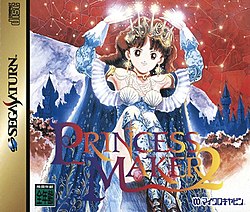

Princess Maker 2 is the sort of game that hands you a ten-year-old and a tiny medieval salary and says, 'Good luck, Dad.' Originally a 1993 Gainax experiment in parenting-as-gameplay, it arrived on PlayStation 2 as a later port of a peculiar, enduring classic. You play a celebrated war hero who is mysteriously gifted a celestial daughter, and the whole point is to shepherd her from age ten to eighteen. On the surface this sounds like a bizarre spreadsheet with anime art; played properly it becomes an oddly emotional study in cause-and-effect parenting and identity formation, with enough endings to make fate itself dizzy. The game is equal parts schedule manager, stat simulator, and morality lab, and its greatest trick is turning tiny weekly choices into full-blown character arcs.
Gameplay is gloriously simple in design but fiendishly complex in consequence. Every week you assign your daughter to work, study, train, adventure, or relax. Each activity nudges a constellation of visible stats like combat reputation, intelligence, affection, and hidden stats that unlock quirky events. There are part-time jobs, school terms, and adventure outings, and each of these is a small drama with long-term repercussions. The patron god you pick at the beginning sets a seed for personality: a Mars-born girl is predisposed to martial prowess, a Mercury-like patron might make her academically inclined. Those seeds are tiny, though; the real story is how your choices prune and coax her growth. The daughter herself is the game's protagonist in every meaningful sense. She does not have a ready-made destiny; she collects it. If you push her toward training, the fighting reputation climbs, her confidence puffs up, and late-game opportunities like becoming a general or royal guard appear. The combat arc is classics-friendly: early pain, floggings of morale, eventual competence and respect. Conversely, if you enroll her in classes and encourage culture, you cultivate an arc toward roles like scholar, courtier, or even an artist. The 'idle' or frivolous path leads to social endings like entertainer or, less glamorously, barmaid. The multiplicity of endings-74 in total-means the arcs are not binary but a spectrum of outcomes shaped by dozens of small choices. What puts the character analysis on steroids are the invisible stats and special events. The game drops moments where an NPC reacts, an old mentor returns, or a romance option surfaces. Those events behave like plot beats: a strict schedule might produce a daughter who never learns to trust, leading to cold, competent endings; a lenient, friend-like approach might generate warmth but also lack of discipline, yielding a happier but less prestigious adult life. The developer commentary at the time framed the game as giving players permission to do something they otherwise would not: fathers get to be the manager of domestic life, an odd reversal in the early 90s Japanese context. That reversal is itself a character pressure point - your avatar, the war hero, also has an arc of sorts. He begins as a public icon and becomes, through the act of raising, a private figure whose decisions define someone else. There are several archetypal parenting approaches the game lets you embody, each producing different arcs in the girl. The authoritarian route sculpts a disciplined warrior or austere noble; the permissive route tends to produce social butterflies and romantic endings; the pragmatic, work-heavy dad can create competent craftsmen or career women who are emotionally distant. The game's cruel and brilliant economy is that every choice feels morally neutral in the moment but narratively heavy in exile: sending her to a tavern job is expedient for cash but can pull her toward lower-prestige endings; investing in education drains funds but opens high-status careers. The player learns the differences between competence, affection, and prestige the hard way, and this is where character arcs become satisfying-because they feel earned. There is also an element of satire and social commentary buried inside the systems. Given the game's 1993 origin, some remarks about gender roles are dated and have sparked criticism; reviewers have pointed out thinly veiled sexist references and academic pushback. But the narrative ambition remains: Princess Maker 2 forces players to confront what kind of adult they want to make, and whether careerism, happiness, or social status matters more. It is an ethical sandbox masquerading as an anime babysitting sim.
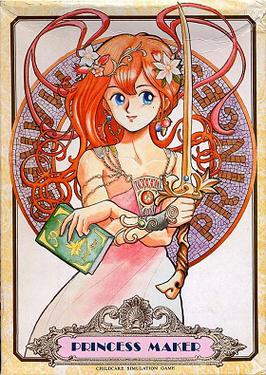
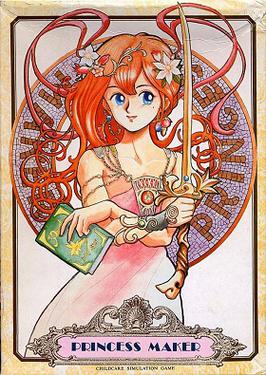
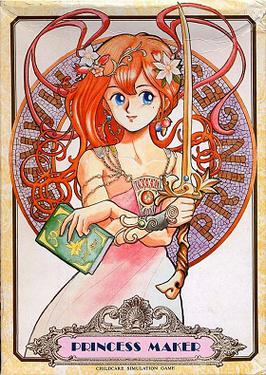
The original PC-9801 art established the game's anime identity: big expressive eyes, clear character designs, and layouts that read like a visual novel with stat bars. Critics praised the 'eye-catching' style for making the little domestic dramas feel cinematic. Later versions, including the PS2-era ports, redrew assets for modern resolutions. The Refine/Regeneration iterations cleaned up the lines and added a polished opening movie, but some retro critics lamented the loss of dithering and certain pixel charm. Translation issues in later ports have also occasionally undermined the emotional beats by mangling text or leaving some voiced endings untranslated. Still, the core artwork endures: the daughter is drawn with personality, and NPCs have the kind of visual shorthand that telegraphs their role in her arc-mentor, rival, suitor, or patron god-with pleasing clarity.
Princess Maker 2 on PS2 is a time machine that hands you responsibility, absurdity, and, if you play carefully, genuine narrative payoff. As a study in character and consequence it excels: the daughter is not a static avatar but a living outcome of your parenting philosophy, and the variety of arcs-royal, martial, romantic, tragic, or mundane-keeps replay value high. The interface and translation rough edges of some ports are a reminder of the game's age, and certain gendered jokes feel uncomfortable now, but those problems don't erase the odd tenderness at the game's core. If you are curious about how tiny administrative choices can spin into a full life, or if you secretly wanted to be a controlling yet emotionally invested dad in a fantasy kingdom, Princess Maker 2 will charm and occasionally disturb you in equal measure. It's a piece of gaming history with heart, quirks, and more endings than a soap opera, and it deserves an 8 out of 10 for ambition, character depth, and lasting weirdness.
 Princess Debut on DS
 Fat Princess Adventures on PS4
 Princess Natasha on DS
 DX Jinsei Game V on PlayStation
 Fantasy Life i: The Girl Who Steals Time – Nintendo Switch 2 Edition on Switch 2
 Jinsei Game DS on DS
 DX Jinsei Game IV on PlayStation
 Princess Maker: Yumemiru Yosei on PlayStation
 Princess Maker on PS2
 Princess Maker 4 on PS2
 Princess Maker 5 on PS2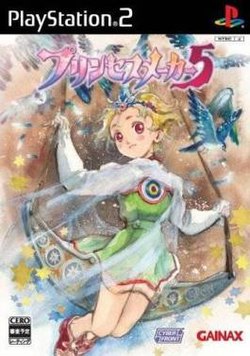












 Another SquareThought Site