

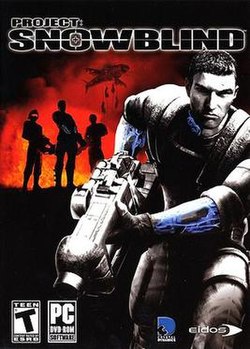

Project: Snowblind is Crystal Dynamics' cheeky first attempt at making you feel like a walking Swiss Army knife with mood swings. Set in a near-future Hong Kong under siege by the Republic, you play Nathan Frost, a soldier stitched back together with nanotech enhancements and enough attitude to make an augmented general nervous. The game keeps the plot brisk - EMP bombs, a megalomaniacal villain, and one final sprint to pull the plug on civilization-ending explosives - but what keeps this one interesting is the way it tests your mechanical and tactical skills rather than your patience for thirty-hour epics. Snowblind is short, punchy, and designed to throw a steady stream of combat puzzles at you, often asking you to decide how efficiently and creatively you can dispatch them.
Snowblind's DNA traces back to Deus Ex, but it's far more trigger-happy and far less sermon-y. Levels are largely linear, yet they rarely feel like a one-way hallway; designers give you multiple routes, side paths, and gadgety toys so you can approach confrontations in different styles. This is where the challenge lives: each encounter is a decision tree. Do you sprint in with primary fire and a grin, setting off a symphony of gunfire and grenades? Do you ghost through vents and side corridors like a competent ninja with a headset? Or do you fiddle with an Icepick to turn an entire patrol into your temporary bodyguards? The game rewards tactical thinking: how you combine weapons, augmentations, and environmental hacks determines how smoothly you get through a mission. At core, Snowblind is a shooter that asks you to be several types of player at once. Aim and recoil management are the baseline skills - the guns feel solid for a PS2-era shooter, and accurate headshots still win you fights faster than improvisational flamenco. But aim alone isn't enough. The augmentations that unlock over the campaign are the real toolbox, and learning when and how to use them is a skill curve worth investing in. Some augmentations are pure combat multipliers; others let you manipulate the battlefield. Using augmentations in tandem with weapon secondary fires - every weapon in the game has one - becomes a muscle memory exercise. One secondary fire spawns drone swarms that home in on targets. Another deploys an energy riot shield as a portable wall. Learning to weave these into your loadout and use them fluidly under pressure separates 'I got through it by accident' from 'I owned that area.' Hacking is not a mini-game so much as a weaponized convenience. The Icepick turns cameras, turrets, and robots into temporary allies or distractions. The skill here is timing and prioritization: which device do you hack first to create cover, which turret do you steal to thin enemy ranks, and which camera is better left untouched because it's bait? On higher intensity encounters, a well-timed turret hack can be the difference between a neat takedown and a frantic reload sequence that ends with you respawning and promising to never aggro that particular alleyway again. Grenades and secondary gadgetry push the player to think in zones. There are grenades that stun, ones that distract, and the riot-shield deployable that practically begs you to use it as mobile cover while you pick off enemies from behind. Driving vehicles shows up in a few missions and requires a different play muscle: spatial awareness and crude vehicular tactics. It's not Forza, but understanding how to get close, dismount, and clear a chokepoint with your human arsenal matters. Snowblind's multiplayer packaged many single-player toys - augmentations, vehicle skirmishes, the ability to hack battlefield hardware - into matches of up to sixteen players. Sadly, the modern PS2-era experience suffers from inactive communities today, but back when the servers hummed, these modes demanded teamwork, map knowledge, and a willingness to blend stealth and aggression. Difficulty in Snowblind is mostly tactical rather than punitive. You won't face unfair bullet-spongy bosses so much as cleverly layered encounters: mixed groups of turrets, robots, and human troops that force you to prioritize targets and use your toolkit effectively. The game nudges you to master resource management: ammo conservation, augmentation cooldown awareness, and choosing which secondary fire to use when. In short, the skills tested are aim, situational awareness, inventive gadget use, hacking timing, and adaptive tactics. If you like your FPS with a toolbox and a problem-solving vibe, Snowblind will feel like a gym for those skills.
Graphically, Snowblind sits comfortably in the PS2 aesthetic: functional, occasionally stylish, and never trying to sell you on photo-realism. Levels have enough variety - urban Hong Kong streets, Republic bunkers, and more enclosed installations - to keep the visuals fresh while shuffling you between combat scenarios. The effects for augmentations and secondary fires are where the game shows personality; drone swarms, energy walls, and hacked turrets all have readable visual cues that help you make split-second tactical decisions. The soundtrack, composed by Troels Brun Folmann, adds an orchestral and mildly eastern flavor that actually helps keep the tension high when you're juggling hacked turrets and sticky grenades. For players who care about modern graphical fidelity, it's dated. For players who care that visual feedback supports quick tactical choices, it does the job admirably.
If you strip Project: Snowblind down to its bones, it's a compact combat puzzle show where you are given progressively cooler tools and then graded on how creatively and efficiently you use them. The learning curve rewards players who want to master more than just the trigger: aim, use augmentations intelligently, time your hacks, optimize secondary fires, and read level geometry to exploit side paths. It's short and the multiplayer is largely historical dust on the PS2 at this point, but during its playtime the game keeps the challenge honest and entertaining. For anyone who enjoys FPS gameplay that pulls in stealth, gadgetry, and tactical thinking - and who won't mind a tight campaign rather than a sprawling one - Snowblind remains a satisfying test of reflexes and brainpower. Consider it a compact course in 'how to win fights using weird toys,' taught by a professor who prefers explosive demonstrations to lectures.
 Time Crisis: Project Titan on PlayStation
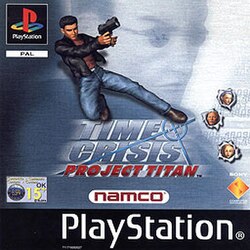 Project Awakening on PS4
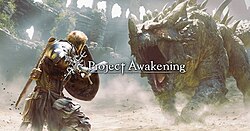 Warhammer 40,000: Boltgun 2 on Xbox Series X/S
 PixelJunk Shooter 2 on PS3
 Turok: Dinosaur Hunter on Switch
 Primal Carnage: Extinction on PS4
 Rise of the Tomb Raider on PS4
 Lara Croft and the Guardian of Light on PS3
 Legacy of Kain: Soul Reaver on PlayStation
 Perfect Dark on Xbox Series X/S
 Walt Disney World Quest: Magical Racing Tour on PlayStation












 Another SquareThought Site