

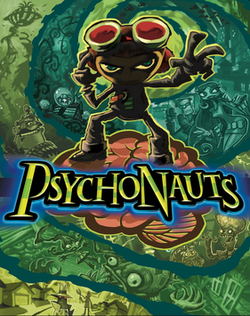

Psychonauts is that rare platformer that asks you to be part acrobat, part psychiatrist, and part Tetris master of mid-air telekinesis. On PS2 you play Razputin "Raz", a nimble runaway circus kid with psychic powers who sneaks into Whispering Rock Psychic Summer Camp and promptly starts breaking minds (in the helpful 'enter-other-people's-minds-to-fix-them' sense). The game's charm - its eccentric characters, imaginative mental worlds and sharp writing - is well known, but what I want to dig into is how the challenge feels on the PS2: what skills the game asks of you, where it pinches your thumbs, and when it rewards patience with glorious, goofy payoff.
Psychonauts dresses up classic 3D platforming in a neuroscience-themed costume and then asks you to perform. Early on you get the basics: running, jumping, and the familiar camera/analog dance of PS2-era control. Soon enough Raz acquires psychic tools - telekinesis, levitation, pyrokinesis, invisibility and more - and the game flips between action platforming, combat, and puzzle logic. Each power is more than a flashy toy; it becomes a mechanical language you must learn to speak. Telekinesis turns the environment into a physics puzzle (move crates, fling skulls, or place your own brain into a meat tank if you get carried away). Levitation retools platforming into a vertical skill test where momentum and patience matter. Invisibility and pyrokinesis are often the difference between charging an enemy head-on and choosing the stealthier or tactical route. If you enjoy being multi-skilled, Psychonauts will feel like a buffet. The game asks players to juggle three equipped powers while keeping all unlocked abilities available from a menu. You earn upgrades through PSI ranks and by finding hidden arrowheads, which encourages exploration and not just foot-dashing to the next plot marker. Exploration is its own skill: sniffing out figments, sorting emotional baggage, and hunting memory vaults all give you stat boosts and lore. The mental worlds reward players who read spaces and NPC chatter; the camp corridors change as characters' threads progress, so listening to the cast pays off both in story and secret rewards. Combat is rarely brutally complex, but it nudges you to combine powers instead of mashing 'attack'. Enemies known as censors will pester you in the minds you enter; tackling them efficiently means choosing the right power for the right target - pyrokinesis for clustered foes, telekinesis to remove hazards, invisibility to bypass patrols. A small economy of health and "astral projections" adds stakes: in mental worlds you have a limited number of respawns before being booted out and forced to re-enter, which means sloppy deaths can become time sinks. The camp store and collectibles let you buy extra health and projections, but good resource management matters, especially if you want to revisit levels to mop up missed collectibles without re-running the entire section. Platforming is where Psychonauts both delights and bites. Most levels scale neatly from leisurely learning puzzles to sharper tests of timing and precision, but then the infamous "Meat Circus" appears - a timed, high-precision gauntlet that feels like someone swapped the difficulty dial from "playful" to "servo-controlled nightmare". The Meat Circus earned complaints on release because it suddenly demands near-perfect jumps and frame-accurate timing that the rest of the game only gently alludes to. If you're the sort of player with iron reflexes and a zen-like tolerance for repeating segments, you'll love the intensity. If not, you'll feel it as a difficulty spike. Double Fine later tweaked this on re-releases, but on the original PS2 build it was a stiff final exam. Beyond twitch reflexes, the game expects puzzle logic and a taste for experimentation. Several mental worlds borrow point-and-click sensibilities: inventory items must be used in specific ways (the Milkman Conspiracy even makes you give G-men particular objects), and environmental shifts can reframe an earlier platforming problem into a solvable one. Spatial awareness is heavily rewarded: levels often warp gravity, change perspectives, and force you to think on three axes rather than one. You also need a little conversational literacy - overheard lines and changing NPC dialogue often hint at hidden routes or puzzle solutions. In short, Psychonauts demands platforming precision, adaptive combat thinking, inventory/puzzle logic, exploratory curiosity, and a measure of patience when the game deliberately warps your expectations.
Psychonauts never tried to trick you into thinking it's photorealism - which is good, because the PS2 would have laughed. Instead it leans full-throttle on a stylized, cartoonish art direction that makes the limitations sing. Each mental world is visually democratic: the Milkman Conspiracy is a suburban nightmare with warped gravity and featureless G-men, Lungfishopolis re-imagines you as a Kaiju stomping through a miniature city, and other minds look like an artist's fever dream put on display. On PS2 that art direction is a blessing - textures are blocky by modern standards, but the color palettes, silhouette design, and creative use of geometry overshadow raw fidelity. Level design is clever: verticality, visual cues, and set dressing often tell you where to go, and the game's aesthetic vocabulary helps you learn level rules quickly. Animation and voice work are solid, with Richard Horvitz's Raz delivering spiky, memorable vocal energy. The PS2 port by Budcat Creations holds up as a faithful translation; load times and occasional camera jank are the era-appropriate compromises, but bugs were never so common that they spoiled the game. Some reviewers noted unaddressed glitches and repetition late in the game, but those are small complaints compared to how memorable and distinct the brains you visit actually look and feel.
As a skill check, Psychonauts is a charmingly ambitious final exam. It rewards players who can switch mental gears: precise platformers will enjoy the levitation and timed sequences, puzzle lovers will adore the inventory puzzles and mental-world logic, and explorers will be gratified by the hidden upgrades that make you legitimately stronger. Its biggest gripe at launch - the Meat Circus spike - is the one time the game asks you to be a muscle-bound platforming robot when elsewhere it prefers curiosity and cleverness. If you accept that the PS2-era controls and camera have their wobbles, what you get is a unique blend of comedy, clever level design, and varied mechanical demands that still stands up. Psychonauts asks you to be patient, adaptable, and occasionally ruthless with your retry button; do that, and you'll graduate from camp feeling like an actual psychonaut - or at least like a kid with a very specific set of brain-hacking skills. Either way, it's worth the trip.
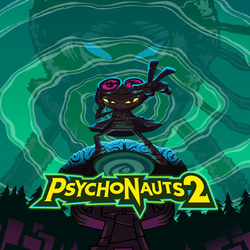 Psychonauts 2 on Xbox Series X/S
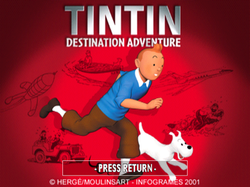
 Tintin: Destination Adventure on PlayStation
 Disney's Chicken Little: Ace in Action on PS2
 One Piece Grand Adventure on PS2
 Onimusha: Dawn of Dreams on PS2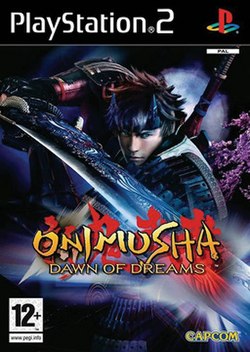












 Another SquareThought Site