

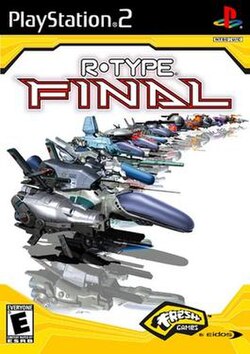

R-Type Final arrives on the PlayStation 2 wearing the weathered jacket of a veteran and the stubborn grin of a fighter who knows every alley in town. Marketed and discussed at the time as the supposed last mainline entry in Irem's venerable R-Type series, Final returns the franchise to its roots: slow, deliberate horizontal blasting with an eye for precise design and a contempt for cheap hand-holding. The game's premise is lean and purposefully archival. Decades of war with the Bydo set the scene, and the opening mission-investigating a broken space colony after Operation Last Dance-feels less like a plot hook than a catalog entry in a galactic museum of warfare. Levels are presented as research dossiers and unlocked content is framed as in-universe artifacts. It is a game that takes its lineage seriously, and in doing so it risks alienating players who equate modern polish with value. Fans of old-school shooters, however, will find a strangely comforting meatiness to its mechanics and a staggering quantity of ships and options to tinker with. The result is a PS2 title that behaves like a late-night arcade cabinet given a surgical upgrade: familiar, unforgiving, and obsessively detailed.
R-Type Final's central conceit is both ambitious and delightfully obsessive. The package contains 101 playable ships, a roster that reads like an encyclopedia for people who think spaceship appendages are a personality trait. Ships include reworkings of classic R-Type designs alongside wholly new craft, and unlocking them is not a matter of brute force but of navigation through a branching R Museum interface that doubles as both menu and lore repository. The museum structure is more than window-dressing; each playthrough is framed as research on the Bydo, and successful runs open galleries, plaques, and ship histories. There's even a cheeky detail where the PS2's internal clock is folded into a ship's commemorative plaque, giving some unlocks a faux-dated rollout year-an aesthetic flourish that underlines how much this game enjoys its own myth-making. Mechanically, Final is an exercise in disciplined options and predictable brutality. The familiar Force device returns as a core tactical element, tethered support weapons and grappling orbital units that reward planning over reflexive spraying. Movement and firing are weighty; there is no slippery modern float here. Positioning is king: every enemy formation and environmental hazard is designed to be read and countered rather than overwhelmed. That design philosophy extends into the branching level routes. The game encourages repeated runs by offering alternate pathways and endings-one route leads to an ultimate, sacrificial confrontation with the heart of the Bydo, another transforms your ship into a Bydo and pits you against friends-turned-foes, while a final route hurls you into a relentless future wave with permadeath-like stakes. These divergent outcomes give the single-player campaign genuine replay value. Players who scoff at the notion of 101 ships will be eased by the fact that many are incremental variations, but the variety still keeps discovery compelling. Difficulty is not window-dressed: this is R-Type in the sense of 'you will learn the screen, then survive it.' Enemy patterns are often telegraphed but punishing; bosses are large, ornate set-pieces that eat mistakes for breakfast. The reward loop is classic: die, learn, return with knowledge and perhaps a different ship. There is no multiplayer crutch and no leveling system-the challenge and the player's skill are the only currencies. For a gamer steeped in the 1990s aesthetic of mastery-over-arcade-rivalry, this is precisely the point. For newcomers, it may feel like being schooled by a professor with no patience for excuses, but the educational process is oddly gratifying. The game's presentation of lore-poetry preludes to levels and museum unlocks-gives each run a sense of progress beyond simple score-chasing. It turns grimy, mechanical fun into something that feels catalogued and consequential.
On the PlayStation 2, R-Type Final opts to honor two-dimensional traditions while embracing the consoles modest 3D capabilities for effects and set dressing. Sprites and stage elements are detailed and lovingly rendered; enemies are often grotesque biomechanical sculptures that recall the franchise's Lovecraftian-meets-industrial design sense. Backgrounds are layered and occasionally sumptuous, but never at the expense of clarity-the foreground action remains readable even when the screen becomes densely populated. Bosses, in particular, are shown off like heavy-metal album covers with thrice the articulation: articulated parts, moving plates, and explosive, satisfying failure states. Performance is stable and the frame holds steady during the game's usual chaos, which is crucial for a title that predicates itself on precise movement. The PS2's hardware is used wisely rather than ostentatiously; lighting and particle effects are sparing but effective, and the museum interfaces and plaques feel tactile. The art direction leans toward the grim and functional rather than bright and cartoony, which suits the game's militaristic research tone. Sound design and Yuki Iwai's compositions complement the visuals neatly-music is serviceable, often pulsing with urgency, and sound effects give each weapon and explosion a satisfying weight. Final doesn't try to drown you in cinematic spectacle; it presents a clear, focused battlefield designed for examination and conquest.
R-Type Final is not a game that apologizes for being old-school; it revels in it. For anyone who remembers the arcade days and the patient, ritualistic learning of a shoot 'em up's secret language, Final is a measured, loving send-off to a lineage of games that valued design rigour over theatrical accessibility. Critics at the time reflected that balance-reviews aggregated to generally favorable scores, and outlets like Edge gave it solid marks, even listing it among influential titles. The branching routes, 101-ship roster, and R Museum's obsessive unlockables give the package depth beyond a single run, encouraging players to experiment with loadouts and routes. Its difficulty will be a barrier for some, and newcomers seeking crowd-pleasing modern conveniences may find it austere. For the intended audience-players interested in exacting design, discovery, and an aesthetic that treats spaceships like heirlooms-R-Type Final remains a commendable and satisfying experience. It is a PS2 shooter that respects its roots and rewards those who are willing to learn the rules instead of demanding that the rules learn them.
 R-Type Final 2 on PS4
 Theatrhythm Final Bar Line on Switch
 PixelJunk Shooter 2 on PS3
 PixelJunk Shooter on PS3
 Time Crisis on PlayStation
 Tom Clancy's Rainbow Six: Vegas on PS3
 Irem Collection Vol. 2 on Switch
 Irem Collection Vol. 1 on Switch
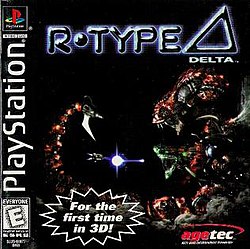
 R-Type Delta on PlayStation
 R-Types on PlayStation
 Arcade Archives: 10-Yard Fight on PS4












 Another SquareThought Site