



Relish Rampage arrives like a cartoon fever dream with a fruity premise: pickles from outer space, Mojo Jojo election hijinks, and three pint-sized superheroes tasked with saving Townsville. On paper it is a tidy licensed action-adventure for the PlayStation 2 - 3D levels, flying combat, puzzles, and boss encounters featuring familiar villains. In practice the game is a textbook example of how several fundamental technical systems can undercut a solid idea. This review focuses on the nuts and bolts: controls, camera, collision, mission structure, and rendering. If you care about why the experience feels off under your thumbs, read on; if you just want to know whether the city looks cute, the short answer is yes.
Relish Rampage centers on flying, puzzle solving, and chunk-sized levels that ask you to deliver ballots and pickles while fending off gangs and aliens. The control model attempts to be accessible - one character select, basic attack, and a flying movement scheme - but execution is where the wheels fall off. Multiple reviewers summarized the problem as 'exceedingly flawed' controls, and that diagnosis matches what you feel while playing: directional inputs produce inconsistent velocity and turning feels imprecise. The analog stick often seems to control a momentum-driven body rather than a nimble flying teenager; acceleration and deceleration curves are tuned in a way that makes small positional adjustments painful, which is a problem when much of the game is locating tiny mission items or threading tight spaces between buildings. Camera mechanics compound the control problems. The camera is frequently disorienting, snapping or rotating unpredictably during platforming sequences and combat. One contemporary critic compared the camera behavior to retro Mode 7 wobbliness, and that comparison is apt: the camera's pivoting and zooming lack smooth damping and do not always respect occlusion, so it both clips through geometry and swings in ways that obstruct player sightlines. The result is a nauseating sense of spatial disconnection - not great when your primary tool is three-dimensional flight. Poor camera framing also amplifies collision and targeting issues; enemies will appear off-screen until they land directly in front of you, which makes combat feel unfair rather than challenging. Collision detection and hit registration are basic but flawed. Colliders on the girls, environment geometry, and enemy models don't always line up, which leads to frustrating moments where attacks appear to pass through opponents or where the player collides with invisible boundaries. Level geometry is described by some outlets as 'big cubic polygons,' and that translates into low-detail meshes with broad flat surfaces and chunky LOD transitions. Those simplified collision meshes may have helped performance but also created a brittle interaction layer: flying close to a rooftop can cause abrupt pushes or snagging, and enemies occasionally get stuck on geometry, breaking encounter scripting. Mission design trends toward repetition. The loop generally asks you to fly from point A to point B, clear enemies, perform a small puzzle, and then repeat with slight variations. There are boss battles, but they are criticized as boring and under-animated; boss characters often exhibit limited animation cycles and predictable telegraphs, which removes the thrill of a showpiece fight. Without varied AI patterns or advanced encounter scripting, bosses become endurance tests rather than tactical puzzles. The game's length is also short by modern - and even contemporary - standards; mission variety and pacing could have compensated for brevity, but the repetitive mission structure makes the playtime feel artificially truncated. Where the game does score technical wins is in its core avatar work. The Powerpuff Girls themselves are well-designed and well-animated relative to the rest of the cast: character models are faithful to the source and their idle and attack animations read clearly, which helps maintain a semblance of charm even when other systems are failing. The city of Townsville is also populated and visually lively by virtue of design choices such as NPC placement and animated set dressing. Sadly, those positive elements highlight the negatives: good asset design sits on top of a shaky runtime that can't fully support it. Overall, the gameplay experience is a mixture of competent character art and poorly executed fundamental systems; when the camera, controls, and collision align the game can feel tolerable, but those moments are too sporadic to salvage the whole.
Technically, Relish Rampage sits in the early PS2 era aesthetic: chunky polygons, modest texture resolution, and simple shader work. The environment geometry leans toward low polycounts with large, flat faces - the sort of architecture that reviewers described as cubic and simplistic. That isn't inherently bad for a licensed title aimed at younger players, but the game suffers from inconsistent LOD transitions and pop-in that undermine environmental cohesion. Texture filtering and mipmapping do their job but are clearly constrained by memory budgets: materials are simple, and fine detail is absent except on character faces and some key set pieces. Animation is a mixed bag. The three protagonists benefit from tighter rigging and more expressive cycles, which helps the player feel connected to the on-screen avatars. NPCs, bosses, and many secondary enemies are animated sparsely; limited keyframe sets and looping cycles make larger encounters feel static. Bosses in particular appear under-animated, which weakens their perceived threat and the cinematic payoff of these fights. Lighting is functional rather than ambitious - baked ambient occlusion-style shading with a few dynamic lights for effects - and draw distance is tuned conservatively to protect performance, which keeps the frame rate generally stable but at the expense of visual depth. Performance-wise, published accounts and reviews focus on design and camera rather than catastrophic technical failures like frequent frame drops or crashes, implying the game is serviceable on the PS2 hardware. That said, smoothness of experience is undermined more by gameplay-affecting systems than raw frame-rate numbers: a stable 30 fps won't salvage motion sickness induced by a jerky camera or save a player from input imprecision. On the plus side, the art direction remains faithful to the cartoon, and the city does feel lively - which is probably why some outlets praised the visual presentation of the girls and Townsville despite the mechanical shortcomings.
Relish Rampage is a classic licensed-game paradox: the license gives it personality and an audience, the art team gives it charm, but core technical systems - controls, camera, collision, and mission scripting - are undercooked. If you are nostalgic for the Powerpuff Girls and want to see Blossom, Bubbles, and Buttercup rendered in 3D on a PS2, you'll get moments of delight; the character models and set dressing capture the source material's energy. If you care about how a game feels to control, how encounters are choreographed, or how a camera frames action, this title will test your patience. Critics at the time were blunt for good reason: repetitive missions, boring boss fights, and disorienting camera work make the experience short and often frustrating. The game isn't unplayable - it just never achieves the technical harmony needed to consistently be fun. Give it a curious rental or a budget-bin pick if you love the franchise; treat it as a case study in how a few flawed systems can sink an otherwise appealing licensed concept.
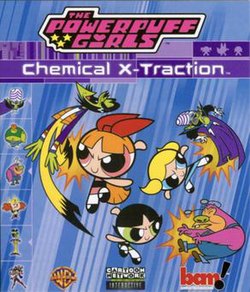 Cy Girls on PS2
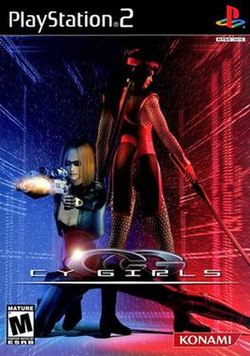 Malice on PS2
 Tintin: Destination Adventure on PlayStation
 Disney's Chicken Little: Ace in Action on PS2
 One Piece Grand Adventure on PS2
 Taiko no Tatsujin: Dokodon! Mystery Adventure on Switch












 Another SquareThought Site