

 Oct 2011
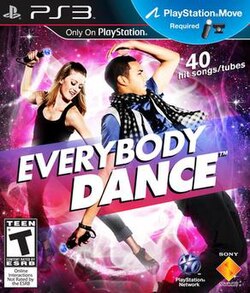

DanceStar Party, released as Everybody Dance in some regions, is London Studio's 2011 PlayStation 3 spin-off from the SingStar Dance lineage. Built around the PlayStation Move controller, it wears its purpose on its sleeve: translate your limbs into game-recognizable moves and reward you for rhythm and flair. The title positions itself between casual party fodder and lightweight exergaming, offering single-player and multiplayer modes plus a sprawling regionalized track list. On paper the components align - licensed pop and dance tracks, motion controls, and party features - but the execution is a matter of how well the software interprets human motion, how the scoring communicates accuracy, and whether the audiovisual feedback keeps players moving instead of confused. This review inspects DanceStar Party from a technical angle: how the Move input is interpreted, how the game's choreography and scoring pipeline behave, where the UI and audio choices help or hinder, and how those elements combine into a party game that aims to be as much about fun as it is about accurate motion sensing.
At the core of DanceStar Party is a simple technical premise: use a PlayStation Move wand as the player's motion input and evaluate gestures against pre-authored choreography. The game inherits the motion-led DNA of SingStar Dance, but trades vocal pitch detection for spacial-temporal gesture recognition. The Move controller provides a single tracked position and orientation relative to the PlayStation Eye and inertial sensors; the game therefore relies on relatively low-dimensional input compared to full-body camera rigs. That constrains what the detection system can and cannot do - developers must design choreography and scoring windows that are forgiving of occlusion, sensor drift, and the limited fidelity of a single handheld device. In practice DanceStar Party implements a gesture-matching pipeline that prioritizes clear cues over subtle technique. Moves are communicated through on-screen silhouettes and prompts that indicate direction, speed, and timing. The hit windows are tuned for accessibility: early players will notice generous timing windows and forgiving spatial thresholds. That choice keeps the onboarding curve shallow for party environments, but it is also the source of the most frequent criticism: the score-based system occasionally reads as opaque. IGN called out the scoring as a pain point, and technically this is understandable - when detection thresholds are widened to accommodate variability, the granularity of feedback drops. If the game reports a numeric score without granular per-move diagnostics (e.g., "your wrist angle was off by X degrees" or an explicit combo/precision meter), players perceive the system as arbitrary even when the underlying classifier is doing exactly what it was designed to do. Multiplayer is where DanceStar Party leverages its technical architecture well. Because Move only needs to identify hand trajectories and relative timing, local multiplayer scales without enormous additional computational cost. The game supports competitive and cooperative modes, and latency between two Move controllers is negligible on a properly configured PS3 with a calibrated camera. Calibration itself is straightforward but necessary: the PlayStation Eye's field of view and lighting drastically affect tracking stability, so the game includes a calibration step (position the camera, set the player distance, wave the wand) that actually matters. Poor lighting or a cluttered background will introduce jitter and occasional misreads, so the technical advice from repeated playtests is to treat the calibration step as sacred - skip it and you'll pay for it with misdetected spins and phantom step inputs. Song selection and region-specific licensing introduce another layer of engineering considerations. The title ships with a large, diverse playlist spanning eras and genres; however, the document indicates regional differences for many tracks. That means the release build had to contain logic for territory gating and possibly multiple audio packs. On-disc memory budget and load-streaming strategies come into play: the game streams audio and choreography assets in sync, and the PS3's I/O constraints demand efficient asset packing. On a technical level, DanceStar Party gets this right - track transitions are smooth, and choreography cues remain in sync with the beat, which suggests robust timing buffers and prefetch heuristics. There are no notable audio desyncs in typical play, a sign that the game's audio pipeline prioritizes low-latency playback and accurate timecode alignment between song and cue sequence. Where the title shows its age is in the depth of move recognition. Because it relies on a single controller and not full skeleton tracking, dance routines are built around arm gestures and positional markers rather than nuanced footwork. That design decision is understandable given Move's hardware but it limits the game's capacity to reward genuine dance technique; instead it rewards rhythm, timing, and expressive arm motion. For players seeking a simulation of choreography that judges foot placement or hip movement, DanceStar Party will feel shallow. For social players, this shallow-but-stable recognition is actually a feature: it favors spectacle over precision and keeps the party going. The game also flirted with an economical DLC model in the broader Everybody Dance family. The follow-up products included Everybody Dance Digital - a free-to-play entry where songs were purchased in packs - indicating that London Studio and Sony expected ongoing content updates. From an engineering standpoint, that implies a backend for transactions, content delivery, and regional licensing checks - reasonable moves for a music-led franchise, and forward-looking in the context of 2011 console ecosystems.
Visually the game opts for clarity over photorealism. Stage environments, dancer avatars, and UI elements are designed to maximize silhouette contrast and immediate legibility, which is the correct technical priority for a motion-detection title. The graphics pipeline emphasizes high-contrast choreography markers and simplified character rigs so that a player's eye can quickly map their own motion to the on-screen prompts. On PS3 hardware this approach helps maintain steady frame pacing and predictable rendering latency: fewer shader-heavy effects means the GPU can consistently hit the target frame budget, which in turn stabilizes the perceived responsiveness of Move inputs. Motion-feedback latency is a subtle but critical technical vector in dance games - when visuals lag, players lose the beat. DanceStar Party's minimalist visual choices reduce that risk. Animation quality is competent: animated choreographers and background dancers sell the moves without introducing visual clutter that could confuse gesture detection. The UI is functional, with readable text and large icons - again, by design, because fast comprehension beats decorative fidelity during a party set. The package isn't aiming to wow with AAA graphical prowess; instead it prioritizes deterministic visual feedback, predictable frame timing, and high-contrast presentation so the control->response loop remains tight.
DanceStar Party is a technically pragmatic party game. London Studio accepted the constraints of PlayStation Move hardware and built choreography, UI, and audio systems around those limits. The result is a title that is approachable, reliable in typical living-room conditions, and tuned for multiplayer fun rather than technical virtuosity. Critics' middling aggregate scores (Metacritic: 66/100, IGN: 6.5/10) reflect the trade-offs: the motion detection is forgiving (good for casual players, frustrating for precision-seekers), the scoring system can feel nebulous at times, and the game's depth is intentionally capped by the single-wand input model. If you want a dance product that prioritizes party accessibility, robust audio-cue syncing, and a massive, region-aware song list - and you're prepared to accept simplified gesture recognition and a scoring system that favors feel over forensic feedback - DanceStar Party is a reasonable pick. If you want a dance game that will grade you like a motion-capture judge, you're better off looking elsewhere. For its stated aims, and given the PlayStation 3/Move landscape of 2011, DanceStar Party mostly delivers; it just occasionally reminds you that detecting human grace with a glowing wand is more art than science.
 DanceStar Digital on PS3
 Lego Party on PS5
 Pop'n Music 9 on PS2
 Pop'n Music 11 on PS2
 PixelJunk 4am on PS3
 Pop'n Music 7 on PS2
 Wonderbook: Book of Potions on PS3
 Tori-Emaki on PS3
 Wonderbook: Diggs Nightcrawler on PS3
 PlayStation Home on PS3
 Everybody Dance 3 on PS3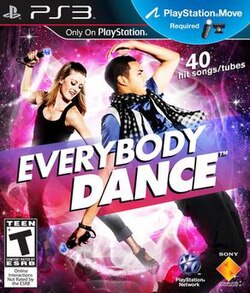










 Another SquareThought Site