

 Aug 2025
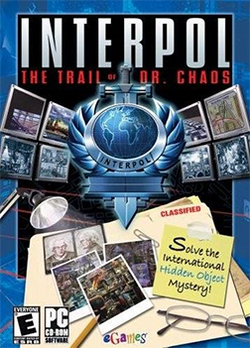

Interpol: The Trail of Dr. Chaos is the sort of game that sounds like it should come with a trench coat and a magnifying glass. The box art promises international intrigue, a dastardly villain named Dr. Chaos and the faint whiff of actually competent law enforcement. What the PlayStation 3 actually delivers is a single-player, seek-and-find puzzle experience that seems to have been designed around the noble principle of Minimal Expectations. Developed by TikGames and shepherded onto consoles by Sierra Online for XBLA (then ported to PSN), the title originally appeared on PC and Mac in 2007 before making the brief leap to living-room controllers in 2009. Critics were largely underwhelmed; Metacritic scores hover in the high 40s for the PS3 version, and the review mosaic is a polite way of saying 'not recommended unless you like frustrations that look like bargains.'
If you enjoy poking at static screens trying to distinguish a suspiciously pixelated hat from a suspiciously pixelated background, Interpol is your kind of mild masochism. The core loop is classic hidden-object: the game presents scenes and asks you to find things, sometimes with a detective-y spin that pretends these objects are integral to thwarting a man named Dr. Chaos. That spin is largely cosmetic. Puzzles appear to be a grab-bag of seek-and-find lists and occasional logic bits that never quite commit to being clever or annoying in a way that's charming. Instead they opt for the lukewarm middle ground of inconsistency. The word 'strategy' shows up in the marketing, and the game obligingly winks in that direction by sprinkling modest resource-management or progression elements across certain stages. This is not Civilization by stealth; it's more like a cup of chamomile tea calling itself an espresso. You may plan a route through different scenes or choose which cases to pursue next, and there is a thin thread of consequence to your choices. The result is enough structure to make the proceedings feel like a game rather than a slideshow, but not enough depth to satisfy anyone who prefers their strategy with actual strategy in it. Controls transfer the hidden-object formula to the DualShock reasonably well. Using a thumbstick and button presses to interrogate screens is perfectly serviceable, although the very existence of this setup raises the central design question the critics asked: why force a genre built for mouse-and-click systems to adapt to a console environment that adds nothing but awkwardness? IGN summed this up bluntly: the title is 'good for a few short bursts of seek-and-find fun, but it's just not a game that's very well suited to the console.' That rings true in practice; sessions are bite-sized, and those bites often taste like they were chosen from the discount bin. The pacing is arranged around short challenges rather than long detective sagas, producing a game best played between more interesting games or while avoiding more interesting responsibilities. Where Interpol really stumbles is in its inconsistency. One puzzle might reward careful observation with a satisfying 'aha,' and the next will hand you a list of items that are either absurdly obvious or maddeningly obscured by muddy images. This rollercoaster of effort versus payoff makes the experience feel like a compilation of prototypes rather than a polished title. A handful of outlets-TeamXbox being the notable outlier with a positive view-found enough charm and variety to recommend it to casual players. Most critics did not. The reviews skew negative across the board: Destructoid and GameRevolution practically resent its existence, while GameSpot and IGN land at middling scores and point to shaky production values and inconsistent puzzles as the main problems. If you are the kind of player who enjoys hidden-object work and is willing to forgive rough edges for short bursts of amusement, Interpol might pass some spare time. If you expect detective fiction, robust puzzle design or console-optimised interaction, you'll probably leave the PS3 feeling like you purchased a magnifying glass that only finds dust.
Visuals are the most frequently complained-about ingredient in any conversation about this game. Much of Interpol's aesthetic is composed of photographic or photo-like scenes, which is a wise choice for hidden-object games because reality provides a lot of things to hide behind. Unfortunately, the fidelity on the PS3 release is poor enough that the photos rarely feel crisp. IGN explicitly called out the poor image resolution, and that complaint is hard to refute when you spend a significant portion of screen time squinting at textures that look like they were stretched over a memory of a memory. The production values feel frugal throughout. Background art, when it isn't actively boring, is often passable as 'functional' rather than evocative. Animations are minimal. There are moments that aspire to cinematic flair-title cards, brief cutscenes, the occasional dramatic zoom-but they are produced with the enthusiasm of someone volunteering to run slides for a high school play. Sound design hovers in the same territory: competent but forgettable. Music tries to supply atmosphere but mostly serves as polite elevator ambience. The overall audiovisual package has the practical advantage of helping you focus on searching rather than admiring, which would be useful if the searching itself were better calibrated. Instead, the low resolution and inconsistent art direction frequently conspire to make the act of finding items more frustrating than fun.
Interpol: The Trail of Dr. Chaos for PlayStation 3 is a textbook example of a game that knows what it wants to be and reaches about halfway there. It successfully transports the hidden-object formula to the living room, but it does so without the polish, resolution or puzzle consistency required to make the trip worthwhile for more than a few casual bursts. Critics mostly agreed, leaving it with aggregate scores in the high 40s on Metacritic and a scatter of individual reviews ranging from mildly positive to actively hostile. There is a small audience who will find comfort in the straightforward, no-surprises design: people who like short, undemanding sessions of 'find the obscure thing' and who aren't bothered by gritty visuals or a patchwork of puzzle quality. Everyone else should treat this like a very minor case file-interesting for a page or two, not worth staking your badge on. If you're buying a PS3 game to sink into a mystery that unfolds like a gripping novel, move along. If you need something that will occupy fifteen minutes while you wait for dinner, and you don't mind fuzzy photos and uneven challenges, Interpol will do that job without complaint. My recommendation: look at the user reviews, compare a sane price, and then decide whether you're in the mood for a detective experience that's more 'light-duty search' than 'thrilling investigation.' Score: 4.8/10 - an adequate tool for killing time, not a competent crimefighter.
 Just Cause 2 on PS3
 Stranger of Paradise: Final Fantasy Origin on PS5
 Puzzle by Nikoli 4: on PS4
 Puzzle Kingdoms on DS
 Puzzle de Harvest Moon on DS
 Puzzle Quest: Galactrix on DS










 Another SquareThought Site