

 Oct 2008
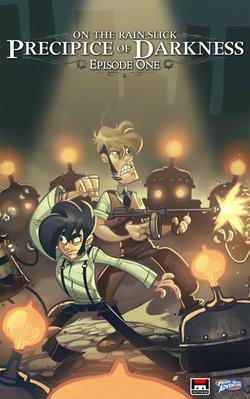

Episode Two of Penny Arcade's Precipice of Darkness series arrives like a prankishly polite steam-powered elephant: loud, insistently whimsical, and oddly determined to crush a few sanity meters along the way. On PS3 the package is the same eccentric blend of page-comic interludes and clunky-but-charming 3D exploration seen on other platforms, but what really gives this chapter its heartbeat is the personality-led story. If you bought this for witty banter and grotesque robotic citrus assaults, you're in the right line. If you bought it because you expected a classic RPG arc with miles of stat menus and deep player-driven agency, you'll be... amused and occasionally impatient. The core question I want to answer in this review: does Episode Two grow its characters in ways that justify sticking around for their weird little tragedies and punchlines? Spoiler: it mostly does, because when the game turns sincere it does so with the awkward confidence of someone trying to hug a galaxy.
Episode Two keeps the gameplay formula tight to the series' peculiar identity: a blend of point-and-click-ish item quests and real-time, timing-based battles. On PS3 that means using the DualShock to prod inventory hotspots, follow Tycho and Gabe as they make mistakes only comic archetypes could love, and execute the Active Time Battle-like exchanges where a well-timed button press can turn a near-defeat into a standing ovation by your friends (and arguably, the player). The puzzles are predominantly seek-and-find affairs: collect spider silk here, lift a truck engine there, harvest the soul of one creatively inconvenient mime if you skipped that in Episode One. Combat demands attention to timing rather than micro-managing gear, which suits the story-driven pacing: fights are dramatic punctuation marks not the main chapter headings. Where Episode Two stands out mechanically is how those encounters and fetch quests intersect with character beats. The sanitarium sequence is an elegant example: it forces the trio into situations that are both mechanically interesting (resisting drug effects with Twisp and Catsby's absurd assistance, dealing with lockdowns, harvesting giant spiders) and narratively revealing. The combat and puzzles function as character tests. When the game locks your party behind Strengthium doors, it isn't just a gate to a bonus area - it's a literal and metaphorical barrier exposing Brahe family madness, the protagonist's tenuous domestic stability, and Anne-Claire's knack for explosive improvisation. I have to give credit to the game's design for using the player's silence as a narrative tool. The customizable protagonist is often a straight man to Tycho and Gabe's comic tragedy and bravado; this makes the Player's arc subtle but significant. They start as a resourceful everyperson whose home is repeatedly torched, but by the World's Fair climax they are active in the group's survival and the retrieval of the Necrowombicon. The PS3 iteration doesn't change these beats, but controller feel and the console's slightly sedate load times mean the tactile rhythm of puzzle-solving can feel smoother than a patchwork tent-house of code. There are, of course, rough edges. The pacing can feel episodic in the worst way: long stretches of item collection that lean on charm to carry them through rather than mechanical depth. Some boss fights are more spectacle than strategy, and though Anne-Claire's giant doll-piloting set-piece is visually hilarious and narratively satisfying, it tips into 'you are here to watch' more than 'you are here to participate.' That said, Episode Two is smart about when it lets gameplay take the wheel and when it needs the characters to drive the bus straight into a cosmic orange.
The game's aesthetic is a deliberate two-tone: 3D environments and models for exploration and battles, interrupted by richly rendered 2D panels and comics that punctuate important beats. On PS3 the visuals are competent, not revolutionary. Character models are blocky enough to remind you this wasn't made with next-gen photorealism in mind, but the art direction - the noodle-y expressions, the grimy steampunk fixtures, and the unapologetically silly Fruit Fucker robots - sells every scene. Cinematics unfold like Penny Arcade comics animated with a budget and a wink. Episode Two's palette leans into dingy World's Fair grime and sanitarium sterility, then explodes into neon horror for the Fruit Fucker Prime sequence. The doll-mecha piloted by Anne-Claire is the high point: the absurd silhouette and the way it stomps the stage is a visual payoff to the gadgeteering teasing the game has been doing. The game also deploys Lovecraftian imagery with the same irreverent brush it uses for punchlines; Yog Kathak looks like a steam-punk deity who stayed up too late reading manifestos and now drinks his feelings. Technical shoe-leather is visible - animations aren't always buttery, and some textures read like they were designed by nostalgic octogenarians - but those limitations are part of the game's identity instead of a betrayal of it. On PS3 the experience is stable enough that the art and comic beats remain the main attraction.
Episode Two isn't trying to be the moral center of gaming; it's trying to be a very specific kind of midnight radio play where loud banjo riffs and eldritch symbolism make out in the back seat. That affects how its character arcs land. Tycho's arc deepens: the comedy around his obsessive studiousness folds into genuine dread and familial tragedy as the sanitarium sequences reveal the Brahe family's generational brush with madness. He flips between being a self-important apocalyptic scholar and someone silently terrified of the patterns he can't stop seeing - a duality that Episode Two uses to great effect when it needs to switch from sarcastic commentary to sincere stakes. Gabe is the game's emotional kinetic energy: enough swagger to be dangerous, enough cluelessness to spark laugh-out-loud moments, and a surprising capacity for loyalty that keeps him from being cartoonishly disposable. His pie-to-fire micro-arc is goofy on the surface and reveals a deeper comedic trait: Gabe is a person whose mistakes leave smoke. He grows in Episode Two by being constant where others falter. Anne-Claire is easily the MVP of agency. Introduced as a mechanically gifted niece and kept from deus ex machina territory, she becomes the character who both theorizes and acts. Her evolution from tinkering aunt-in-the-basement to mecha-doll pilot is practical, earned, and unexpectedly touching: she doesn't just save the day - she demonstrates that resourcefulness and affection can be mechanically articulated in a game world. Her arc is the show's promise that brains, not arcana, can topple gods when paired with the right truck engine. The villains are satisfyingly theatrical. Dr. Crazoir evolves from imprisoned genius to the redeemed font of exposition, while Dr. Wolfington's sadistic zoological rackets make him a grotesque mirror to Tycho's family tragedy. Mordo von Mundo ("M") exemplifies how the series blends petty ambition with cosmic stakes: he's motivated by being an outcast scientist who turns to stolen demonic designs to be taken seriously. The reveal of Dr. Raven Darktalon Blood as Dr. Blood injects the ending with a righteous ambiguity: is he a hero in disguise, or something more complicated? The game plays that ambiguity as a twist that is both narratively satisfying and thematically consistent: in a world where science and arcana are indistinguishable, identity is also a tool. If Episode Two has a flaw, it's that the Player character - for all the ways the game tries to fold them into the narrative - remains deliberately thin because of the customizable protagonist design. That choice kept the door open for later episodes to shift perspective, but in the immediate arc, it makes the player a mirror that other characters reflect off of rather than a fully realized person. Zeboyd Games' later decision to remove the Player from Episode Three entirely (in the reworked series) underscores how central this quandary is to the series' identity. Commercially, Episode Two's reception was decent critically but underwhelming in sales compared to Episode One. Creative risks like leaning into the world-building and escalating the stakes were appreciated by critics but apparently not enough to sustain the episodic model at the time, and Hothead ultimately moved on. That history is part of the game's charm now: it's a snapshot of an ambitious experiment that intermittently succeeds spectacularly. On PS3, Episode Two is worth playing for anyone who values character over grind, jokes that can turn unexpectedly bleak, and the sensation of being part of a ridiculous conspiracy that smells faintly of machine oil and pie. It's funny, it sometimes gets serious, and when it decides to be sincere the game proves it can make you care about a doll-piloting engineer and two self-important comic strip men lost in a very small apocalypse. If you like your RPG served with satire and small bursts of genuine emotional heat, Episode Two deserves a tent in your tent-city of games.
 Time Crisis on PlayStation
 Initial D Extreme Stage on PS3
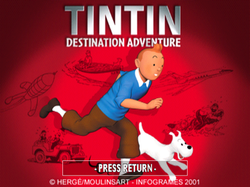
 Tintin: Destination Adventure on PlayStation
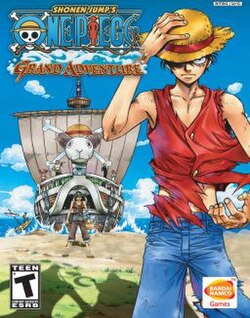
 One Piece Grand Adventure on PS2
 Taiko no Tatsujin: Dokodon! Mystery Adventure on Switch
 Ring Fit Adventure on Switch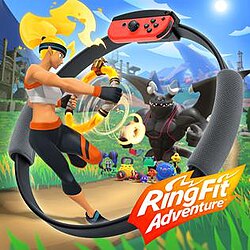
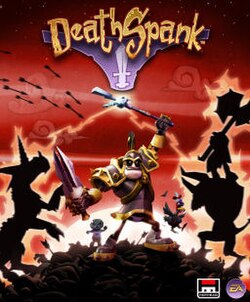 DeathSpank: Thongs of Virtue on PS3
 Penny Arcade Adventures: On the Rain-Slick Precipice of Darkness Episode One on PS3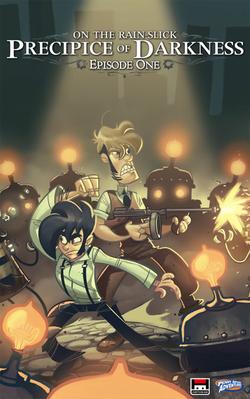










 Another SquareThought Site