

 Dec 2005
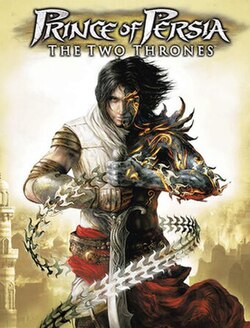

Prince of Persia: The Two Thrones closes Ubisoft's Sands of Time trilogy with a pragmatic mix of parkour, swordplay and internal dialogue that sounds suspiciously like your conscience after a late-night kebab. Technically it's interesting because the game wears its constraints on its sleeve: built on the Jade engine, animated without motion capture, and produced under a short, pressured schedule that forced design compromises. The result is not a flawless gem, but a polished, mechanically confident title-especially on its primary console builds-where smart systems (Speed Kills, dual-wielding weapon durability, the Daggertail mechanics) combine with clear production decisions to make a cohesive interactive experience. This review looks at The Two Thrones through a tech-focused lens tuned for players who care about frame-rate, animation blending, AI behavior, and how design choices follow from hardware and schedule realities.
At its mechanical core The Two Thrones is a traversal and combat game that leans heavily on the Prince's acrobatic toolkit. The level architecture is explicitly layered - flats roofs, courtyards, vertical shutters, poles and chutes - which the team designed to maximize traversal options. That architectural choice is a technical win: instead of squeezing play into cramped corridors, designers gave the movement system breathing room, and the Jade engine handles the connected navigation sequences smoothly. Wall-running, 45-degree shutter launches, pole balances and chute slides are all present and the game reliably recognizes context-specific animations. The team eschewed motion-capture and instead hand-animated the character; that gives a slightly stylized, precisely-timed movement set that makes timing-based maneuvers feel responsive rather than floaty. Combat extends the freeform system from Warrior Within, with refinements that are clearly system-driven. The Prince can pick up secondary weapons and dual-wield; these weapons have limited durability and break after a number of strikes or when thrown. That is more than a cosmetic constraint: it forces the player into dynamic resource management mid-fight and prevents the universal solution of 'grab the best sword and never look back.' The Dagger of Time still sits at the heart of the game's mechanical economy: sand charges are a collectible currency gated by sand gates and sand chests. The Dagger's powers scale as sand charges increase, unlocking area-of-effect abilities that change combat pacing. That collection loop (traverse, fight, destroy sand sources, upgrade) is a tidy gameplay feedback loop that rewards exploration. The Speed Kill system is The Two Thrones' most visible gameplay twist. Technically it's a timed input sequence (a quick-time-ish mechanic) layered on stealth and traversal: approach undetected, trigger a Speed Kill opportunity, and then press the attack button at precisely-timed intervals. The timing windows vary depending on target complexity, which forces the engine to handle variable cue timing and animation transitions mid-sequence. Failure results in an enemy throwing the Prince off - a simple, high-cost penalty that keeps encounters tense. The system cleanly replaces the earlier 'bonus damage from undetected strikes' with something more cinematic and risk/reward driven; it's an example of a mechanical change that adds depth without bloating controls. The Dark Prince introduces an interesting technical constraint and opportunity. Originally planned to be player-switchable, the transformation became story-driven because of memory limits on the PS2-era targets. As a result, the game spawns automated transformations tied to narrative beats. When transformed the Prince loses access to secondary weapons and instead uses the Daggertail - a bladed whip grafted to his arm. The Daggertail brings a different control and animation set: it's a mid-range slashing tool used for combat and environmental traversal (grappling torches, pulling blocks). Critically, the Dark Prince state drains health over time, and the engine continuously decrements health while in that state; Sand pickup mechanics are used as the counterbalance, refilling health and encouraging aggressive play. From a design standpoint this is a neat way to force players into temporary high-power, high-cost states without giving them a permanent advantage. Save and recovery systems are conservative and explicit. Health only recovers from water sources or save fountains (or by toggling the Dark Prince state), which makes exploration tense - every missed bottle of water matters. Death is not a total catastrophe thanks to the Dagger's recall ability (a narrative-flavored undo), but players can also fall back to save fountains or checkpoints. The chariot on-rails segments are standouts in terms of engine flexibility: they tie in collision avoidance, scripted enemy appearances and rapid animation swaps, demanding a different subset of the physics and animation systems. Under the hood you can see the production constraints in many places. The team at Ubisoft Montreal completed the main production in roughly nine months after restarting production from Casablanca, which explains the focus on a reliable set of mechanics instead of experimental systems. Enemy AI was specifically tweaked to recognize the Prince's expanded move set, so foes will react to wall-jumps and mid-air strikes in ways that feel competent rather than randomized. The result is a game where systems are polished rather than novel: everything you do-parkour, fight, stealth-is well-integrated and technically consistent.
Graphics and audio were strong suits for this generation. The Jade engine delivers detailed textures, especially on the PC builds where reviewers noted sharper assets; consoles present slightly lower-res textures but keep the fidelity in the architecture and character models. Character animation blends are particularly worth highlighting because no motion-capture was used: the animation team keyed transitions carefully, and you feel it during chaining parkour moves and the Speed Kill sequences. The Dark Prince's 'living wound' sand infection is a smart visual effect - conceived to look like a physiological corruption more than a static tattoo - which is implemented with simple but effective material swaps and particle overlays. Level design also supports the engine: the research into Moroccan and Islamic architecture was not window dressing. Flat roofs, layered habitation and iconoclastic decorative cues create traversal paths instead of just picturesque backdrops. These layouts let the camera breathe in wide courtyards and tighten in interior corridors where platforming matters; camera work is generally competent, though a few tight platforming moments suffer from fixed angles that make spatial judgment more stressful than necessary. On the audio side the team brought in heavyweight talent. Inon Zur returned to provide orchestral flourishes while Stuart Chatwood added the franchise's signature motifs; the soundtrack was performed by the Hollywood Studio Symphony Orchestra and consciously returned to more 'eastern elements' compared to Warrior Within's contemporary sound. Voice work is solid: Yuri Lowenthal reprises the Prince (recorded in Los Angeles), Helen King voices Farah (recorded in Montreal), and Rick Miller voices the Dark Prince - a role that required extensive effort and effort noises. The recording setup separated vocals geographically but mixed coherently, and the sound design overall supports the cinematic tone. Performance-wise the original console builds (PS2/Xbox) were praised for stable presentation; PC offered crisper visuals where hardware allowed. Ports to handheld and motion-control platforms (PSP/Wii) fared worse in reviews due to control and input translation challenges, but the base assets and animations hold up. If you're playing on PS3 hardware via a port or backwards compatibility, expect the visual fidelity to track the console generation the build was optimized for; the underlying asset quality and animation systems are what make the game visually consistent across platforms.
Prince of Persia: The Two Thrones is a study in pragmatic technical design. Faced with a tight schedule, a mid-development studio handoff, and hardware memory limits, the team focused on making the systems they kept as solid as possible. The result is a mechanically coherent game: precise hand animation, a polished traversal system, the risk-reward Speed Kill mechanic, and a Dark Prince that offers interesting gameplay trade-offs grounded in engine-friendly implementations (health drain, Daggertail traversal, temporary power). Where the game doesn't win is in risk-taking: it rarely pushes new technical boundaries and some design decisions (controlled Dark Prince transformation, limited health recovery) are clearly born of constraint rather than creative intent. For an 18-year-old who cares about how games are built, The Two Thrones is satisfying. It shows what a disciplined dev team can produce when they prioritize integration and polish over experimentation. The combat systems are thoughtfully balanced (weapon durability, sand-managed Dagger upgrades), the parkour is tight even without mocap, and the audio team delivers a cinematic score that anchors the visuals. If you want bleeding-edge innovation, look elsewhere; if you want a well-engineered, technically coherent action-adventure with a memorable mechanical hook in the Speed Kill and an intriguingly implemented Dark Prince, this is still a very good time. Score: 8.5/10 - a game that earns its place as a strong finale to the Sands of Time trilogy through solid technical craftsmanship rather than flashy novelty.
 Toki Tori 2+ on Switch
 Pacific Rim: The Video Game on PS3
 Two Worlds II on PS3
 PlayStation Home on PS3
 Ōkami on PS2
 Gaelic Football '25 on Xbox Series X/S
 Unearthed: Trail of Ibn Battuta on PS3










 Another SquareThought Site