

 Aug 2025
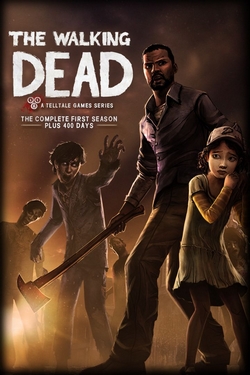

Put on your moral hard hat and forget everything you think you know about zombie games. The Walking Dead on PS3 is less about brain-eating headshots and more about brain-eating choices - the kind that leave you chewing on guilt for days. Telltale traded the twitchy, spray-and-pray gameplay of other undead titles for a point-and-click, story-first experience where the real challenge is social survival: reading rooms, reading people, and deciding whether to be the hero, the pragmatic bastard, or that guy who accidentally makes everything worse. If you came here for arms-and-legs-on-a-stick combat, you'll be disappointed in the best possible way. If you came here wanting to be tested - mentally, morally and reflex-wise - you're in the right place.
The Walking Dead's difficulty is a sneaky one: it hides in paperwork, conversations and split-second moral triage rather than in enemy health bars. The core skillset the game demands is less 'aim' and more 'judgement.' You play as Lee Everett, and the game hands you two overlapping toolkits: conversational tools and environmental puzzle tools. The conversational toolkit is the big one. Dialogue trees appear with only a few seconds to choose; let the timer run out and Lee says nothing, which can be as consequential as choosing to insult someone's mother. Those timed choices are where the game turns you into a decision athlete. You need reading speed, pattern recognition (what choice will make which character more likely to trust you later?), and emotional calibration: the ability to pick a response that fits both your mental image of Lee and the cold calculus of keeping a ragtag group alive. Timed decisions are not trivia-Telltale designed them so outcomes are ambiguous. There is rarely a gleaming "right" option. Instead the challenge is predicting social ripple effects. Do you soothe Kenny after his son is bitten, even if it requires lying? Do you prioritize Clementine's emotional safety or the group's physical supplies? Learning to live with the consequences - some permanent, some subtle - is the skill that separates a casual player from someone who treats the game like a social laboratory. On the mechanical side, The Walking Dead uses point-and-click exploration and inventory-based problem solving. The puzzles are simple compared to a classic LucasArts adventure, but they matter. You must inspect scenes, combine items and improvise with what the world gives you. Observation pays dividends here: noticing a loose board, a hidden key or a character's mood shift will unlock options later. If you're allergic to paying attention, the game will punish you with fewer options and more regret. Then there are the action beats-quick-time events. These sequences test reflexes and composure. Failing a QTE usually means a soft reset to just before the scene, but the sequence's tension is the point: can you mash the right button while your hands are shaking because Kenny is losing it and a horde is on the roof? QTEs reward calm thumbs and the ability to make split-second physical choices when the stakes are emotionally charged. A subtle but crucial in-game skill is memory management. Telltale tracks decisions across episodes and tweaks dialogue and scenes accordingly. That makes saving and the 'rewind' feature a gameplay decision in itself. You can create multiple saves and revisit decisions, which is great for experimentation, but using rewind kills the emotional punch. If you want the full challenge, resist the urge to micromanage outcomes. Play with limits; accept the permanence of some choices; let the story push you into uncomfortable territory. This is the mental discipline the game rewards. Finally, there's an emotional stamina component. The Walking Dead doesn't wear you out with difficulty spikes - it wears you out with weight. Repeatedly choosing who lives or dies is draining. Expect to bring ethical reasoning, empathy, and moral consistency to the controller. People who keep a calm internal monologue and can justify choices tend to come away more satisfied; those who flail between personas every five minutes will be left with a story that feels messy rather than meaningful. In short: be decisive, be observant, be human.
Visually, The Walking Dead doesn't try to be photorealistic; it goes for a comic-inflected, cel-shaded aesthetic that looks like the panels came to life. That art direction is a practical part of the game's challenge design. By avoiding photo fidelity, the game emphasizes facial expressions, framing and cinematic cuts that make conversations and moral beats pop. You get readable cues - a twitch here, a tightened jaw there - that matter when you're trying to predict how someone will react to your choices. On the PS3 the game runs smoothly enough, with the occasional technical hiccup mentioned in contemporary reviews (save-format quirks around multi-platform patches were a real-world headache during release). Those rough edges rarely break the experience, but they do reinforce a skill you'll use off-screen: patience. If the game hiccups during a tense QTE, a calm player takes a breath and tries again; the panicked player rage-quits and loses the nuanced payoff. Sound design and voice acting carry much of the load - Dave Fennoy (Lee) and Melissa Hutchison (Clementine) anchor the emotional core - so your ability to listen becomes as important as your ability to look.
If challenge is what you want, The Walking Dead will give you a masterclass in difficult choices. It trains a different set of muscles than most mainstream games: empathy, moral reasoning, quick ethical triage and the capacity to stay calm under social pressure. The QTEs add reflex flashes, and the environmental puzzles reward observation over brute force. The game's design asks: how well can you be human when society has stopped being polite? That's a tougher test than it sounds, and it's why Telltale's series resonated so hard with players and critics alike. Play on 'Minimal' mode if you want fewer hand-holds, and leave the rewind feature alone if you want your emotional responses to matter. Treat decisions as experiments, but accept that some will have consequences you can't fix. If you can read a room, pick your words faster than you panic, and live with the outcomes you create, The Walking Dead will not just challenge you - it will change the kinds of games you compare other games to. In short: this is one zombie encounter you'll remember for having nothing to do with ammo and everything to do with character. Good luck, Judge Dredd; the court of moral opinion is always open, and it's hungry.
 The Walking Dead: Survival Instinct on PS3
 Dead Space Ignition on PS3
 Tintin: Destination Adventure on PlayStation
 One Piece Grand Adventure on PS2
 Taiko no Tatsujin: Dokodon! Mystery Adventure on Switch
 Taiko no Tatsujin: Don to Katsu no Jikū Daibōken on Switch
 The Wolf Among Us 2 on Xbox Series X/S
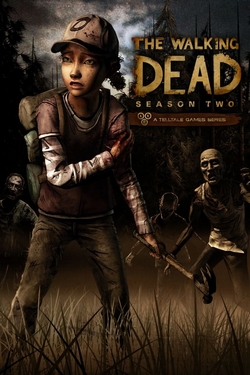
 The Walking Dead: Season Two on PS3
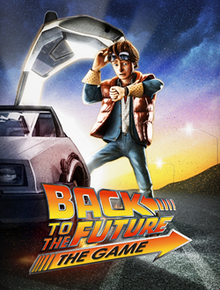
 Back to the Future: The Game – 30th Anniversary Edition on PS4
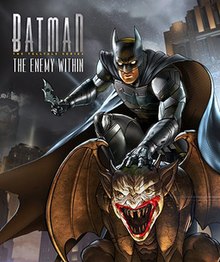
 Batman: The Enemy Within on PS4
 Batman: The Enemy Within on Switch










 Another SquareThought Site