

 Aug 2025
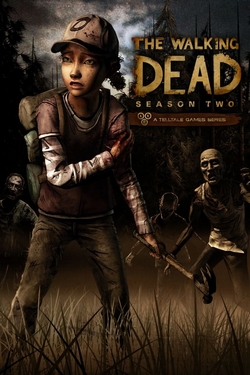

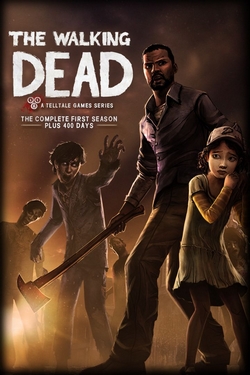
Telltale handed you a kid in a post-apocalyptic world and said, "Handle this." The Walking Dead: Season Two puts you squarely in Clementine's shoes on the PS3 and, rather than tasking you with looting supermarkets or crafting molten baseball bats, it tests your decision-making muscles, your timing, and your ability to read people (and teenagers with frozen expressions). This is an episodic graphic adventure masquerading as an interactive soap opera for the end of the world - and the main difficulty isn't zombies; it's being morally ambiguous at speed. This review zeroes in on the challenges the game throws at you and the skills you need to survive emotionally and mechanically. If you're looking for twitch-based shooters, look elsewhere. If you want the kind of pressure that makes you sweat over dialogue choices and split-second Quick Time Events, congratulations: you're in the right hellish mall.
Mechanically, Season Two is the distilled essence of Telltale's formula: point-and-click exploration, conversation trees, and the occasional action scene where button prompts decide whether your companion becomes zombie chow. That formula feels simple on paper but grows teeth in execution. The challenge here is less about mechanical complexity and more about cognitive load: reading the situation, predicting consequences, and acting-often in a few seconds. The game's decision system is a study in pressure. Conversations present multiple replies, sometimes including a 'stay quiet' option, and choices come with a strict countdown. If you hesitate, Clementine defaults to silence and you'll live with the social fallout. That design forces decisiveness. Skills required: quick moral calculus, emotional control, and the ability to prioritize long-term consequences over immediate relief. You won't always have time to play the philosopher; you'd better be ready to trust your instincts. Quick Time Events (QTEs) show up during action-heavy beats. Fail one and the scene restarts; fail a few and you realize the game isn't being malicious so much as insistently authoritarian about your input. These sequences test reflexes and attention - not high-level combos, just basic timing under pressure. The real challenge is that QTEs are layered on top of choice-driven drama. A failed button press can kill a character you weren't prepared to lose, or just make you watch a scene repeat until you perform adequately. The skill here is staying calm; flailing solutions rarely end well. Inventory and environment interactions are deliberately lightweight: you examine, collect, and use items to advance scenes. The tension comes from limited time and context rather than resource scarcity. Where Season Two gets clever is in how your choices echo. Importing saves from Season One and the 400 Days DLC (or picking their defaults) changes who shows up and who remembers you. The game rewards situational memory and narrative planning: it's helpful to recall past choices and anticipate how NPCs will react. That's a storytelling challenge masquerading as game design. A big, often-discussed difficulty of Season Two is emotional durability. The game is built to tug on empathy strings and then pluck them. You're repeatedly confronted with wrenching dilemmas - who to save, who to leave, when to lie. These choices often have knock-on effects in later episodes (a character you dump now might not be around when you need them). Crafting the 'right' moral solution is rarely clear-cut. The required skill here is narrative risk assessment: decide what you can live with and what you absolutely can't, then commit. The game occasionally punishes players who overthink. Critics noted a perceived lack of impactful choices in places, and fans felt some decisions lead to similar outcomes regardless - a design limitation of episodic structure. That means another skill becomes important: acceptance. Accept that some choices are about shaping character relationships and emotional tone more than rewriting the map. Learn to savor the micro-variations even when the macro stays the same. Telltale also mixes in group dynamics. Clementine travels with rotating survivors, each with distinct temperaments. Spotting who is likely to snap under stress or who will be loyal later is part social deduction, part pattern recognition. Interacting intelligently with NPCs - coaxing info, defusing tension, or deliberately provoking someone for a desired reaction - is an underappreciated skill. If you enjoy reading faces and motives more than juggling bullets, you'll be in your element. Finally, there's the meta challenge: the episodic release cadence. Episodes come weeks apart, and the game expects you to remember threads. That tests your patience and memory. If you binge, the continuity is visceral; if you wait, you'll replay to recover context. Managing that long-form story experience is a different kind of skill: commitment. In short, the game is less about how well you aim and more about how well you decide, time, and cope.
On the PS3, Season Two uses the Telltale Tool to render a comic-book-flavored, slightly cell-shaded aesthetic that suits the source material. It's not a showcase of technical prowess; textures can be soft and animations sometimes stiff. What matters is mood: lighting, framing, and facial acting create atmosphere and tension. Camera angles are often low to emphasize Clementine's kid-sized view in an adult world, which doubles as both a storytelling and gameplay cue: you're small, and your choices are disproportionately heavy. For a challenge-focused player, the visuals do their job of selling stakes even if they're not pushing polygon counts.
If you want challenges measured in bullets-per-minute, Season Two will disappoint you. If you're excited by moral pressure, split-second social decisions, and the need to keep your head while the game's emotional thermostat climbs, it's a masterclass. The difficulty curve is psychological: fast decision-making, steady nerve for QTEs, social reading of NPCs, and acceptance of narrative constraints. The game earns points for atmosphere and Clementine as a protagonist, though it stumbles with occasional thin writing beats and the fact that not every choice ripples as widely as you'd hope. On PS3 this season remains a compelling test of how you think, not how you frag. Bring decisiveness, empathy, timing, and the willingness to live with guilt. You'll cry, you'll agonize, and you'll probably make a questionable choice you'll defend for years. That's the challenge - and the point. 8/10.
 Toki Tori 2+ on Switch
 Pacific Rim: The Video Game on PS3
 Two Worlds II on PS3
 Tintin: Destination Adventure on PlayStation
 One Piece Grand Adventure on PS2
 Taiko no Tatsujin: Dokodon! Mystery Adventure on Switch
 Taiko no Tatsujin: Don to Katsu no Jikū Daibōken on Switch
 The Wolf Among Us 2 on PS5
 The Wolf Among Us 2 on Xbox Series X/S
 Back to the Future: The Game – 30th Anniversary Edition on PS4
 Batman: The Enemy Within on PS4
 Batman: The Enemy Within on Switch










 Another SquareThought Site