

 Oct 2013


Playing The Wolf Among Us on PS3 is like being handed a noir-ish comic book, a magnifying glass, and a moral Rubik's Cube that sometimes throws a punch. You step into the shabby shoes of Bigby Wolf - the Big Bad Wolf turned reluctant sheriff - and are thrust into a 1986 Manhattan that's equal parts sleazy barroom and fairy-tale witness protection. Telltale's episodic formula is in full effect: story-first design, sharp writing, and choice-driven scenes that reward reading faces and reading the room. If you're expecting twitch-heavy combat, look elsewhere. If you want to be tested on reasoning, impulse control, empathy, and the occasional reflex, this is your jam.
Challenge in The Wolf Among Us isn't math homework or boss HP bars; it's social and cognitive. The core loops are exploration, conversation, clue-chasing, and QTE shoots-each with its own skill test. Exploration is deceptively simple: wander 3D environments (apartments, bars, pawn shops), hover the cursor over interactable objects, and examine items. It sounds chill until you're on a tight narrative shoe-string and you need to spot the single item that unlocks the next lead. That demands observational focus, pattern recognition, and a habit of methodically checking corners instead of sprinting past like a caffeinated mall cop. Conversation trees are the real meat. Options are often moral landmines disguised as small talk: be blunt and risk alienating an ally, or soft-pedal and let a manipulater off the hook. The game makes you live with the ripple effects. Playing well means thinking like an investigator and an actor-balancing what Bigby should say to get information, what he must say to preserve relationships, and what he absolutely has to avoid because it makes him look like a walking, growling mess. You'll need empathy (to read motives), poker-faced restraint (to avoid unleashing Bigby's wolfy temper prematurely), and predictive thinking (to estimate how NPCs will react later). There's an investigative strand that actually asks you to act like a cop-following clues, linking people to places, and using the inventory sparingly. Items are less about inventory puzzles and more about narrative leverage. The challenge: figure out where a clue fits in someone's story and use it to push a conversation. That's deduction wrapped in a conversation mechanic. If you enjoy putting two-and-two together and watching someone squirm, this skillset shines here. Quick time events (QTEs) present the only overt reflex test. Telltale treats them more like cinematic punctuation than fail screens: you press the right button at the right time or you don't, and the story shifts accordingly. Sometimes missing a QTE simply changes a line or relationship; sometimes it nudges you toward harsher consequences. Reflex-wise it's casual: no combo strings or memory feats-just react. The real tension is that many dialogue choices appear under time pressure too. You've got to process text, estimate outcomes, and pick an answer before the timer ticks down. The combo of reading comprehension + split-second choice is where the game quietly becomes difficult. Blink and you make a decision you'll explain to yourself later in the shower. Telltale's episodic structure matters: each of five episodes escalates stakes from a single gruesome mystery to full-on moral ciphers involving the Crooked Man and his cronies. The game asks you to juggle short-term tactics (get information now) with long-term strategy (keep allies onside for later votes and confrontations). That long-game thinking is a skill-memory of past dialogue, awareness of who owes you favors, and the ability to weigh whether to act violently now or store leverage for a trial in episode five. There are also meta-challenges: pacing and technical hiccups. Critics often flagged bugs and occasional awkward pacing, which means one of the player's skills is patience and adaptive problem-solving. If dialogue options or camera cuts glitch, you occasionally have to reorient and accept the scene's intention rather than the perfect execution. It's frustrating, but also oddly part of the experience: you learn to prioritize story choices over mechanical perfection.
The Wolf Among Us dresses its PS3 era visuals in a stylized, comic-book cel-shaded coat that still looks sharp in a 'grim neon back alley' way. Environments are expressive rather than photoreal; posters, grime, and neon signs do a lot of narrative heavy lifting so you know Fabletown is on its last beer and a prayer. Character faces carry weight: micro-expressions convey suspicion, fear, and guilt, which is crucial because the game expects you to read people. The PS3 ports have the occasional frame hiccup and texture pop-these are the technical notes many critics grumbled about-but the aesthetic choices keep the mood intact. Visual clarity is good enough for gameplay: interactable items are usually readable, and the camera does its job during most streamed conversations and action beats. In short, it looks like a graphic novel that learned how to move.
If you pick up The Wolf Among Us on PS3 expecting a reflex-only gauntlet, you'll be disappointed. If you want a game that trains you to be a clever, morally awkward detective, it will school you in the best possible way. The challenge is cerebral: reading scenes like a con artist reads a wallet, timing your responses with the grace of someone defusing a bomb, and balancing immediate justice against future consequences. Add modest QTEs and a few technical speed bumps, and you get a package that rewards thinking, patience, and a little theatricality. Telltale's strengths-writing, atmosphere, voice work, and character-carry the experience, and the episodic pacing forces you to live with your choices in a satisfying narrative echo. For those who like their challenges handed to them wrapped in noir, fairy tales, and ethical grey goo, Bigby's door is open. Just don't be the jerk who punches every suspect the moment they sigh; it tends to have consequences.
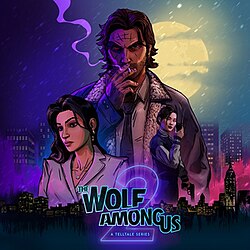
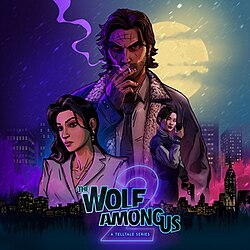 The Wolf Among Us 2 on PS5
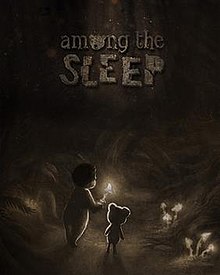
 Among the Sleep on PS4
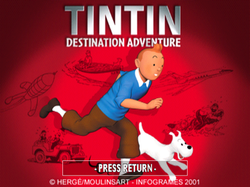
 Tintin: Destination Adventure on PlayStation
 One Piece Grand Adventure on PS2
 Taiko no Tatsujin: Dokodon! Mystery Adventure on Switch
 Taiko no Tatsujin: Don to Katsu no Jikū Daibōken on Switch
 The Walking Dead: Season Two on PS3
 Batman: The Enemy Within on PS4
 Batman: The Enemy Within on Switch










 Another SquareThought Site