

 Aug 2025


WET arrives like a fistful of pulpy noir and rockabilly slapped onto a third-person shooter template. On PlayStation 3 it trades technological bravado for mechanical swagger: the engine rarely tries to impress you with photorealism, but it hustles to sell a very specific fantasy-an acrobatic, kinetic murder-ballet controlled by Eliza Dushku's Rubi Malone. This review looks past the game's stylish marketing and focuses on the tech under the hood: how the systems interact, where the pipeline performs, and why the game's guts make the experience either satisfying or sloppy depending on what you care about. The result is a mixed bag. WET's core systems-time-scaling combat, acrobatic traversal, dual-target aiming and combo multipliers-are cleverly interlocked. Those systems produce delightful moments of calculated chaos. On the other hand, the presentation layer (art assets, animation polish, and level construction) frequently undermines that mechanical harmony by feeling dated and occasionally brittle on PS3 hardware. The game earns praise for its design cohesion and soundtrack but also deserved criticism where visual and level tech lag behind the ambition.
At the technical level WET is a study in system-level choreography rather than open-world simulation. The gameplay loop is composed of a small number of tightly-coupled subsystems: acrobatic state machine (jump, slide, wall-run), time-scale controller (slow-motion initiator), targeting/auto-aim layer (primary & secondary target acquisition), weapon subsystem (pistols, dual-shotguns, SMGs, crossbows, sword melee), and the scoring/upgrade economy (multipliers -> Style Points -> upgrades). The slow-motion mechanic is the linchpin. When Rubi initiates certain animations-sliding on knees, mid-air shooting, or wall-run attacks-the engine invokes a global time-scale reduction. Technically this is a classic time-dilation implementation: physics and animation blend into a slower playback rate while input sampling remains responsive enough for split-second aim corrections. Critically, the game pairs time-dilation with a dual-target auto-aim routine. While you're in slow motion WET will lock an auto-aim vector at a second enemy and let you fire at two targets with separate ballistic traces. That choice dramatically reduces player frustration with precision micro-aiming during frantic choreography; it also encourages combo planning because the score multiplier subsystem rewards chaining kills. Score and health systems are interleaved. Collecting multiplier icons and maintaining chains increases both score and HP regeneration rate, which is an elegant design decision: the game rewards stylish play with survivability, closing the loop between risk-taking and resource recovery. Whiskey bottles are explicit health pickups, separate from the multiplier-driven regen, adding a conventional consumable layer. Movement is implemented as an animation-driven traversal system. The transitions-run -> wall run -> vault -> slide -> sword uppercut-are significantly animation-bound, so the designers lean on blend trees and rooted animation for spectacle. This yields great-looking scripted moves but exposes the game to the usual problems: occasional animation snapping, collision penetration when the character collides mid-blend, and some awkward camera positioning during transitions. Wall-run launches off human geometry-"wall run off a person"-are a design flourish that feels great when they work, but they rely on precise positional checks and hitbox consistency; any mismatch in ragdoll or enemy collider complexity will break the cinematic effect. Weapon handling strikes a balance between arcade and simulation. Recoil is minimal by design; accuracy penalties are implemented more as cooldowns and animation constraints than true ballistic simulation. Pistols are the baseline, while dual shotguns and SMGs change the effective engagement envelope-shotguns for close-quarters knockback, SMGs for rate-of-fire suppression. The sword is not a pure melee utility; sword attacks are woven into the acrobatic state machine to allow mid-slide uppercuts and cinematic kills. The net technical effect is that combat feels tuned around animation frames and state invocations rather than emergent physics interactions. Level design is intentionally linear. The game's scripting systems are used aggressively-enemy spawns, set-piece triggers, and camera cuts-so levels behave like sequences of mechanical puzzles solved by proper use of the traversal and time-dilation systems. That works for pace and spectacle, but it reduces systemic depth and emergent problem-solving. Grading at the end of each stage (Completion Time, Acrobatics, Average Multiplier) feeds the upgrade economy and encourages replay for higher scores, which helps extend the mechanical lifespan even in the absence of complex level geometry. The motorway sequences introduce Quick Time Events (QTEs) which are an entirely different tech stack: deterministic cinematic sequences with button-press evaluation windows. They break from the real-time simulation but function as intended-brief, high-output spectacle that complements the core loop. Overall, WET is mechanically coherent: each system was engineered to support cinematic combos and scoring flow. Where it breaks down is less about architecture and more about polish-hit detection edge cases, animation blending glitches, and occasional camera collisions that remind you this was a mid-tier production.
Graphically WET is stylistic where it wants to be and sloppy where it doesn't. The game's noir "berserker" sections are a good example of directed art tech: the engine shifts the post-processing pipeline to a high-contrast black/white with selective red accents, effectively using color grading and shader masks to create a comic-strip, high-impact aesthetic. This is a cheap and effective trick that masks low polygon counts and texture detail by leaning on bold silhouette readability and bloom/contrast adjustments. Outside those stylized moments the limitations are obvious on PS3 hardware. Character models have reasonable silhouette fidelity but often carry low-resolution diffuse maps, basic normal mapping, and limited LOD transitions that pop at short distances. Environments favor tiling materials and static prop placement; there isn't a lot of procedural detail or dynamic destructibility to the world, which makes many rooms feel like boxed arenas rather than lived-in spaces. Lighting is mostly baked with a handful of dynamic lights for muzzle flashes and scripted effects; that keeps a steady frame-rate but sacrifices dynamic shadows and complex per-pixel lighting effects. Animation is a mixed bag. The core combat animations are energetic and well-directed, which sells the game's cinematic intent. The animation system uses layered blends for combining shooting poses with traversal moves, but edge cases show blending artifacts-feet sliding on surfaces during wall-run transitions or torso offsets when two layered animations compete. Collision handling during these blends is occasionally brittle: the character can clip through thin geometry or get caught on prop colliders, which breaks immersion and disrupts flow. Performance on PS3 is acceptable for what the game tries to do-an action movie in packaged levels-though you will see texture streaming and shader LOD simplify the scene during heavy particle and slow-motion sequences. These optimizations prevent frame drops but emphasize the platform-era constraints: less pixel fidelity, more post-process smoke-and-mirrors. The sound and music side is a technical highlight. The score, recorded live by Brian LeBarton and collaborators, is mixed to support combat rhythm; percussion and guitars punch up during combos and transitions. Voice acting is competent and delivered with the right attitude; audio layering during slow-motion-low-pass filtering plus reverb tail adjustments-helps sell the feeling of time dilating without muddying combat audio cues.
WET on PS3 is a systems-first game: designers identified the few mechanical pillars they wanted (time-dilation, acrobatic traversal, combo scoring) and engineered them to work together. Technically that pays dividends-the dual-target slow-motion combos, multiplier-linked regen, and animation-driven execution produce cinematic moments that feel tuned. If you prize visceral, well-choreographed combat loops over technical sheen, WET will give you more 'movie stunt' than 'simulation'. The main downsides are in the presentation pipeline: aging textures, brittle animation blending in edge cases, and decidedly linear level scripting that reduces opportunities for systemic play. Critics who groused about dated visuals weren't wrong; the exploitation-film stylings and strong soundtrack paper over a lot of the rough edges, but they can't fully hide the technical shortcuts. Despite these faults, the game sold respectably and carved out a niche because its core gameplay is legitimately fun. If you're buying WET for a polished next-gen-looking spectacle, you will be disappointed. If you're after a razor-focused action experience that prioritizes choreography, scoring and audacious set pieces-preferably with a soundtrack recorded live in four days and a protagonist who can flip off a bad guy while firing two pistols-WET is worth the ride. The architecture favors spectacle over simulation, and for better or worse that design decision defines the game's personality and technical footprint on the PS3.
 Subnautica: Below Zero on Xbox Series X/S
 Ride on PS4
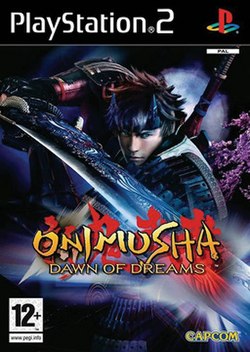
 Onimusha: Dawn of Dreams on PS2
 Crimson Sea 2 on PS2
 Pirates: The Legend of Black Kat on PS2
 Action Man: Operation Extreme on PlayStation










 Another SquareThought Site