

 Mar 2012
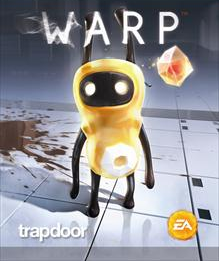

Warp is a compact, mechanically curious little game that dresses its brainy puzzle-stealth loop in the clothes of a sci-fi caper. You play Zero, a pint-sized alien with teleportation powers, a fondness for making humans explode from the inside out, and an unfortunate susceptibility to water. On PlayStation 3 the package arrives as a short, tightly scoped single-player experience built on Unreal Engine 3. The result feels like a laboratory prototype: flashy in ideas, occasionally rough in execution, but constantly interesting if you like systems that reward thinking about space, state and sound.
Warp's core is a small set of interacting mechanics that scale into more complex puzzles by combination rather than pure quantity. The base mechanics are worth enumerating because the game's depth comes from how they interact: Warp (short-range teleportation), Frag (detonate from within objects or enemies), Echo (a hologram that acts as a decoy and a spatial probe), Swap (exchange positions with an object), and Launch (send an object hurtling at high, gravity-immune velocity). Trapdoor made these primitives explicit, which is a designer's dream: once the rules are clear, you can measure, predict and exploit them. From a technical design standpoint, Warp plays like a constrained spatial simulator. Warp lets Zero pass through geometry and living beings; the engine must reconcile inside/outside state for collision, animation and AI perception. When Zero enters an object the game flips physics and rendering flags so the player can move 'internally' and then trigger a Frag. That internal-to-external transition is where most of the fun is: arranging objects so their interiors become weapons, timing Echo decoys to mask movement, or using Swap to enact controlled object-in-object replacements that behave like controlled destructors. Launch is an interesting extension because the projectile ignores gravity until impact-this choice simplifies trajectory prediction for players and reduces runtime physics unpredictability on a console that, in 2012, still felt the limitations of affordable deterministic physics. Sound and sight are implemented as core gameplay signals rather than mere ambience. The game models sound propagation as discrete events (footsteps, collisions, power use) that trigger guard investigations. AI uses sight cones and an alert propagation system: a spotted Zero will cause guards and turrets to coordinate, and alarms can dynamically change the map state by enabling pads and coils-destroying those coils or moving them off pads is a small but satisfying environmental puzzle. The stealth design hinges on object occlusion and AI line-of-sight checks; Zero's half-size allows hiding behind geometry, and technical mastery of occlusion is rewarded. This makes the level geometry itself an active subsystem: crates, pipes and conduits are not mere clutter but affordances for warp paths and sound masking. Upgrades are a minimal but well-integrated meta system. Grub energy, collected from glowing parasite-like grubs, buys stat changes that reduce sound output or improve power functionality. The decision to gate upgrades behind collectible placement is classic metroid-lite design: the grubs are sometimes tucked into geometry that requires advanced use of Warp/Echo/Swap, so upgrades often retroactively enable earlier secrets. The challenge rooms operate as compact benchmarks of the engine and control fidelity: they verify that player inputs, animation states and power cooldowns are consistent because they measure completion time and publish leaderboards. There are some visible trade-offs. The A.I. is intentionally simple-guards investigate noise and follow basic patrol/state machines-which supports predictable puzzle play but also produces the 'trial-and-error' feel some critics mentioned. When puzzles require precise timing or exploit minor inconsistencies in AI perception, the solution sometimes feels more like pattern memorization than deduction. The controls and animation transitions are mostly serviceable, although a few reviews highlight a sense of looseness and occasional lack of polish around level endings and the final boss encounter. On PS3, input-to-action latency is acceptable for Warp's pacing, but the game occasionally asks for tight sequencing between warps and Echo/Swap actions; in those moments the margin for error and the AI's binary investigation states can make solutions feel fiddly rather than elegant. Mechanically, water is the game's negative state: exposure attenuates-or completely nullifies-Zero's abilities, signalled by a loss of color and different walking animation. This is a clever technical constraint because it introduces a near-instant state change that the engine can check deterministically: water volume > threshold = power disable, water volume >> threshold = death. The shield usage by scientists (malleable water shields) is a smart level-design constraint that forces the engine to treat certain volumes as exclusive zones that block multiple ability systems simultaneously. That kind of multi-system gating is a neat example of how a small rule set can create diverse puzzle space without adding more abilities.
Visually Warp uses a stylized aesthetic that plays to an advantage on Unreal Engine 3's capabilities. Rather than chase photorealism, Trapdoor leans on high-contrast character silhouettes, bright particle flares for grubs and frags, and clear visual states for power activation. These choices help readability on the PS3: player hitboxes, object interiors and guard sightlines are visually unambiguous, which is crucial in a game that asks you to reason spatially. Particle effects and gore are cartoonish enough to keep the tone light while still communicating impact clearly. On the technical side, UE3 delivered robust tools for occlusion culling and level streaming, and Warp benefits from that: maps feel dense without bogging down the console. Lighting is functional rather than spectacular-baked lightmaps with selective dynamic lights keep performance stable, and the water effects that disable powers are implemented with clear shaders and masks rather than expensive screen-space reflections. The artwork and UI lean into clarity: icons, hologram outlines and the grub glow use saturated colors so the player doesn't have to squint through visual noise. There are some signs of the game's smaller production budget: textures occasionally lack high-frequency detail and some animation transitions are blunt. These are not game-breaking, but they contribute to the 'rough edges' critics noted, especially in climactic or boss sequences where aesthetic polish would have helped the moment land.
Warp on PS3 is a focused exercise in systems design: it asks the player to internalize a handful of rules and then combine them creatively. That emphasis on rule clarity is a strength-every power has predictable behavior, and the world responds in ways you can learn and exploit. Trapdoor's implementation on Unreal Engine 3 makes smart technical choices to keep the experience readable and performant on the PS3 hardware. Trade-offs include a modest AI, occasional control looseness, and some polish gaps in late-game encounters. If you prize concise, mechanically inventive puzzle-stealth and can forgive a few rough edges, Warp delivers a compact, brainy good time. If your taste runs toward sprawling, deeply simulated stealth or cinematic finish, this little alien fling might feel like a charming prototype rather than a magnum opus. Either way, it's worth playing for the cleverness of its systems and the satisfying, physics-light predictability of its teleport-based toolbox.
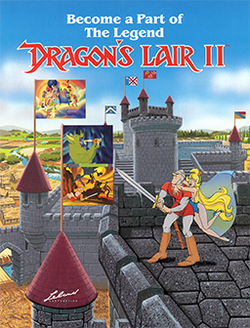
 Dragon's Lair II: Time Warp on PS3
 Dandara on Switch
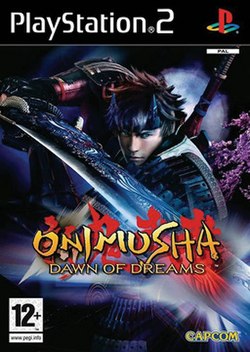
 Onimusha: Dawn of Dreams on PS2
 Puzzle by Nikoli 4: on PS4
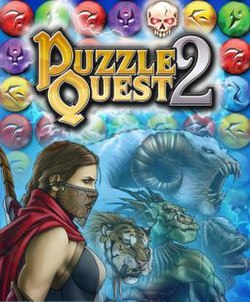
 Puzzle Quest 2 on DS
 Twinbee Taisen Puzzle Dama on PlayStation










 Another SquareThought Site