

 Jun 2009


Wolfenstein 3D on PS3 is a time capsule that smells faintly of floppy disks, gun oil, and the unmistakable confidence of a team that decided to teach Nazis a lesson via texture-mapped corridors. Beneath the pixelated walls and the chorus of German shouts, there is-if you squint and tilt your head like an overly analytical film student-a surprisingly coherent character study. The protagonist, William "B.J." Blazkowicz, is not presented with lengthy flashbacks or tearful monologues. Instead, his arc is told through rooms cleared, keys found, and the steady accumulation of ammunition. This review will unapologetically read story beats into level design, treat guns as emotional beats, and explain why the PS3 port of a 1992 revolutionary shooter still reads as a short, punchy character drama.
If Wolfenstein 3D were a play it would be eleven short acts repeated across multiple seasons. The basic structure-escape a prison, thwart a secret plan, storm a bunker to punch a man who thinks he can wear a mechanical exoskeleton while being historically terrible-maps neatly onto a hero's journey without any of the pretension. B.J. starts as a captured Allied spy in "Escape from Castle Wolfenstein," which gives him the same narrative muscle as any amnesiac action hero: no explanation, only impulse. Each level functions like a beat in his growth; the elevator at the end of a map isn't just progression, it's a scene cut. He survives, the curtain falls, and we get a consoling tally of enemies killed and secrets found. Mechanically, the game hands B.J. a very small emotional vocabulary-knife, pistol, submachine gun, and the gloriously excessive chain gun-so interpreting his arc is partly interpretive theater. The knife is intimate and base: B.J. reduced to survival. The pistol marks competence; it signals the point where the spy regains agency. The submachine gun and later the chain gun are not just upgrades, they are B.J. choosing escalation. When the game hands you a chain gun, the protagonist stops sneaking and starts delivering consequential moral choices at sixty rounds per second. The effect on the player is cathartic, and narratively it's B.J. embracing direct action against the monstrous regime. Enemies are props and antagonists in one. Guards and SS troopers are the mundane, dehumanized obstacles of occupation; their repeated appearances function like recurring minor villains in a serialized TV show. Dogs are panic incarnate-fast, feral interruptions that test B.J.'s reflexes and remind the player of vulnerability. Then there are the narrative spikes: undead mutants in "Operation: Eisenfaust" and the final boss fights, culminating in Adolf Hitler in a four-chain-gun exoskeleton. These bosses are opera-gesture moments that compress high drama into a few seconds of disproportionate violence. The fights force B.J. to commit fully to the role of avenger. The episodic structure matters to his arc. The primary trilogy moves B.J. from escape, to thwarting a macabre science project, to toppling a psychotic symbol of power. The Nocturnal Missions prequel trilogy reframes him as a pursuer and investigator-older tactics, different stakes-so playing both gives you the sense of a life lived in two modes: reactive escape and proactive sabotage. Spear of Destiny as a retail prequel gives B.J. the Indiana Jones-lite chapter where he is not only fighting Nazis but also dealing with magical-macguffins, expanding his arc from purely practical spy to mythic relic-hunter. For a game that speaks with occasionally cartoonish German and cinematic boss replays, this is an admirably varied CV for a man with a very steady walk animation.
Wolfenstein 3D's visuals are a dialect of efficient brutality. Technically it's 2.5D: the levels render in a fast ray-casted perspective while enemies are 2D sprites drawn at multiple angles. That restriction forced id Software's artists-Adrian Carmack chief among them-to bake character into single frames. Enemy sprites are expressively ugly in the best way: the smudged face of a guard, the floppy motion of a wolf, the corpses and bloody wall details added to emphasize the stakes. The decision to adopt VGA late in development meant the palette could be richer and the rooms more memorable, even if everything still reads like a stop-motion diorama compared to modern polygonal realism. Sound and music-Bobby Prince's work and the team's army of shouts-act as the game's leitmotifs. The guns have reassuring thumps, footsteps give away secrets, and the occasional German chant on the title screen announces the ideological foe without nuance. The Death Cam and violent animations-once controversial-work as punctuation: you shot a thing; now the world acknowledges it. On PS3 the port mostly preserves these artifacts of early 90s design, and there's a strange pleasure in watching low-res sprites wobble and emit remarkably modern-sounding gun samples. Aesthetic limitations become stylistic choices: Wolfenstein doesn't want to look photorealistic, it wants to look decisive.
If you approach Wolfenstein 3D like a period piece it's a milestone: the grandfather of modern shooters that taught the industry how to move fast, how to sell tense corridors, and how to monetize a game through shareware. If you approach it like a character study, it's a compact portrait of William "B.J." Blazkowicz told in action beats instead of monologues. He is not subtle-he's a straight-arrow spy whose personality is measured by the weapons he picks up and the bosses he smashes-but the economy of storytelling is part of the charm. On PS3 the game feels less like a port and more like a historical artifact-comfortably playable, a touch raw, and morally unambiguous in its antagonists. Its legacy is loud: Wolfenstein 3D popularized the first-person shooter, proved shareware could be a business model, and even shaped legal debates about imagery in games. The engine was licensed, modders made levels, and later id would move on to Doom. But when you boot Wolfenstein on PS3, what you really get is a short, soulful arcade opera where a man with a square jaw (and an even squarer moral compass) walks through rooms, collects keys, and refuses to let evil take the stage. For anyone who wants to see where the genre learned to run and how a game can sketch a hero in only a few mechanical beats, this PS3 re-release is required playing. If you want narrative subtlety, this isn't the place; if you want compact, cathartic, joyfully unrefined heroism, welcome back to Castle Wolfenstein.
 Wolfenstein: The New Order on PS3
 Rise of the Triad Remastered on PS4
 Warhammer 40,000: Boltgun 2 on Xbox Series X/S
 PixelJunk Shooter 2 on PS3
 Turok: Dinosaur Hunter on Switch
 Primal Carnage: Extinction on PS4
 Doom Eternal on Xbox Series X/S
 Doom Eternal on PS5
 Quake on PS5
 Doom: The Dark Ages on PS5
 Doom II on PS4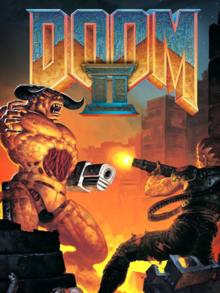










 Another SquareThought Site