

 Mar 2012


Wrecked: Revenge Revisited is the kind of game that wears its dusty denim jacket and says, "I used to be called Gas: Fuel For Fun," then proceeds to crank a V8 of arcade chaos while winking at your sensibilities. Developed by Supersonic Software and published by 505 Games for digital platforms, the PS3 release (available in the PAL region) and the Xbox Live Arcade sibling arrived on 28 March 2012 and landed somewhere between fond nostalgia and mild disappointment with critics - Metacritic puts the PS3 edition at about 64/100. On the surface it's a straightforward vehicular combat racer: pick a car, pick a weapon, and wreck your friends or a series of AI opponents. But if you squint, lean in, and assign personality traits to bits of sheet metal, this scrappy little title offers enough character drama to fuel a soap opera about steroids and suspension systems. This review takes an oddball approach: instead of just tallying brakes, boosts, and bullet arcs, I'm going to analyze the game's real cast - the cars (and the players who drive them) - and chart their story arcs through the campaign, multiplayer bouts, and the game's thin but suggestive narrative of revenge. Think of it as automotive literary criticism with tire marks.
Wrecked's gameplay is arcade-first, rules-later: races are short, violent, and punctuated with weapons and power-ups. That formula means the "characters" in the game are less defined by voice acting and cutscenes and more by their archetypal behaviors on the track. The Protagonist is you - an archetype of the underdog driver who starts with a mushy starter car and an unquenchable thirst for petty vengeance. Your arc is a classic progression story: awkward early races where your radiator is the emotional equivalent of a crying baby, then incremental upgrades that translate into tactical edge, ending in a crescendo where you finally exact metaphorical revenge on the pack. The Pack functions as the antagonist ensemble. They're not individuals in the narrative sense but in gameplay they act like rival families: the Muscle Car (the braggart bully), the Nimble Coupe (the slick con artist), the Tank (the unstoppable brute), and the Little Hatchback (the plucky scrapper who somehow survives). Each race is a micro-drama in which alliances are formed and broken - your Muscle Car friend will push you into a nitro boost one lap, and the next lap he'll use a homing missile to remove your bumper. These are relationship arcs told in reverse: trust builds, trust explodes, and sometimes trust is repaired with a well-placed oil slick. Multiplayer is where character development thrives, because humans breathe intent into metal. A player's style reveals their personality: the Grease Monkey clings to upgrades and thinks of every race as a career ladder; The Showboater drifts and taunts, sacrificing efficiency for applause; The Pacifist is the rare player who treats an explosive power-up like a moral dilemma. Watching these playstyles interact is like observing a crowded bar fight where everyone's wearing different helmets. Single-player content gives the illusion of a story arc through modes and progression rather than actual storytelling. There are championships, challenge races, and unlocks that act as milestones in your personal revenge tale. Completing events unlocks new parts and cars - tangible signs of your protagonist's growth. It's not Shakespeare, but when your once-puny hatchback finally sports a reinforced chassis and a dual-shot railgun, the sense of catharsis is unexpectedly satisfying. Combat mechanics are clean enough to make an impact: weapons feel weighty, collisions are satisfying, and the risk-reward of offensive versus defensive play is tangible. Where Wrecked stumbles is in variety and depth; track design and mode variations don't always sustain long campaigns, so the character arcs can feel compressed. You get the beginning, middle, and end, but sometimes the middle is a montage rather than a fully staged act. Still, for short bursts - the kind of matches you play while waiting for your pizza - Wrecked delivers memorable moments that tell small, sharp stories: desperate comebacks, betrayals at the apex of a corner, and the occasional friend who turns into an archenemy over a single explosive pickup.
Visually, Wrecked is an arcade relic in the modern clothing of the PS3 era. Its aesthetic is blunt but serviceable: cars gleam with stylized detail, explosions are satisfying but not photorealistic, and tracks favor readability over environmental poetry. The game doesn't pretend to be a beauty queen - it's the brawler at the club who somehow looks good after a scuffle. On PS3 the frame rate holds up well for the chaotic action, and animations communicate weight (important for selling the idea that your car has feelings). Character design is notable mainly because the cars wear their personalities on their fenders. The Muscle Car has stripes like a schoolyard bully wearing a varsity jacket; the tiny hatchback has bumper stickers that say 'I survived.' There's very little in the way of narrative cinematics, so the graphics have to do the heavy lifting for emotional cues. They mostly succeed. Lighting and particle effects amplify big moments - a destroyed engine bay belching smoke feels like a wounded character crying for help. That said, the environments can repeat, and track variety isn't deep enough to sustain a long-form visual story. Think of it as a TV series with great pilot episodes and a mid-season slump.
Wrecked: Revenge Revisited is an odd little character study disguised as a demolition derby. If you come in expecting a story-heavy single-player epic, you'll leave hungry, but if you accept the game's premise - that drama unfolds primarily through the interactions of cars and players - it becomes a charming, punchy arcade title. The revenge theme is more of an attitude than a plot: it gives players a narrative spine to hang their triumphs and humiliations on. Community and multiplayer infuse the cast with life, turning anonymous metal into personas with vendettas. The game's strengths are its brisk, satisfying combat moments and the way it encourages players to invent their own stories. Its weaknesses are predictable: limited variety in modes and tracks, and an absence of a proper narrative to anchor the revenge motif beyond unlocks and leaderboards. Critics reflected this ambivalence - some praised the joy of the core gameplay, while others found it thin. For PS3 players in the PAL region looking for a fun, chaotic racer to play in short sessions (especially with friends), Wrecked offers enough personality to justify a download; if you need a polished, deep single-player saga, you'll want to look elsewhere. I give it a 6.5/10: a game with heart, a stiff upper bumper, and just enough story-shaped dents to make it interesting.
 Red Dead Redemption on PS4
 Risk of Rain on PS4
 Project Awakening on PS4
 Combat Elite: WWII Paratroopers on PS2
 Orphen: Scion of Sorcery on PS2
 Monster Hunter Stories 2: Wings of Ruin on Switch
 Pong: The Next Level on PlayStation
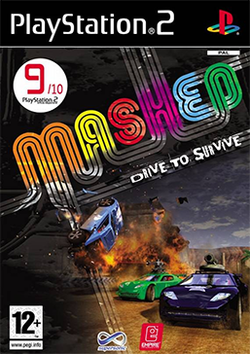
 Mashed: Drive To Survive on PS2
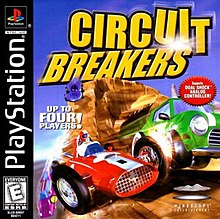
 Circuit Breakers on PlayStation
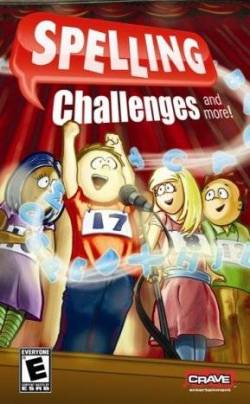
 Spelling Challenges and More! on DS
 Antz Extreme Racing on PS2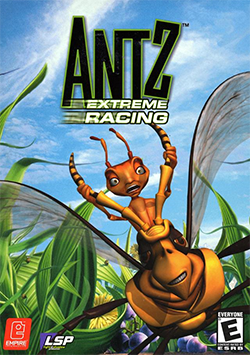










 Another SquareThought Site