

 Oct 2012
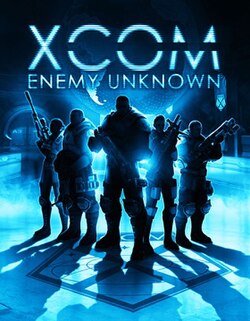

XCOM: Enemy Unknown is one of those rare reboots that treats its source material like a venerable grandparent: it respects the wrinkles, keeps the war stories, but gives the old geezer a new haircut and a better budget. On PS3 the game is the same tense, turn-based stew Firaxis cooked up: you run a multinational paramilitary outfit, babysit a subterranean 'ant farm' headquarters, and send squads into city streets and warehouses where aliens have a nasty habit of hiding behind IKEA-sized obstacles and murderously efficient ambushes. This review refuses to do the usual checklist of bullets and mechanics. Instead it interrogates the real stars of XCOM - the characters and the arcs they quietly create as you shove them into cover and sometimes watch them explode. If you want a tactical thriller with emergent, player-created tragedy, this is the dish. If you want a canned, melodramatic narrative with lovingly hand-delivered character development, look elsewhere. XCOM's storytelling is less 'actors onstage' and more 'action figures in a sandbox'; the arcs are found in promotions, panic meters and the little memorial wall that accrues names like a tiny, stern obituary for your hubris.
XCOM's 'characters' fall into a few overlapping categories: the story characters (Dr. Vahlen, Council, the Volunteer and the alien leadership), the archetypal soldier classes (Assault, Support, Heavy, Sniper), and the anonymous extras - the rank-and-file recruits whose faces you pick and whose deaths you learn to dread. Dr. Vahlen is the game's emblem of scientific curiosity. She's the lab-coat heartbeat of the narrative: always asking for live specimens, always hinting at discoveries to come. Her arc isn't cinematic; it is procedural. She grows in significance as your research tree blossoms, and her requests for autopsies and interrogations give the campaign an anthropological rhythm. She represents the human need to name and understand the unknown, even if what's learned is more unsettling than comforting. The Volunteer is XCOM's true emotional anchor. Unnamed until you make them, this psionic avatar transforms from statistical unit to mythic figure as they tap into alien psychic networks. Their arc is operatic despite the game's preference for understatement: from nascent psychic recruit to someone powerful enough to interface with the aliens' hive mind, and finally to the sacrificial pilot whose last choice is to steer a collapsing Temple Ship away from Earth. The Volunteer is the rare character whose development the plot actually stages - not through cutscenes so much as through the player's investment. You watch them gain powers, pick a name, watch teammates salivate for the new 'Volunteer meta' in their squad comps, and then you feel the weight when that character insists on staying behind. It is one of the few times XCOM stops being a board game and becomes a tragedy. The Ethereals and their cohort (Outsiders, Overseers, Uber Ethereal) form an antagonistic chorus with a surprisingly clean motive: uplift. Rather than being cartoonish brimstone, the Ethereals are manipulative philosophers who shepherd species toward an ambiguous 'greater destiny.' Their story arc - from shadowy pilots to revealed cosmic eugenicists - is brief but memorable and manages to explain, without humanizing too deeply, why they meddle with Earth. Firaxis resists turning them into sympathetic villains; instead they're clinical, strategic and slightly pathological in their 'helpful' contempt for humanity. On the squad level the game crafts hundreds of micro-arcs. Soldier progression is a slow-burn character study: a Squaddie who survives three missions becomes a decorated Sergeant with PTSD-flavored panic rolls and a favorite rifle. Permadeath means every promotion has teeth; perks you choose are commitments in character-building. The classes are archetypal but surprisingly narratively rich. Assaults become reckless lead characters who sprint into danger and either become legends or cautionary tales. Supports grow into medical saints or bitter, haunted veterans who couldn't save their friends. Heavies narrate themselves as blunt instruments of chaos, and Snipers are the loners whose single decisive headshot ends someone else's arc. Panic, nation support, and the Geoscape function like secondary characters that react to your moral and strategic choices. Nations bail for reasons that feel personal even though they are driven by numerical panic levels; watching a country's flag wink out is like losing a node in the narrative network. The consequence architecture - satellites, research priorities, room construction - forces you into story beats. You cannot do everything, and the choices you forgo become the small tragedies and moral compromises that accumulate into a campaign's emotional spine. The missions themselves are where XCOM lets characterization happen through gameplay. Fog-of-war encounters create tension, and the game's UI gently tells you the odds of success while still letting chance create drama. Environmental destructibility, line-of-sight mechanics and the unpredictability of alien placement means character arcs are messy and earned: a rookie who performs a heroic grenade throw or a veteran who freezes in a panic isn't a writer's choice so much as the game's emergent dramaturgy.
Visually XCOM keeps things stylized rather than photoreal. The soldiers look like action figures, which is an inspired decision because it ties directly into the childhood joy of lining up little plastic heroes and secretly being a monster with a rocket launcher. Alien redesigns are a highlight: Sectoids are embarrassingly familiar in the best way (big head, creepy stare), Mutons are bronze-age gorillas in power armor, and Chryssalids have been reworked into truly unsettling quadrupeds. Thin Men are elegantly creepy and Æon Flux-adjacent in their lankiness. Maps are handcrafted and detailed; Firaxis chose quality over procedural map promises and the result is consistently atmospheric levels where the juxtaposition of everyday locales and predators creates an uncanny cinematic feel. The 'ant farm' base view is a tidy visual metaphor for control and exposure - you can almost feel the weight of every room you build. Michael McCann's synth-forward score deserves a shout: it paints the subterranean paranoia perfectly. On PS3 the textures and effects are solid for the era, and while the game won't be mistaken for a PS4 showpiece, its art direction and sound design serve the narrative and emergent character moments brilliantly.
XCOM: Enemy Unknown on PS3 is the kind of game that tells stories by breaking your heart in incremental, utterly avoidable ways. Its narrative strength is emergent: characters are created by the choices you make, the promotions you grant, the missions you botch, and the heroics you don't expect. Dr. Vahlen and the Volunteer provide the few explicit story beats, but the real drama is the slow accumulation of micro-tragedies and triumphs among your recruits and the geopolitical tantrums played out on the Geoscape. If you care about crafted character arcs in the classical sense, XCOM will occasionally frustrate you with its refusal to spoon-feed drama. If you prefer stories that rise from stakes, chance and moral compromise, the game is a masterclass. The PS3 port lovingly delivers Firaxis' tactical alchemy: tense combat, meaningful progression and a score that sounds like a noir science-fiction fever dream. Verdict: a tactical epic that humanizes strategy through permadeath, panic, and the notion that the best stories are the ones you don't plan for. Bring tissues, a crash course in triage, and a backup plan for when the Volunteer decides the ship is more important than their lunch break.
 Warhammer 40,000: Kill Team on PS3
 Titan Wars on PlayStation
 Vandal Hearts II on PlayStation
 Coloball 2002 on PS2
 Tiny Metal on Switch
 Cubix: Robots for Everyone: Showdown on PS2
 Achtung! Cthulhu Tactics on Switch
 Civilization VI on Switch
 Marvel's Midnight Suns on PS5
 Civilization VII on PS4
 Sid Meier's Civilization Revolution on DS










 Another SquareThought Site