

 Aug 2015
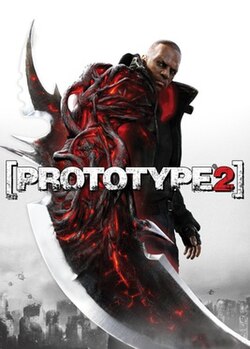

Prototype 2 on PS4 is the same gleefully violent sandbox that shocked and thrilled on earlier consoles, repackaged for a new generation. You play James Heller - a grieving U.S. Marine turned living virus - hunting Alex Mercer while tearing Manhattan a new skyline. If you enjoyed the original's mix of absurd mobility and grotesque combat, the sequel sharpens the toolkit into something more tactical and, crucially for us masochists, more skill‑based. This review is tuned to the part of your brain that reads "challenge" and says "yes please." I will focus on what the game asks of your thumbs, your timing, your brain and your appetite for throwing cars. Prototype 2 teaches you to be a predator that jumps like a superhero, fights like a demolition derby and thinks like a half‑functional military strategist. It isn't subtle, and that's the point.
Prototype 2's core loop is simple: move fast, find targets, consume them, upgrade, repeat - but the way the game layers abilities, enemy types and mission choices turns that loop into a study in skill application. Movement is the first challenge. Heller isn't a slow tank; he is a missile with attitude. You sprint up the sides of buildings, chain roof hops, then transition into a glide at the last instant. The game makes fluid traversal feel spectacular, but it rewards players who treat the city like a three‑dimensional chessboard. Mastery requires more than holding forward and mashing jump: you learn to read ledges, time boosts to clear gaps, and use the glide to set up attacks. Precision platforming isn't punishing in the "pixel‑perfect" sense, but if you want to move like an efficient predator (and finish a mission without looking like a confused pigeon), you need practice. Combat crescendos the challenge curve. Heller has near‑invulnerability and infinite stamina, which sounds like a free pass to chaos - until you meet smarter enemy types. Regular soldiers are fodder if you close quickly, but Blackwatch introduced a more realistic AI and a dodging system specifically to stop Heller from being an unstoppable button‑masher. Timing your dodges becomes essential: enemy volleys and vehicles can still stagger you and break combos if you get sloppy. Supersoldiers, Brawlers and Evolved agents (the game's human bosses with similar powers) force you to adapt rather than spam the same move set. Boss fights, especially against Evolved agents like Koenig and ultimately Mercer, test whether you've built your kit thoughtfully and can switch tactics on the fly. Skillful use of Heller's mutant powers is where the game turns into a toolbox puzzle. Consuming people isn't just for flavor - it's a tactical decision. Some enemies are consumed instantly; others give different perks or memories. The sonar pulse highlights points of interest and can expose enemies in crowds instead of making you hunt for icons, which rewards situational awareness. The pulse becomes a skill you use between runs to prep an engagement. Tendrils add creative depth. These arm‑sprouting whips let you smash objects into enemies, rip weapons off tanks, and set up cinematic environmental kills. The 'Black Hole' attack - using tendrils to launch debris - makes the city itself a weapon, but it also asks you to think about positioning. A well‑timed tendril throw can turn a squad and a vehicle into instant confetti; a missed timing wastes your opening. Environmental kills are not just window dressing. Dismemberment and physics‑based attacks are brutally fun but they require spatial thinking: throw a car to block an enemy's path, then slam a tank's Gatling cannon into their faces, or lure a group under falling scaffolding. The game rewards players who look beyond combos and use the city as an ally. Stealth and subterfuge get an upgrade compared to the original. Heller can assume identities like Alex Mercer did, but now it's more tactical. If you wear a soldier's form in Yellow Zones, civilians recoil - so the game nudges you to think about social context and mission approach. Hacking Blacknet terminals to pick side‑missions gives you choice: which operations will you disrupt and how? Picking the right mission can be its own difficulty puzzle, especially when you want to farm a specific upgrade or find a particular person to consume for intel. The BioBomb and Brawler‑control mechanics add an element of indirect control. Turning a human into a detonating BioBomb is a satisfying way to thin crowds, but you must time and aim these conversions for maximum effect. Controlling a pack of Brawlers feels like commanding a mini army; you issue orders strategically, then exploit the chaos while they soak up attention. These powers reward a tactical mind that can set up distractions and capitalize on enemy focus. Difficulty balancing isn't perfect. Some critics called side‑missions repetitive, and they can be if you run the same sabotage tasks without changing approach. The game tries to offset this with Radnet's weekly challenges - an optional source of additional abilities and scenarios that pushes players to refine specific skills. If you ignore Radnet, you still get the core game, but you'll miss a system designed to teach and test you in compact, skill‑focused bursts. On the skill front, Prototype 2 expects you to be a jack of many trades. You'll need: - Platforming and aerial timing: to chain movements and set up hits. - Situational awareness: to use sonar pulses, read AI behavior and avoid being flanked. - Tactical improvisation: to craft environmental kills and mix tendril, melee and ranged attacks. - Target prioritization: to decide whether to consume for upgrades, incapacitate, or use as a distraction. - Boss pattern recognition: to identify windows to deal damage, when to dodge and when to change strategies. A player who invests time learning Heller's cadence will find Prototype 2 rewarding. Moves that feel gimmicky at first chain into devastating strategies later. The game prefers players who learn through experimentation rather than those who want a slow, methodical stealth sim; victory here looks like a precisely executed rampage. The one area where challenge suffers is narrative motivation: the story gives you reasons to hunt Mercer, but many reviews called the plot thin. That matters if you need a tight narrative to stay engaged; if you don't, the game's mechanical depth compensates because its systems themselves tell a violent, satisfying story.
Prototype 2 benefited from an engine overhaul using the Titanium 2.0 engine, and the PS4 release gives the game's already loud visuals a bit more polish. Buildings are more detailed, vehicles deform satisfyingly and dismemberment effects are more visceral than before. The city feels like a playground built for destruction: debris, crumpling metal and dynamic physics all feed into combat and traversal strategies. The visuals also communicate useful information for the challenge‑oriented player. Enemy types, environmental hazards and destructible objects are readable in the heat of combat, which matters when you have seconds to decide whether to leap, dodge or Black Hole a plaza into a smoldering graveyard. The sonar pulse is represented clearly, and the animation cues during boss encounters are distinct enough that pattern recognition becomes a fair test rather than a confusion fest. Performance on PS4 is stable for the re‑release; you get fewer frame hiccups than the original console launch reportedly suffered on older hardware. The result is that high‑speed movement and physics‑heavy fights remain legible - a must for a game that asks you to perform in three dimensions at speed.
Prototype 2 on PS4 is not a subtle game and it doesn't pretend to be. What it offers is a refined school of violent competence: learn the movement, exploit the environment, master tendrils and BioBombs, and the city bows before you. The challenge comes less from survival and more from efficiency. The game asks you to be precise in absurd ways - to time a glide, line up a Black Hole, then chain a consume into a takedown - and for players who love that kind of mechanical toybox, the payoff is enormous. It isn't perfect: mission variety can grind thin, and if you need a narrative to carry you through repetitive tasks, you might unplug before fully appreciating the systems. On the other hand, Radnet's challenge drops and the richer tactical tools (tendrils, Brawler control, a smarter dodging system) make Prototype 2 a stronger, more skill‑centric sequel than its predecessor. If you want a sandbox that treats destruction like a sport and asks you to get good at it, Prototype 2 is worth the ride. If you prefer quiet, methodical difficulty or an emotionally layered plot, this game will still entertain you in short bursts - but expect the real education to be in your thumbs and your timing. In short: bring the patience to learn Heller's moves and the appetite to experiment; Prototype 2 will hand you a very messy diploma.
 Terra Nil on Switch
 The Making of Karateka on Xbox Series X/S
 Tintin: Destination Adventure on PlayStation
 Project Awakening on PS4
 Action Man: Operation Extreme on PlayStation
 Moon: Remix RPG Adventure on Switch
 Crash of the Titans on PS2
 Crash Tag Team Racing on PS2
 Grid Runner on PlayStation
 MTV Sports: Snowboarding on PlayStation










 Another SquareThought Site