

 May 2021


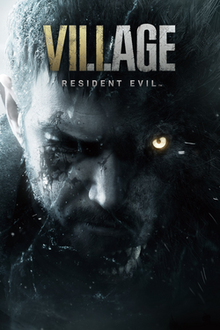
Resident Evil Village is the kind of sequel that dresses like gothic horror, smacks you with werewolf teeth, then hands you a merchant's ledger and expects fiscal responsibility mid-scream. On PS4 it keeps the first-person tension of RE7 but leans harder into action, packing an entire creepy theme park of nightmares into one snowy village. If you're the sort of player who likes being tested, Village asks for a weird combo: twitch aim, inventory Tetris, patience, and the cold-blooded appetite to prioritize bullets over sentimentality. This review zeroes in on the challenges the game throws at you and the specific skills you'll either learn or be mercilessly roasted by.
Village's challenge isn't a single difficulty spike - it's an orchestra of small, sometimes contradictory tests that force you to juggle a handful of skills simultaneously. First up: resource management. Capcom hands you a gun, a few rounds, and a caravan of hungry Lycans. Ammo is scarce early on and remains a constant accounting problem. The game rewards conservative choices: aim for heads, use melee when feasible, and learn when to run. The Duke, the merchant with a suitcase bigger than your prospects, becomes your economic therapist - selling upgrades, weapons, and those greasy side dishes made from hunted animals. Knowing when to blow your Rare Currency on a better stock or stash a few coins for a key upgrade is a repeatable strategic test. Inventory management is a tactile puzzle in itself. The briefcase is literally inventory Tetris: items rotate, tiles fill, and suddenly your prized shotgun is jammed behind a collection of herbs. Spatial reasoning and forward planning are mandatory; if you want to carry a medkit, submachine gun, and two crafting materials, you'll need to rotate items like a tiny, stressed Tetris champion. That mechanic alone elevates decision-making from "what do I use" to "how do I carry it." Combat demands aim and pattern recognition. The Lycans are fast, intelligent, fight in packs, and occasionally steal your faceplate with improvised weapons. You'll need to prioritize targets (ranged threats first, then melee), make use of environmental barricades, and master the timing of blocks and dodges. Ethan's movement is not parkour - it's deliberately weighty. That slow, deliberate feel rewards careful positioning and punishes frantic strafing. Boss encounters lean on weak-point targeting; some are more spectacle than intricate dance, but the skill consistently tested is accuracy under pressure. Adaptability is the meta-skill Village uses to keep you honest. Each major area - Castle Dimitrescu, House Beneviento, Moreau's reservoir, and Heisenberg's factory - plays like a tiny sub-game with its own rules. Castle Dimitrescu leans on exploration and stealthy corridor fights, Beneviento warps you into psychological puzzle-and-stealth territory, Moreau throws grotesque, up-close fights, and Heisenberg shifts into an engineered, enemy-swarm action domain. You can't use one rigid approach for all four; switching playstyles on the fly is an essential skill. Puzzle design is mixed as a training course. Some puzzles reward attention to environment and map use; others are criticized for being too obvious or even accidentally placed next to their solutions. This means your puzzle skill set mostly involves scavenging, reading notes, and connecting dots - not the kind of brain-melting inferno that ruins a night, thankfully. Saving and risk management play into the challenge: typewriters replace tape recorders, letting you control where to lock progress. That control makes each section a deliberate risk assessment. Do you push on one more room to squeeze another treasure out of a guarded nook, or do you save and sleep on your laurels? The game constantly asks you to weigh greed versus caution. If you want a pure expression of the mechanical challenges, Mercenaries mode (unlocked post-completion) is the place to grind. It's arcade-tight, time-limited, and forces you to become efficient: aim fast, string combos, and choose upgrades that complement your playstyle. Consider it a training dojo for the main game's more chaotic sections. Skills summary: precise aim, spatial inventory management, resource prioritization, pattern recognition, adaptive playstyle switching, environmental awareness, and a dollop of risk calculus. Master these, and the village will feel punishingly fair. Fail them, and the village will repay you in screams and respawns.
On PS4 Village looks like Capcom squeezed a gothic painting through a modern renderer: rich textures, frosted landscapes, and grotesque creature designs that linger in your vision long after you quit. The RE Engine does a lot of heavy lifting, giving character faces uncanny detail and interiors a theatrical gloom. Performance on PS4 is solidly playable, though not as silky as next-gen builds; load times and framerate occasionally remind you that the game was designed to scale. Still, the visual variety - from the stately decay of Castle Dimitrescu to the damp, mutated horrors of Moreau's reservoir - feeds gameplay by shaping how you fight and explore. The environments are not just pretty; they're full of tactical verticality, hiding places, and tight funnels that influence combat pacing and resource use.
Resident Evil Village on PS4 is a beautifully constructed gauntlet that asks for more than reflexes: it wants strategy, patience, and a willingness to change tactics mid-fight. Its strength lies in variety - each lord's domain forces you to pick up new tricks - and in the way survival horror and action trade barbs throughout the campaign. The game isn't flawless: some boss fights swing too far into run-and-gun territory, movement can feel sluggish in open arenas, and a few puzzles are too gentle. Still, as a challenge package it nails a satisfying balance for players who want to be tested on multiple levels. If you enjoy conserving ammo like it's endangered, turning your inventory into a work of Tetris art, and adapting your playstyle with the grace of a panicked librarian, Village will chew you up, teach you its rules, and eventually let you walk away with a head full of mushroom-molded nightmares and a weird fondness for the Duke's cooking. Fun, scary, and occasionally furious - and you'll probably be better for it.
 Resident Evil 7: Biohazard on PS4
 Resident Evil Survivor on PlayStation
 Resident Evil Village on PS5
 Obscure: The Aftermath on PS2
 Crow Country on PS4
 Tormented Souls on PS5
 Green Hell on Xbox Series X/S
 Resident Evil 2 on PS4
 Devil May Cry 3: Dante's Awakening on PS2
 Ultra Street Fighter IV on PS3
 Resident Evil 4 (remake) on PS4
PS4.jpg)










 Another SquareThought Site