

 Jan 2016


Road to Ballhalla is one of those indie titles you half-remember scrolling past during a sale and then suddenly decide to actually play because you're nostalgic for the days when games felt like indie zines with vibey soundtracks. Published by tinyBuild and developed by Torched Hill (listed among tinyBuild's 2016 published catalogue), the game puts you in the shoes of an earnest little protagonist pushing, nudging, and occasionally panicking their way toward a mythical destination called Ballhalla. This review is not here to tell you whether Ballhalla has Wi‑Fi or a bouncer with standards. Instead, it will examine the surprisingly human (and oddly therapeutic) character arcs threaded through a deceptively simple puzzle loop - because if a game is going to hand you a metaphorical ball, you might as well talk about what that ball represents.
The first thing to understand is that Road to Ballhalla's mechanics double as a personality test. At surface level the game is a modest puzzle-platformer: you guide a small human-like figure who manipulates a large ball across levels filled with ramps, switches, and physics traps. But every push, misstep, and triumphant roll reads like a sentence in the protagonist's diary. The protagonist is deliberately low on explicit dialogue and high on expressive animation - a tiny, hungry-for-purpose avatar whose only words are exaggerated body language and the occasional frustrated shrug. That silence is the canvas for character work. Early levels cast the protagonist as a nervous optimist. Movement is tentative; camera angles linger on hesitant steps and on the ball as if it's a shy friend being coaxed out of a padded corner. The player learns to coax, not command: gentle nudges win where brute force fails. That translates into a story beat where the lead discovers that patience and finesse override panic. The protagonist's arc from anxious to adaptable is reinforced by level design that slowly rewards observation. Switches teach cause-and-effect, icy ramps punish overconfidence, and the occasional level that appears impossible until you change perspective acts like a therapist saying, "Maybe try looking at this from another angle." Mid-game introduces a secondary arc: the protagonist's relationship with the ball becomes reciprocal. At first the ball is an object, a goal to be delivered to Ballhalla. Over time it accrues personality through physics and design: it tugs when you hesitate, it gains momentum when you commit, and it sometimes betrays you by rolling into spikes at the most tragic moment. Those betrayals are not cheap frustration hooks; they punctuate the narrative with tiny failures that shape the player's and protagonist's resolve. This is where the game's character work shines - not because it tells you who the protagonist is, but because it makes you feel like you and they are learning together. Boss-ish or gauntlet levels near the end force a choice architecture: brute speed vs. steady control. The protagonist's final act of growth is a commitment. If earlier you nudged and second-guessed, now you pick a strategy and live with the outcome. Succeeding in these sequences has emotional weight because the gameplay encoded the protagonist's internal development; the final roll into Ballhalla is cathartic less for trophy reasons and more for narrative closure. On the downside, some puzzles at times lean too heavily on finicky physics - a missed collision can feel unfair, and the camera occasionally refuses to cooperate during tense maneuvers. Those moments undercut immersion and can make the protagonist's emotional growth feel like it's being held hostage by a rigid simulation. Still, when things click, the symbiosis between player skill and character story is genuinely satisfying. Humor is another character tool the game uses. The protagonist's micro-reactions (the little faceplant after an overzealous push, the celebratory arm wave when the ball obediently settles into place) keep the tone light. Road to Ballhalla uses failure to build empathy rather than to punish. It's a playful reminder that characters can evolve in small, quiet ways without a monologue from a morose narrator. For an 18-year-old who's spent nights falling off digital cliffs and blaming lag, that's oddly consoling.
Graphically, Road to Ballhalla isn't trying to flex RTX muscles. The aesthetic is minimalist but charming, with soft color palettes and crisp silhouettes so the protagonist and the ball never get visually lost in the environment. Animations are deceptively expressive: tiny motions and timing cues do most of the emotional storytelling. Backgrounds are more suggestion than spectacle - dreamy gradients and abstract shapes create a sense of journey without distracting from puzzle readability. This design choice supports the character-first narrative by keeping the focus where it belongs: on small gestures. There are trade-offs. The art direction's restraint occasionally reads as bland, particularly in later levels where visual variety might have helped differentiate the emotional beats. Lighting and particle effects are used sparingly, which keeps the frame clean for puzzle clarity but also means the game rarely delivers a wow moment for screenshot culture. On PlayStation 4, performance is steady; there are no wild framerate dips, and load times are acceptable, which matters when your protagonist's dignity depends on being able to retry a tricky maneuver quickly. Overall the graphics do their job: they never overshadow the protagonist's arc and, more often than not, they enhance it with tasteful simplicity.
Road to Ballhalla is an indie title that treats small actions as character statements. The protagonist's arc - from hesitant beginner to committed pilgrim - is woven into every push and miscalculation, and the relationship that develops between human and ball is the heart of the game. torched Hill and tinyBuild clearly intended a low-dialogue, expressive narrative and for the most part it pays off. Gameplay occasionally stumbles on physics nitpicks and visual minimalism can feel underfed in later stages, but the emotional return for those willing to roll with it is high. If you like your character development subtle, earned, and built from humble mechanics rather than cutscenes, Road to Ballhalla on PS4 is a quiet little victory lap worth taking. Bring patience, a sense of humor, and the willingness to learn from a spherical friend - you might be surprised how attached to an inanimate object you can get. Final score: 7/10.
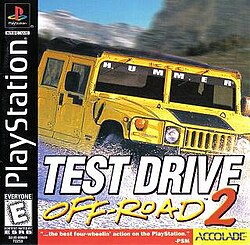 Test Drive: Off-Road 3 on PlayStation
 Road Redemption on PS4
 Puzzle by Nikoli 4: on PS4
 Twinbee Taisen Puzzle Dama on PlayStation
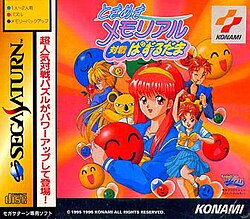
 Tokimeki Memorial: Taisen Puzzle-Dama on PlayStation
 Professor Layton and the Last Specter on DS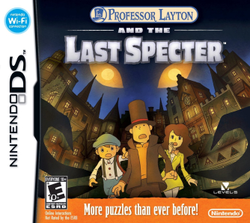










 Another SquareThought Site