

 Jan 2016
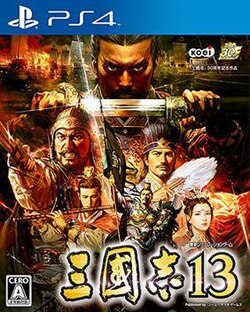

If you think a grand strategy game about ancient China will be all hexes and spreadsheets, Romance of the Three Kingdoms XIII politely asks you to reconsider while sipping tea and sharpening a spear. This thirteenth entry in Koei's venerable Sangokushi series landed on PS4 in 2016 and, true to form, gives you the sandbox of history where generals have egos, ministers have agendas, and your carefully laid plans are frequently tripped up by a romantic subplot involving mistaken loyalties and too many horses. The game ships with two main ways to get started: the traditional campaign mode, where you oversee the wide sweep of politics and warfare, and a hero mode designed to teach you the ropes by letting you step into the boots of individual officers. Famitsu liked it enough to hand out a 36/40, which in Japanese-magazine-speak is basically a polite way of saying 'we cried into our calligraphy brushes with joy.' It sold modestly in week one in Japan, but this is one of those series where influence and patience matter more than flashy launch numbers. What sets RTK13 apart from other historical strategy games is its insistence on characters over merely unit counts. The world map is still the stage, but the people are the plot. This review digs into how the game treats its cast - their ambitions, conflicts, and narrative arcs - and how those human stories power the strategy. If you've ever wanted to watch a minister scheme while you wrestle with supply lines, or felt oddly moved by a general who refuses to betray his sworn brother, RTK13 offers many small dramas stitched into the grand tapestry of statecraft.
Romance of the Three Kingdoms XIII plays like a nonchalant philosophy professor who also knows how to sink a naval invasion: methodical, unforgiving, and oddly theatrical. Campaign mode gives you the long view - manage provinces, shuffle officers, arrange marriages, and decide which rock-solid alliance to back or betray for a sliver of advantage. Hero mode trims the apron strings and focuses on individual officers so you can learn the systems while following a more personal arc. The game is single-player, which means all character drama is yours to orchestrate rather than an unpredictable human friend hilariously backstabbing you for sport. At its core RTK13 is built around officers as both stats and personalities. Each officer has a set of attributes and a temperament that nudges them toward certain actions: loyalty, aggression, brilliance, or venality. Where many strategy titles flatten commanders into numbers, RTK13 treats them like messy humans who will snipe at each other in the council hall and later brave a suicide charge because of pride. This is where the game earns its narrative stripes. Send a hot-headed warrior like Lu Bu-type characters to command under a patient strategist and enjoy the fireworks as their ambitions clash. Elevate a schemer to chancellor and watch court politics rearrange like tectonic plates; transfer that schemer to a border garrison and you'll see the same mind simmer in a new pot with different neighbors. Character arcs emerge from interplay rather than scripted cutscenes. For example, a loyal commander in a provincial city may begin as a grunt you barely notice; with time, promotion, and a few successful skirmishes, he becomes a beacon of local loyalty whose very name stabilizes supply lines. Conversely, placing a brilliant but arrogant officer in a subordinate role can create subtle narrative tension as they fume and plot, eventually choosing to defect, reclaim honor through battlefield glory, or be quietly sidelined by court intrigue. The hero mode helps tighten the spotlight on these personal stories - it functions both as a tutorial and a narrative engine, teaching mechanics while emotionally investing you in at least one officer's rise, waver, and potential fall. Because the game rewards long-term planning, your choices about personnel echo like bad karaoke for decades. Marriages secure alliances, promotions change power balances, and a whim to move an officer can trigger a cascade: a resentful exile, a betrayal, a sudden rebellion. That cascading effect is the best part - it makes your strategy feel less like micromanaging numbers and more like directing a soap opera where the payoffs are provinces instead of emotional closure. The Power-Up Kit and subsequent updates added more scenarios and content variety, giving more chances for unique character arcs to emerge, though the core remains a careful balance of personality management and geopolitical chess. If you're the sort of player who enjoys writing little backstories for units in your head while you stare at a province map, RTK13 supplies endless material. Combat and diplomacy are deliberately sober. Battles are resolved with a mixture of officer attributes and positioning, and while you can take direct command in major engagements, much of the drama is psychological: will your reluctant general stand his ground, or will his loyalty crack under a rival's bribe? The game is less about flashy real-time swordplay and more about convincing courtiers, maneuvering supply, and orchestrating alliances. That steadiness can feel slow to impatient players, but it rewards those who savor the slow burn of a character's transformation from anonymous lieutenant to legendary elder statesman-especially when you engineered it yourself.
On PS4 RTK13 looks like a watercolor map book that learned to play nice with modern hardware. The campaign map is clear, readable, and purpose-built to help you strategize rather than impress a film festival jury. Officer portraits are the visual star: stylized, expressive, and often stuffed with personality. They don't need to be photorealistic to communicate the right vibe - an arrogant commander glares with the exact palette of 'do not cross me,' while a calm strategist's portrait whispers steady competence. Animations are sparse but functional; you won't be watching cinematic duels, but the way officers stand in councils and the little animations when schemes succeed add enough flourishes to give life to the political chessboard. The user interface leans utilitarian, which is a kindness for a game that asks you to babysit dozens of officers and provinces. Tooltips and the hero mode help flatten the learning curve, but the interface also reminds you that this is a thinking game's playground, not an action flick. If you came for flashy particle effects and constant cinematic camera sweeps, you'll probably feel underserved. If you want visuals that prioritize clarity and character over spectacle, the PS4 release delivers exactly that - it gives you faces, moods, and a map that never lies about the math underneath the drama.
Romance of the Three Kingdoms XIII is not trying to be everyone's midnight snack; it's a full-course historical banquet that rewards patience, curiosity, and a taste for interpersonal drama. Its strength is the way characters are not just pawns but the engine of narrative consequence. The hero mode cleverly invites you to emotionally invest in officers while teaching you the mechanics, and campaign mode expands that into a long, satisfying tale of rise, betrayal, and occasionally, redemption. Famitsu's 36/40 feels fair: the game nails depth and character-driven strategy but sometimes suffers from a deliberate pace and a UI that's built for function over flair. For PS4 players who like their strategy with a side of soap opera and who enjoy tinkering with human motivations as much as military logistics, RTK13 is a rich, rewarding title. Score: 8.5/10 - a thoughtful, character-forward war game that will turn your map into a stage and your officers into memorable, occasionally infuriating actors.
 Tokimeki Memorial 2 Substories: Leaping School Festival on PlayStation
 Warriors Orochi 3 on PS3
 Ultimate Marvel vs. Capcom 3 on PS3
 Nobunaga no Yabou Online: Haten no Shou on PS2
 Planets Under Attack on PS3
 Nobunaga's Ambition: Iron Triangle on PS2
 Triangle Strategy on Switch










 Another SquareThought Site