

 Jun 2016
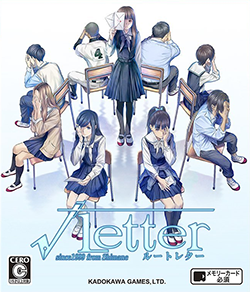

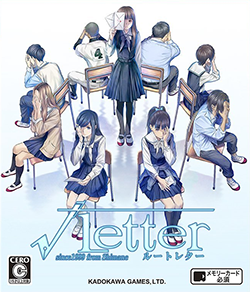
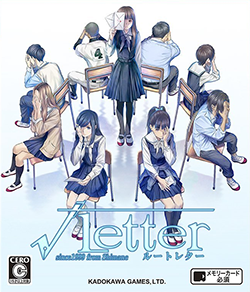
Root Letter: Last Answer is one of those games that quietly reminds you video games can be more about reading and reasoning than about twitch reflexes. Built around a simple but compelling conceit - track down the fate of your long-lost pen pal Aya by interrogating people who knew her and digging through the letters she wrote - the game is part detective novel, part choose-your-own-consequence machine. The Last Answer version adds a twist that makes the challenge palette more interesting: you can swap between the original animated scenes and live-action photography/cutscenes, and there are new scenarios that play out after the main endings. If you came expecting an action mystery, you'll be disappointed. If you like puzzles that test patience, attention and empathy, Root Letter has some clever teeth.
At its core Root Letter splits gameplay into two modes and each demands a different mental muscle. First is the adventure/interrogation half: you show up in Matsue and start interviewing classmates, teachers and assorted locals about Aya. This is where your social-deduction skills kick in. NPCs will lie, hedge, misremember or overshare, and your job is to parse the truth out of that mess. You're not handed an explicit logic grid; instead you have to pick up subtle contradictions, follow up on suspicious statements and cross-reference details. The challenge here is mostly cerebral - identify inconsistencies, keep track of who said what, and decide which leads to pursue. The second half is the simulation/letter-reading mechanic, and it's deceptively strategic. You read through the past letters Aya wrote and choose, out-of-universe, what she actually wrote in certain key passages. Those choices ripple forward and change how characters react to you in the present. That means you're not just answering moral questions; you're deliberately shaping an information environment to steer conversations later. The skill set required here is one part memory (which letter choices produced which future reaction), one part anticipation (predicting how a small change will influence a tense future scene), and one part risk tolerance (some choices open new endings, others lock you out of content). If you're used to puzzle games that explicitly reward logic, the puzzles in Root Letter are subtler and more human. The puzzles are social and narrative: when someone contradicts themselves, you have to decide whether they're hiding something, covering for someone else, or just forgetful. The game rewards careful reading and note-taking. I can't overstate this: bring a notepad (digital or paper). Jot down dates, small physical details, and exactly what people claim about Aya. Replaying certain sections to test a theory is part of the meta-puzzle - the game encourages multiple playthroughs because different letter choices and interrogation routes unlock other endings and, in Last Answer, additional post-ending scenes. Last Answer also tacks on an interesting difficulty variable by letting you swap to live-action scenes. At first glance this seems purely aesthetic, but it changes the challenge shape. Actors' facial tics, tone of voice and subtle body language become another dataset to interpret. If you have a knack for reading microexpressions, the live-action version is a richer hunting ground for clues; if your brain prefers tidy text logs, the animated presentation may be easier to parse. That optional layer adds a social-perception mini-game that conventional visual novels don't usually bother with. Where Root Letter is challenging in less flattering ways: the pace can be glacial. If you're not a patient reader, the long stretches of dialogue and repeated interrogations can feel grindy. The game isn't trying to gate you with strict difficulty spikes so much as wear down your attention and reward the player who willfully focuses. So the skills that matter most are reading comprehension, long-term memory, patience and the ability to form and test hypotheses. Analytical players who like to experiment with branching choices to see what changes will enjoy this as a low-physical, high-cognitive puzzle. Players who crave reflex-based tension or complex mechanical systems will probably feel cheated. Mechanically, Root Letter keeps things simple: branching choices, investigation prompts, and conversation options. That simplicity is a strength for players who want to concentrate on deduction without a steep learning curve, but it also means the challenge is concentrated in narrative complexity rather than mechanical variety. If you're the kind of player who loves to track six different clues and build a logic tree, this is your jam. If you prefer instant feedback loops and visible puzzle rules, be prepared to translate social cues into your own rules on the fly.
Graphically Root Letter: Last Answer is dual-personality work. The original animated presentation is clean and expressive in that visual-novel way - character portraits, mood shots of Matsue and stylized closeups for emotional beats. The live-action option is where the title stretches a little. The production values are solid for a game - actors, sets and photography do the job of making a small Japanese city feel lived-in - but the game doesn't suddenly become a high-budget film. The choice mechanism that lets you switch between animation and live-action is more than cosmetic from a challenge perspective: different visual styles highlight different clues. In animation, text and portrait art guide your attention; in live action, it's the actors' faces and mannerisms. Both approaches serve the puzzle focus, but neither will win awards for graphical innovation.
If you measure a mystery game by how well it tests your reasoning, Root Letter: Last Answer is an intriguing, if modest, exercise. The real challenge isn't reflexes or complex mechanics - it's information management. You need to be patient, curious and willing to take notes. You should enjoy reading long passages, assembling contradictions into hypotheses and rerunning scenes to see how different letter choices play out. The live-action option adds a fresh social-perception layer, turning actor performances into clue-laden puzzles for anyone with a knack for human behavior. It's not perfect. The pacing can test your attention span, and the gameplay remains essentially a branching-novel structure rather than a deep interactive investigation system. The PS4 version's reception reflected that - mixed or average on aggregate - but if you like slow-burn mysteries and the idea of manipulating a narrative by changing a few sentences in the past, you'll get genuine satisfaction from hunting down Aya's story. I'm giving it a 6.8 out of 10: strong on narrative puzzle design and social deduction, lighter on mechanical depth and hit-or-miss pacing. Bring a notebook and a detective's patience, and you'll have fun unspooling this quiet mystery.
 Metro: Last Light Redux on Switch
 ACA Neo Geo: The Last Blade on Xbox One
 Tintin: Destination Adventure on PlayStation
 One Piece Grand Adventure on PS2
 Taiko no Tatsujin: Don to Katsu no Jikū Daibōken on Switch
 Taiko no Tatsujin: Dokodon! Mystery Adventure on Switch
 Root Film on PS4
 God Wars: Future Past on PS4
 Root Film on Switch
 Root Letter: Last Answer on Switch
 Demon Gaze Extra on PS4










 Another SquareThought Site