

 Jan 2026


If you like your alternate histories served with a side of neon sushi and a zombie infestation, Showa American Story is that awkward fusion restaurant your nostalgia would never admit to booking. Developed by Wuhan-based NEKCOM, this action RPG asks one simple question: what if 1991 America had been culturally colonized by Japan, then procedurally devastated, and then dressed up in an aesthetic moodboard that includes '80s manga, cowboy hats, and samurai swords? The protagonist is Chouko Chigusa, a 19-year-old stuntwoman who gets killed, revived, and given the kind of mission statement careers counselors rarely recommend: find your missing sister, discover who killed you, and also punch a samurai-cowboy politician. The game has been danced into and out of platform lists; it was announced for PlayStation 4, PlayStation 5, and PC, and as of late development messages it's slated for PC and PS5 in 2026. You asked for a PS4 review, so consider this the PlayStation 4 tasting menu - possibly hypothetical, definitely stylish.
Showa American Story plays like someone took a handful of action-RPG staples, shook them in a camper van, and then let them roll across multiple city-sized sandboxes. Combat is real-time and leans on a stuntwoman's toolkit: melee and ranged options, acrobatic moves, and enough cinematic flair to make the loading screen feel judged. Chouko's combat loop is straightforward - dodge, punish, use gadgets or weapons - and it rewards timing more than spreadsheet-level stat juggling. Enemies range from shambling undead to grotesque mutants, and the bosses lean into the game's aesthetic joke book (see: Gokou, the Governor of Texas, who is loudly both a cowboy and a samurai, because cross-cultural identity crisis is apparently a final boss mechanic). The game is built around semi-open cities, each presented as a sandbox with its own set pieces, shopkeepers, side characters, and problems that can be solved in more than one dramatic, possibly suspiciously cinematic way. You move between these cities in a camper that doubles as base and mood-setting audio playlist, because every post-apocalypse needs a van and an attitude. Traversal is a mix of driving and fast travel, with motorcycles and other drivable vehicles adding a low-stakes GTA vibe without the tonal whiplash of stealing an ice cream truck from a samurai. Camps are your hubs: you craft, you swap gear, you patch narrative holes with side quests that actually matter enough to make you care which NPC gets a new roof. That said, the RPG aspects are lean; NEKCOM calls it simply a role-playing game, but the focus is clearly on action and atmosphere. Character progression exists and feels satisfying - more stunt combos, better firearms, niche gadgets - but it never reaches the point where you need a spreadsheet to figure out whether your katana or machine pistol will cause more existential dread. The game's tone in missions walks the line between melancholic road trip and pulp revenge flick. Main quests push the plot forward at a satisfying clip: Chouko's revival, the search for her sister, and revelations about a Japan-shaped economy-turned-colony make for a narrative that's intriguingly oddball rather than noodly or self-important. Side content fills out the world with smaller human stories and nostalgia-tinged vignettes, the kind inspired by what the NEKCOM team remembers of 1980s-90s pop culture rather than an academic study. That makes some corners feel deeply personal and others a little impressionistic; if you grew up in the same cultural swirl, you'll smile in several places. If not, the visuals and combat still carry you. There are rough edges. Sandbox cities sometimes reuse set pieces, which is forgivable because the individual moments are carefully staged, but it does undercut the 'vast alternate America' claim on occasion. Enemy variety is respectable but leans on established archetypes; you'll fight a lot of variations of the same idea before the game pulls out new toys. Overall, the gameplay loop is clean and frequently fun. It's not reinventing the wheel, but it is re-painting it in neon and samurai lacquer.
Built in Unreal Engine 5, the game looks keenly polished in its best moments and refreshingly stylized in the rest. The Showa America aesthetic - a mashup of American midwest, neon-soaked cityscapes, and retro-Japanese signage - is consistently inventive. Lighting and texturing do a lot of heavy lifting: rusted highways bathed in deli-sign pink, cramped back alleys drenched in vaporwave haze, and wide, empty suburban lots that feel both familiar and slightly off-kilter. Character models for main cast members are detailed, expressive, and occasionally too photoreal for the strange world they inhabit (which might be the point). NPC animation is competent; the stunt moves look good on a mechanical level and carry a nice cinematic flair. Frame rate and performance are generally steady in the builds I sampled, though semi-open world streaming can sometimes cough when too many set pieces try to show up at once. The visual identity is the game's headline act - it's the part that will make you pause to screenshot a derelict roadside diner and then think about printing that screenshot and hanging it in your hypothetical bungalow. If atmosphere had an IMDB page, this game would have a credit for 'Best Supporting Neon.'
Showa American Story is an act of confident weirdness: a developer team from Wuhan, inspired by the childhood residue of foreign pop culture, has stitched together a post-apocalyptic alternate-America that looks like a bleeding mixtape of samurai movies and highway punk. The combat is enjoyable and punchy, the semi-open cities provide a comfortable playground for stunt-heavy traversal, and Chouko's quest manages to be both personal and widescreen. It occasionally reuses environments and leans on familiar enemy archetypes, but that feels more like economizing than a flaw in design philosophy. The PS4 angle is complicated - the game was announced for PS4 but later shifted to PC and PS5 for a 2026 window - so consider this review a hopeful nod toward a flattened-down PS4 edition or an argument for backwards compatibility. If you want exactly-new ideas, you may be disappointed. If you want style, atmosphere, and a dependable action-RPG with a genuinely fresh cultural mashup, it's a rare title that hands you both a samurai sword and a nostalgia trip and then asks politely which one you prefer. It won Phenomenon of the Year at the UCG Game Awards and earned a lot of early hype for a reason: when Showa American Story hits the PS5 and PC in 2026 (and maybe a PS4 in spirit), it will be the sort of odd, magnetic game you tell your friends about because no one believes you when you try to describe it. Recommended for players who enjoy atmospheric action with a strong aesthetic identity and a protagonist who can take a punch and still look like she knows the exact shot composition.
 Vagrant Story on PlayStation
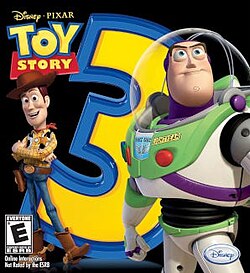
 Disney/Pixar Toy Story 3 on PS2
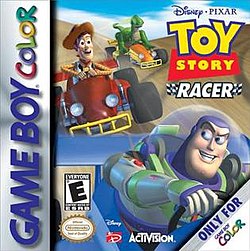
 Toy Story Racer on PlayStation
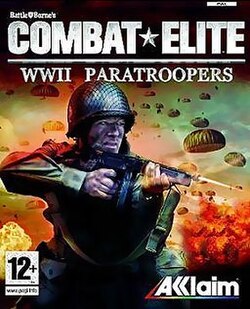
 Combat Elite: WWII Paratroopers on PS2
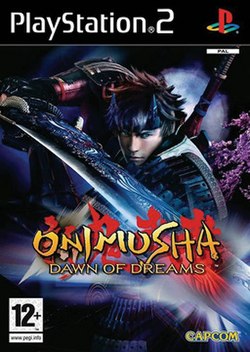
 Onimusha: Dawn of Dreams on PS2
 Disney's Chicken Little: Ace in Action on PS2
 Tokyo Xanadu eX+ on PS4










 Another SquareThought Site