

 Feb 2019
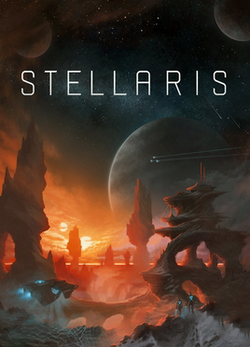

Stellaris on PS4 is Paradox's sprawling space opera shoved into your living room, controller and all. It asks you to run a fledgling interstellar civilization from January 1, 2200, shepherd populations across planets, research shiny tech, manage an economy built on energy credits and minerals, and survive galaxy-sized crises that show up like bad relatives at a wedding. The console port (released February 26, 2019) keeps the core grand strategy and 4X DNA intact: exploration, expansion, exploitation and extermination are all on the menu. If you like long-term thinking, modular crises, and the sort of micromanagement that rewards obsessive spreadsheet brains, this is your jam - provided you're ready to learn the PS4 controls for what is essentially a PC-heavy design.
If Stellaris were a classroom, it would be the one where the professor assigns group projects that last centuries and grades you on three rubrics: military might, tech progress, and economic power. The learning curve is the main challenge the game tosses at you - not because mechanics are obtuse, but because there are so many of them stacked at once. You pilot an FTL-capable empire across a procedurally generated galaxy, and every star system is a tile on a web of hyperlanes. Early on you're scouting: science ships, anomalies to investigate, and claiming habitable planets before some other sentient blob with a bad civic eats all the good real estate. That early-game feels almost RPG-like, because your species design (traits, ethics, authority, civics, even an "origin" backstory) meaningfully shapes options and playstyle. Picking wrong here is not a hard stop, but it's like choosing the wrong major - you'll pay for it later. Resource balancing is a mental workout. Core resources - energy credits, minerals, food, consumer goods and alloys - are the building blocks for expansion, infrastructure, and fleets. Strategic resources unlock higher-end toys: advanced modules, megastructures, and edicts. Keeping those five bars green while funding research and fleet maintenance forces you to be ruthless with priorities. You'll need short-term triage (fix the food deficit!), mid-term planning (build mining stations along a mineral-rich hyperlane), and long-term economic architecture (ecumenopolises, trade-focused civics, or branch offices if you have MegaCorp). The game punishes complacency: one misread crisis or a surprise marauder cluster can drain your coffers faster than you can say "terraforming." Crisis management in Stellaris is where the developers get theatrical. Mid-game annoyances and late-game crises are deliberate attempts to avoid the 'ridiculous snowball' problem that ruins many 4X games. Randomly chosen or player-selected crises - from waking sentient AIs to extra-dimensional invasions - act like timed boss fights on a galactic scale. They demand coalition thinking and flexible skill-sets: diplomacy (to convince rivals to help), logistical planning (to ship fleets across hyperlanes), and tactical prioritization (do you defend core worlds or chase the crisis fleet?). DLCs like Nemesis add fog of war and espionage, while The Machine Age and Utopia alter ascension and endgame options so the final act is far less predictable than a limp choreographed walkover. Diplomacy and politics are simultaneously a strength and a headache. The interface makes player interaction approachable for console users, but the depth is uneven: Paradox designed rich faction systems, ethics that steer AI behavior, and federation mechanics (strengthened in the Federations expansion), yet mid-game diplomacy can feel passive if multiple AIs play politely or weirdly parochial. Skills required here lean toward patience and reading intent: pay attention to AI agendas, faction demands, and the galactic community's resolutions. If you enjoy manipulation, use trade, influence, and vassalization effectively - some civics encourage puppet empires or genocidal isolation, and those choices radically change the difficulty curve. Micromanagement is the spicy core. Individual planets have pops and jobs, districts and buildings; pops fill jobs and produce the resources you need. Planet specialization and district balancing require both a spreadsheet brain and an artist's patience: optimize tiles, juggle migration, and decide when to spam alloys over consumer goods. You will manage construction queues, edicts, and leader assignments - all while spying on your neighbor's tech or building a Dyson sphere for reasons that are purely flexing. On PS4 this is the part where the controller interface either makes you feel like a wizard or like you're trying to thread a needle wearing oven mitts. The port does its best, but expect a learning curve mastering menus with a thumbstick rather than a mouse. Finally, adaptation and meta-skills matter. Stellaris rewards players who can pivot: switch ascension paths (biological, psionic, cybernetic, synthetic), respond to emergent events, and layer DLC mechanics into your strategy. High-level play is less about brute force and more about timing: when to puppy-cling to a Federation, when to declare war to steal a crucial chokepoint, and when to invest in megastructures that take decades to pay off. It's a marathon, not a sprint, and the emotional skill required is stoicism - you will lose star systems, leaders, and entire fleets. Learn to laugh and reload.
Stellaris runs on Paradox's Clausewitz Engine with additions like physically based rendering (PBR) to make ships and cityscapes pop. The look is functional rather than photoreal; portraits, ship sets and cityscapes are stylish and full of personality (especially if you grab species packs like Plantoids or Lithoids). Expansions bring new shipsets and art packs, so the visual variety increases over time if you own DLC. On PS4 the visuals are polished for the living-room experience - the starfields, anomalies, and megastructures look suitably epic on a TV - but this isn't a graphics card flex contest. The UI and icons are clear, which matters more: you'll spend your time inside menus. Console optimizations smooth performance, but the scale of late-game galaxies can still feel dense on smaller screens; zooming out helps but also reminds you how many crises you've ignored.
Stellaris on PS4 is a rewarding chaos generator for players who like long-term strategy, careful resource management, and the occasional existential threat to their species. The primary challenges are mastering a sprawling set of interlocking systems, adapting to random and scripted crises, and managing a planet-scale economy while juggling diplomacy and warfare. Console veterans will appreciate the approachable interface updates, but PC aficionados will still have an edge with mouse-and-keyboard precision. If you love games that demand patience, strategic planning, and the humility to accept brutal losses, Stellaris will give you dozens of hours of deliciously complicated decisions - with plenty of DLC to keep the challenge fresh. If you want everything to be hand-holding and instantaneous gratification, the galaxy will judge you slowly and without mercy. Scorewise, the PS4 edition sits around a solid 7.7 out of 10: deep, occasionally clunky on controller, and gloriously ambitious.
 Revenge of the Savage Planet on PS4
 Nobunaga no Yabou Online: Haten no Shou on PS2
 Nobunaga's Ambition: Iron Triangle on PS2
 Nobunaga no Yabou Online on PS2
 Planets Under Attack on PS3
 Crusader Kings III on PS5










 Another SquareThought Site