

 Feb 2016
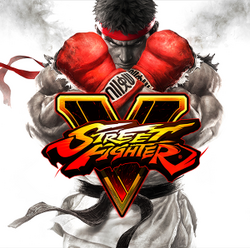

Street Fighter V arrives like a charismatic friend who showed up to the party wearing a tuxedo and forgot to bring snacks. Capcom and Dimps hand you a taut, responsive fighting game that looks and feels like the polished heir to the series' legacy, then politely ask you to wait in the corner while they ship the rest of the house. For PS4 players the core is very much present: rock-solid inputs, character quirks that actually matter, and the sort of frame-data-driven joy that makes opponents regret their life choices. The launch, conversely, was the sort of messy production that makes management apologize publicly and journalists invent new synonyms for "unfinished." This review is mostly about the PS4 experience. That means we can ignore the PC rootkit kerfuffle, aside from the moral of the story: never name something "Capcom.sys" if you want the internet to be calm. Street Fighter V is both excellent and exasperating - a tight fighting engine wrapped in a long-term service structure that initially smelled faintly of a rushed product plan. The good news: Capcom listened, patched, expanded, and eventually shipped Arcade and Champion Editions that filled much of the early void. The bad news: early adopters purchased a game that sometimes behaved like it lived in beta for emotional reasons.
If you like hitting people until they stop moving, Street Fighter V is, scientifically speaking, for you. The game continues the 2D arena tradition of the franchise, but with modern touches that reward timing and decision-making rather than frantic button bashing. The EX gauge returns from older entries to let you power-up special moves and spend on Critical Arts, which are the game's flashy super-move punctuation marks. New this time is the V-Gauge, which lives in the part of the HUD reserved for temperamental meters. The V-Gauge charges when you take hits and unlocks four tools: V-Skills, V-Reversals, V-Triggers, and V-Shifts. V-Skills are character-specific curiosities (Ryu's parry vs. M. Bison's projectile reflect), V-Reversals are the polite middle finger you use while being punched, V-Shifts let you dodge and maybe look clever, and V-Triggers are the whole-can-of-whoop-ass - the big power-ups that change a match's tone. The Stun Meter sits under the health bar like a passive-aggressive roommate, filling when you take consecutive attacks and letting you land a free beatdown when it breaks. The roster at launch was 16 fighters, with four brand-new faces (Necalli, Rashid, Laura, F.A.N.G.) and a comfortable mix of classics (Ryu, Chun-Li, Ken). Over post-launch seasons, Capcom expanded the cast dramatically - adding fan favorites, weird experiments, and crossover-proximity characters - eventually making the roster feel genuinely epic. Characters are handled with competitive clarity: each has strengths, flaws, and at least one button that will make your opponent cry into their controller. Online play was supposed to be the party trick - cross-platform between PS4 and Windows, bringing communities together like a virtual dojo. Instead, early servers and technical hiccups produced a lot of rage-quitting and apologies from Capcom. PS4 players also suffered from input latency complaints around eight frames, which is the difference between precision and feeling like Atlantis exists. Capcom patched many issues over time, and the Arcade and Champion Editions added modes and balance updates that turned a shaky launch into a rightful contender on the tournament stage. If you're interested in high-level play, the mechanical core is so strong that people forgave a lot; EVO attendance and the competitive scene proved it. The game's structure leaned heavily on seasonal DLC and microtransactions. New characters, stages, and cosmetics came in seasons, purchasable with either Fight Money earned in-game or real currency. That system is fine if you like optional cosmetic microtransactions and long-term engagement; it's less fine if you were expecting a full single-player package out of the gate. Capcom's later additions - Arcade Mode, Extra Battle Mode, more V-Trigger options - addressed this, but only after the initial disappointment had already spread on social media like a bad combo string.
Street Fighter V looks like an animated poster for punching. Built on Unreal Engine 4, the visuals combine detailed 3D character models with 2D arena gameplay, which gives the whole thing a cut-paper precision while still looking cinematic when you land a Critical Art. Stages are interactive, with special death animations at the arena edges and a level of polish that made many critics praise the game's aesthetic. The character art and costumes are crisp, the animations hit with proper weight, and the sound design does the important job of making punches feel consequential. There were occasional graphical glitches and some jank in early updates, but nothing that undermined gameplay. If you care about presentation - loading screens, CG openers introduced in later editions, and costumes - Street Fighter V delivers far more than its early content list suggested. The later Arcade and Champion Editions buffed the game's visual and UI trimmings, adding a 3D viewer in the shop and better screens for browsing cosmetics. In short: it looks great, and it ages better than the memory of Capcom's initial apology statements.
Giving Street Fighter V a single label is a public service announcement in game form: it is both the best and the most maddening way to spend your competitive hours, depending on when you bought it. The fighting engine is superb - precise, balanced, and generous to newcomers while offering depth for tournament obsessives. The V-Gauge and character designs make every match feel like a miniature chess match with spandex. The launch-era shortcomings were real: limited single-player content, unstable online performance, controversial PC driver choices, and an ecosystem that leaned heavily on DLC and microtransactions. Those are valid reasons to be annoyed, and Capcom earned the criticism. They also fixed a lot of it. Arcade Edition and Champion Edition transformed the package from a lukewarm appetizer into a full-course meal, adding modes and quality-of-life improvements that the game should have shipped with. If you are buying it now on PS4, especially in its updated form, you get a polished fighting game with a massive roster and a competitive backbone. If you bought day one in 2016 and enjoyed the thrill of being a beta tester with feelings, you have my sympathies and maybe a coupon. Street Fighter V is a triumph that arrived after a series of faceplants - and the triumph itself is worth the bruises.
 Ultra Street Fighter IV on PS3
 Ultra Street Fighter II: The Final Challengers on Switch
 Street Fighter 6 on Xbox Series X/S
 Ultraman Fighting Evolution on PlayStation
 ACA Neo Geo: Art of Fighting 2 on Xbox One
 ACA Neo Geo: The King of Fighters '98 on Xbox One
 ACA Neo Geo: Art of Fighting on Xbox One
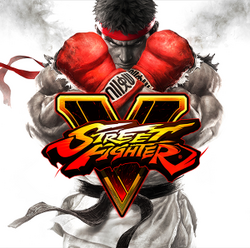 Street Fighter V: Arcade Edition on PS4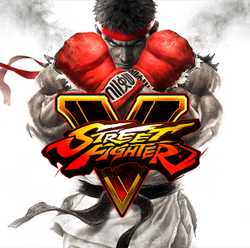










 Another SquareThought Site