

 Jul 2019
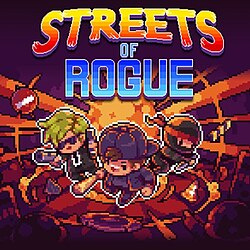

Streets of Rogue is the kind of game that throws you into a procedurally generated city and then hands you a handful of bizarre archetypes, a pile of questionable gadgets and the sincere hope that improvisation will carry the day. On PS4, the top-down roguelite developed by Matt Dabrowski and published by tinyBuild keeps the chaotic charm of the original release while translating the frantic emergent gameplay to the couch-friendly format. It's less about a single authored tale and more about how little stories congeal into full-bodied character arcs mid-run: a bartender who becomes an accidental revolutionary, a werewolf who learns the value of stealth, a scientist who accidentally becomes a mayoral nemesis. The game's structure-short runs across floors of a city, chicken nugget currency, randomized traits and mutators-creates a narrative machine where characters evolve not from prescribed plot beats but from the consequences of your choices and the comedy of systems colliding.
Streets of Rogue doesn't give you a backstory in whispers; it hands you an identity and says, "Make something of it." The cast is intentionally wide: from the expected (soldiers and scientists) to the gloriously absurd (bartenders, werewolves) referenced in coverage, each role is a seed that grows differently each run. These seeds sprout into distinct story arcs because the game's procedural city is basically a stage director with a wicked sense of humor. The top-down action across multiple floors-Slums, Industrial, Park, Downtown, Uptown and the final Mayor Village-forces characters to adapt. A stealthy character who survives multiple assassination-style missions will accrue power differently than a chaotic brute who survives by setting everything on fire. The arcs are emergent, not authored, and that's the point: freedom and randomness are the narrative engines. Mechanically, the character arc begins the moment you pick a class and the game hands you traits. Traits and items are the emotional beats of Streets of Rogue: they nudge players toward certain behaviors. If you pick a character with hacking bonuses, you will likely flirt with an arc of subterfuge; pick a bartender and you might accidentally become a confidant for NPCs, stumbling into Resistance business. Death is also a narrative device. The chicken nugget economy-earn nuggets during runs and spend them between deaths-creates a meta-arc where failure fuels future potential. Each death is treated as both a punctuation and a hook for the next chapter; buy a new gadget, return to the city, and the new options retroactively reframe who your character can be. The Home Base functions like a soap-opera headquarters. It's populated by Resistance Leaders and playable characters who serve as both mechanics and story catalysts: trade nuggets, swap stories, and pick up plot threads that you may or may not finish. The Mayor, the game's distant antagonist, reads more like a looming dramatic presence than a single final boss-political oppression is the setting's antagonistic force, and your characters' arcs are often about pushing back. Because levels are short and themes change, each run reads like a five-act play compressed to five minutes: setup (pick character, accept mission), confrontation (enter a themed level), crisis (things explode or go sideways), climax (escape or die), and denouement (spend nuggets and make choices for next time). Critically, the variety of the cast and the game's mutators means no two arcs are the same. PC Gamer praised this freedom, noting that the game gives "more freedom than almost any roguelike," and that variety of characters combined with random traits means runs are near-unique. The emergent comedy-flagged as a significant strength by Polygon-comes from the same place as the characters' arcs: cheap gags piled high until something meaningful appears. You will laugh. You will groan. You may find a small, odd kind of narrative coherence when a run's randomness suddenly yields a satisfying, self-contained story: the scientist who betrays the Resistance, the bartender who becomes leader of a neighborhood uprising, the thief who joins the Resistance after an ill-advised attempt at pickpocketing a leader. Those arcs happen because the game rewards role dedication and improvisation.
Graphically, Streets of Rogue is not trying to win awards for realism; it's a stylized, top-down pixel mosaic where clarity beats spectacle. Each level has a different visual theme, which helps character arcs feel like they're traveling through genres-one minute noir in Downtown, the next minute pastoral chaos in Park. The Unity engine keeps the action smooth on PS4 while the visuals remain simple enough that the eye isn't distracted from the emergent systems doing the real storytelling work. The art and animation are functional comedic partners: a tiny sprite pulling off a ridiculous action sells the joke and solidifies the arc. When a bartender sprite suddenly spruces into a resistance leader, you don't need a cinematic; you need a clear animation and a city that responds. Streets of Rogue supplies that responsiveness with visual economy and a cheeky sense of timing.
If you're looking for a PS4 game with a tight, linear character arc, Streets of Rogue will frustrate you-deliberately. Its narrative ambition is diffuse: it wants to create a million small arcs rather than one grand story. That's its charm. The emergent arcs are how the game talks to you: take risks, die spectacularly, learn from your deaths via the chicken nugget economy, and return with new tools that change your story. Critics have generally favored this approach, noting the game's comedic instincts and the sheer variety of city pandemonium; Metacritic scores and outlets like Nintendo Life and PC Gamer applauded the freedom it offers. The development roots-Matt Dabrowski's love for open-ended, mission-based gameplay-are visible in every mechanic that nudges characters into memorable misadventures. Streets of Rogue on PS4 is a sandbox soap opera, a roguelite that tells you to make your own dramatic beats and then rewards you when chaos accidentally produces something resembling meaning. If you enjoy role experimentation, system-driven comedy and the feeling of being an improvising auteur of tiny disasters, this city will welcome you with open arms and very few consequences that don't come with a side of chicken nuggets.
 Rogue Legacy 2 on PS4
 Rogue Legacy on PS4
 Touhou Genso Wanderer: Reloaded on Switch
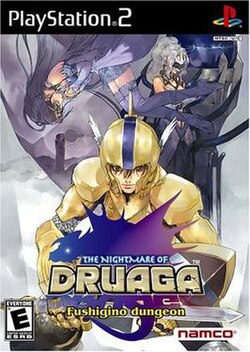
 The Nightmare of Druaga: Fushigino Dungeon on PS2
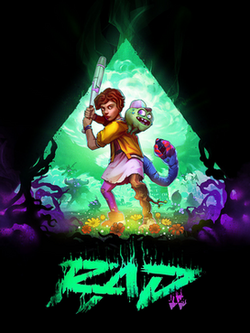
 Rad on PS4
 Ōkami on PS2










 Another SquareThought Site