

 Dec 2018
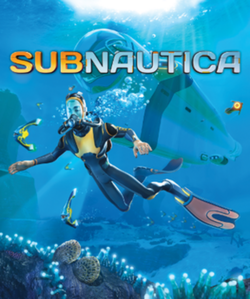

Subnautica is an underwater survival romp that dresses you in a wetsuit and politely tells you that the ocean is not your friend. Developed by Unknown Worlds Entertainment and built in Unity, it drops you - as the lone survivor Ryley Robinson - into the gorgeous, alien ocean world of 4546B and trusts you to figure out how to stay alive, how to build, and how not to become dinner for a Reaper. On PS4 the game shipped in December 2018 and earned solid reviews (Metacritic PS4 score: 80/100). What makes Subnautica special is the way challenge is woven into every loop: exploration, resource-gathering, crafting, and the slow-burning dread of a shadow passing overhead. If you like being tested for your patience, planning skills, and ability to keep calm while oxygen counts down, this is your jam. If you hate being cold, wet and wrong-footed by a giant sea monster, maybe stick to farming sims.
Subnautica's core challenge is delightfully simple: you're alone, underwater, and everything wants to end your day early. The hub of the challenge system is the survival mode suite - health, hunger, thirst and oxygen - which forces you to prioritize. The immediate skill it tests is resource triage: do you eat the fish you found now, or save it to craft a nutrient-rich gel that keeps you from starving later? That tiny decision tree is the sort of thing Subnautica turns into a daily anxiety loop and, eventually, competence. Early game is a tutorial in humility. You learn to spot materials, scan blueprints and assemble basic tools like the Scanner, the Seaglide, and the Repair Tool. Learning to interpret your PDA and environmental cues is a practical skill here: biomes look different, the seabed tells you what to expect, and a silhouette on the horizon is either a Reefback you can cuddle up to or a Reaper that will turn your Seaglide into a very expensive paperweight. Spatial awareness is rewarded-memorizing landmarks, reading your compass and remembering which cave had that crucial Titanium deposit will save hours of panicked backtracking. Crafting is less about rote recipes and more about systems thinking. Some recipes feel arbitrary at first, which can lead to a lot of trial-and-error, but that hit-by-the-teacher approach forces you to learn what components are fungible and where to prioritize inventory space. Inventory management itself becomes a game of Tetris: what you keep on your person versus what you put in chests, what to stash in a Cyclops or your base, and planning for oxygen and battery consumption before long treks. The game's day-night cycle and frequent eclipses add a visibility challenge: a shallow reef at noon is navigable; at night it becomes a claustrophobic silhouette buffet. Vehicle operation introduces a new skillset. Piloting the Seamoth and Cyclops requires an understanding of depth limits, energy management and situational awareness to avoid predators and crush depth death. Base-building ups the ante into logistics: designing airlocks, power grids, water filtration and storage with an eye on safety and redundancy. The strategic brain loves this part; the part of your brain that flinches when something taps your hull is still going to be annoyed. The fauna provide both mechanical and psychological challenge. From stalkers that snatch your gear to the terrifying Leviathan-class Reaper and Sea Dragon, enemy encounters are not just combat tests (there are almost no guns) but environmental puzzles. Should you stealthily skirt the edge of a canyon, lure a predator away, or build better vehicles and modules to survive the area? Permadeath hardcore mode turns every choice into a weighty decision and trains players to be cautious and methodical. Creative mode exists as a sandbox, but the real growth happens when you play with risk. Finally, Subnautica's design nudges you toward self-directed learning. There is deliberately little hand-holding: no quest markers leading you by the nose, just breadcrumbs in wrecks, radio logs and the logic of the world. That requires players to develop deduction skills, curiosity, and the discipline to follow a hunch into deep dark places. If you're the kind of person who loves the slow burn of mastery-learning which biomes hide which resources, building a mobile vehicle bay and returning triumphant-you'll find Skyrim-sized satisfaction in this undersea school of hard knocks.
Subnautica's visual identity is the kind of aquatic wallpaper you might cry into. The ocean biomes are beautifully varied: kelp forests, glowing caves, abyssal trenches and wreck-strewn shallows all have distinct palettes and silhouettes, which is crucial because visuals are also your navigation tool. The game picked up nominations for Best Visual Design for good reason; it communicates danger and reward through shapes and light as much as through text. On PS4 the art direction holds up well, even if performance can be a notch below PC. Unity handles the water and godrays convincingly, and the day-night cycle plus frequent eclipses create dramatic shifts in atmosphere that directly affect gameplay. Audio design deserves a shout too - the creak of a hull, the distant roar of a Leviathan, and the soundtrack work together to ratchet tension without you noticing until your heart is already pounding.
If you want a survival game that rewards thinking more than button mashing, Subnautica on PS4 is a masterclass in environmental challenge and player skill growth. It tests your resource management, navigation, vehicle piloting and strategic planning while making you feel like a tiny, damp astronaut. The lack of explicit quest rails is a feature: it forces curiosity, deduction and careful preparation. The PS4 release isn't quite the PC poster child for performance, but it keeps the core experience intact and compelling. Score-wise it lands around an 8/10: not because the game is perfect, but because it succeeds brilliantly at what it set out to challenge you with - surviving and thriving in a beautiful, hostile world without turning you into a space-age meal.
 Subnautica on PS5
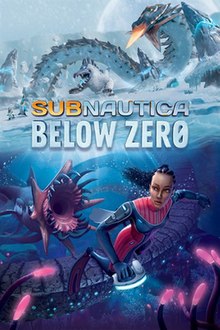
 Subnautica: Below Zero on PS4
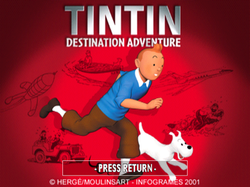
 Tintin: Destination Adventure on PlayStation
 Disney's Chicken Little: Ace in Action on PS2
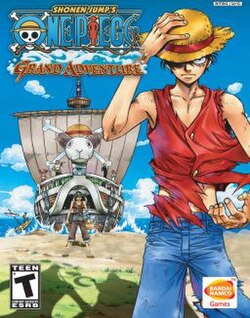
 One Piece Grand Adventure on PS2
 Taiko no Tatsujin: Dokodon! Mystery Adventure on Switch
 Subnautica: Below Zero on PS5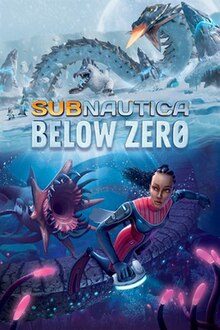










 Another SquareThought Site