

 Mar 2023
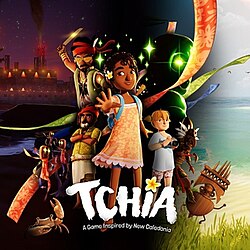

If you leaf through the battered pages of a 1990s game mag you will still find a place for games that choose atmosphere over belligerence and curiosity over checklist design. Tchia, a tropical open-world from Montreal's Awaceb, belongs to that honorable tradition - a game that wants you to wander its islands like a player reading the map with one eye closed. Launched on PlayStation 4 (and its PS5 brethren) on March 21, 2023, Tchia wears its inspirations on its sleeve: an archipelago that smells of salt and childhood memory, folklore plaited into game mechanics, and a protagonist whose powers turn the very world into a toybox. This is not a title that arrives brandishing a thousand features; it comes as a quiet, confident package. The hook is simple and, for lack of a better term, clever: Tchia can 'soul-jump' into animals and objects. From a dogs' digging trick to the physics of a buoyant coconut, the mechanic is the lens through which exploration, puzzle-solving, travel and combat are all refracted. The studio travelled to Lifou and leaned hard on New Caledonia and Kanak culture for authenticity, and the result is a game that smells less like market research and more like a family story told at dusk. The game has its flaws - combat can feel thin and repetitive - but played in the mood it asks for, it can be one of the more charming open-world experiences in recent memory.
Tchia plays from a familiar third-person perspective, but it is the ways the camera lets you fall in love with the island chain that make the difference. The central narrative is straightforward: rescue your kidnapped father. The plot threads lean darker than the cheerful ukulele and the sunlit beaches would suggest, and the story does not shy from horror-tinged turns. Yet it is the tools of gameplay that keep you interested when the main quest becomes a procession of objectives. Soul-jumping is the headline act. The player can possess more than thirty animals and 'hundreds of' inanimate objects. Mechanically, this is elegant because it allows a single system to solve a dozen design problems: traversal, puzzles, combat, and even treasure-hunting. Jump into a dog and unearth a buried map. Own a crab and scuttle into narrow gaps. Turn into a coconut or a barrel and ride the waves. The sheer variety of possessions invites experimentation; you will regularly try things just to see what the physics engine will do. For a reviewer who grew up with 'trial-and-error' design, Tchia's sandbox rewards the kind of playful curiosity that old magazines used to call exploration. Your human form is hardly useless. Tchia is acrobatic - she climbs, slides, glides and uses trees as catapults to fling herself through the canopy. A glider and a raft form quick-travel staples that are satisfying in execution: piloting the catamaran along a glittering horizon is one of the game's quieter pleasures. The game also borrows rhythm-game elements via a freely playable ukulele. Playable 'Soul-Melodies' let you summon animals, change weather, or manipulate time of day. These sequences are skippable, which is a merciful design choice for those of us who would rather not serenade every parrothead encountered. Side content is abundant and rarely perfunctory. Point-of-interest markers, optional games, cosmetics, and minor quests pepper the map, and most feel like the kind of tasks that reward curiosity instead of checklist completion. Tchia's customization options - for appearance, raft and glider - let players stamp their own personality on the voyage. That said, the combat is the game's least imaginative element. Weapons and enemy encounters work, but they rarely evolve. Several critics noted that the fighting feels unchanged from start to finish, and they are right: the combat loop never becomes the game's main reason to play. If you come to Tchia expecting a relentless action romp, you will leave disappointed. If you arrive for exploration and atmosphere, you will stay. The map design respects the player's attention in a way modern convenience often forgets. The in-game map refrains from painting your precise location in neon; it nudges you toward exploration rather than spoon-feeding routes. That philosophy is reflected in many small design choices, and it is refreshing to see a modern open world that still trusts the player's sense of curiosity.
Technically, Tchia runs on Unreal Engine 4, and the result reads like a lovingly illustrated travel journal rendered in polygons. The art direction opts for warmth and character over photoreal spectacle. Foliage breathes, water reflects with pleasing fidelity, and character models are expressive in a way that supports the game's narrative tone. The islands are full of small touches - flapping flags, carved totems, villages where Drehu and French phrases hang in the air - that contribute to a sense of cultural specificity rather than generic 'tropical.' The PS4 build holds up admirably; frame rates are generally steady and load times reasonable. There are occasional physics quirks - the sorts that induce laughter rather than rage - where possessing a particular object produces an unexpectedly glorious result. On the downside, pop-in can be noticed from time to time, and some distant geometry lacks the polish you might find on higher-end platforms. These are not fatal sins; they are the minor seams around a cloth that is otherwise sewn with care. Audio deserves a callout: John Robert Matz's score and the game's sound design won well-deserved praise, and the ukulele sequences are more than cosmetic - they underpin many of the game's emotional beats and earned nominations and awards for their craft.
Tchia is a game that would have fit comfortably into the pages of a mid-1990s feature story titled 'Games That Make You Feel.' It is earnest where other titles choose irony, and it invites a slow, curious style of play that modern open worlds sometimes forget. Awaceb's background and their travels to Lifou are visible in every lovingly rendered palm tree and in the game's respectful use of Kanak cultural elements. The soul-jumping mechanic is the kind of elegant idea that keeps a reviewer grinning for reasons beyond checklist completion: it turns traversal into discovery and objects into possibilities. If the game has a wound, it is the combat's reluctance to evolve. Some players will find the encounters serviceable but unsatisfying in the long run. Those shortcomings, however, are balanced by a strong central design philosophy and a world that rewards exploration with genuine charm. Critical consensus skews positive and sales proved the audience was ready - by May 2023 Tchia had crossed the one million mark - and the game collected a number of accolades, including recognition at The Game Awards and a BAFTA nod for its impact beyond mere entertainment. For PS4 owners who remember reading longform previews in their twenties and who appreciate a game that offers room to breathe, Tchia is an essential detour. It is not the loudest title on the shelf, but it hums a melody you might want to learn on your own ukulele.
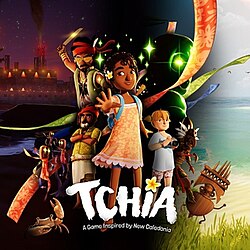 Tchia on PS5
 Tintin: Destination Adventure on PlayStation
 Disney's Chicken Little: Ace in Action on PS2
 One Piece Grand Adventure on PS2
 Taiko no Tatsujin: Dokodon! Mystery Adventure on Switch










 Another SquareThought Site