

 Dec 2014


Teslagrad is a 2.5D puzzle-platformer that dresses up brain-bending magnet puzzles in a moody, hand-drawn steampunk cloak. On PS4 you guide a small, wordless boy through the imposing Teslagrad tower, unlocking electromagnetic powers and slowly piecing together a political conspiracy that makes your local soap opera seem subtle. The game is as much about patience, timing, and spatial reasoning as it is about exploration; if you came for twitchy combat you'll be disappointed, but if you like a good mental workout with platforming spice, Teslagrad delivers. This review zeroes in on the challenge aspects and the specific skills you'll need to not only survive the tower but to feel smugly superior when you finally solve that nasty puzzle.
At its core, Teslagrad is a magnetism-themed puzzler wrapped in a Metroid-lite exploration shell. The primary mechanical loop is simple on paper: discover electromagnetic devices, learn how they push, pull, invert or otherwise rearrange your environment, then use that knowledge to navigate rooms full of spikes, falling platforms and occasional minimally threatening guards. But what sounds like 'press button, magnets do thing' becomes an exercise in careful planning and split-second execution when the puzzle designer says 'surprise, this one's timed.' The game expects you to be a good observer. Many solutions are hidden in plain sight - a pattern of alternating poles, a flickering device, or a subtle camera pan will clue you in that polarity matters. If you rush into rooms like it's a speedrun for attention, you will likely miss important visual cues and die, fall, or trap yourself and have to think your way back out. Spatial reasoning and an ability to model cause-and-effect in your head are the real horsepower here. Early attempts to brute-force a block-pushing sequence will teach you that Teslagrad rewards foresight. You learn to read the level like a chessboard: what moves will the magnetic field force, and which positions are safe between pulses? Precision platforming is another pillar. While the game's action segments are minimal, the platforming windows are unforgiving. Timed leaps between magnetically oscillating platforms, sprint-and-slide maneuvers across narrow beams, and the occasional midair polarity flip demand fine-tuned analog control on the DualShock. The PS4 controls map well, but success depends less on the controller and more on patience and input discipline - no mashing will help here. When a sequence requires toggling polarity mid-jump, you'll need to coordinate button presses with your thumb like a surgeon cracking walnuts. Pattern recognition skills level up as you encounter compound rooms where electromagnets interact. Those rooms are where the game stops being a platformer-plus-puzzles and turns into a short-term project management exercise: coordinate moving platforms, avoid electric hazards that alternate with lethal regularity, and time your progression windows through a cascading set of magnetic effects. Teslagrad doesn't always hold your hand with tutorials; instead, it introduces mechanics in small increments and expects you to synthesize them. That learning curve can be steep but ultimately satisfying when you slot a new trick into your repertoire. The non-linear world structure encourages backtracking and exploration, and that brings in a different skill: puzzle recall. You'll often return to areas with new items or abilities that change previous puzzles. Remembering the layout and the interaction points becomes a meta-skill - the game rewards attention over trial-and-error. Upgrades and items are sparse but meaningful; when you find something that extends your reach or manipulation options, it often recontextualizes earlier rooms and creates delicious 'aha' moments. Combat is intentionally minimal and functions largely as an obstacle to movement rather than a core challenge. Enemies are more of a timing hazard than a threat to your puzzle-solving freedom, which is welcome since Teslagrad wants your brain geared toward manipulation of fields and geometry. The handful of combat encounters require quick positional thinking and avoidance, not complex combos, so if your strengths lie in thinking rather than button-mashing, you're in luck. As for difficulty, it sits in that nice indie sweet spot where puzzles are seldom obtuse for the sake of being cryptic; instead they demand a blend of logical deduction and execution. There are a few spikes - particularly in later sections where multiple systems interlock - that will force you to grind your patience just a little. Speedrunners and perfectionists who want every collectible will find extra value in memorization and flawless platforming execution. Casual players might find some rooms frustratingly tight, but the steady breadcrumbing of abilities and the visual clarity of hazards generally make the learning curve fair. A final point on challenge philosophy: Teslagrad turns failure into a teacher rather than punishment. Dying mostly sends you back to an earlier checkpoint, but every failed attempt reveals more about timing, field strengths, and safe windows. If you can learn from mistakes and adjust your internal model of how the tower works, you'll progress steadily. If you're stubborn and try to muscle through without learning what each magnet actually does, Teslagrad will politely and repeatedly correct you until you change tactics.
The hand-drawn art is arguably the game's MVP. Each of the over a hundred environments feels like a page from a gothic fairy tale illustrated by someone who drinks espresso and reads physics textbooks for fun. The color palettes are moody, often drab with sudden neon bursts from coils and magnetic fields that both look gorgeous and serve as essential gameplay signposts. On PS4 the visuals are crisp: shadows, particle effects, and ambient lighting all help communicate interactive elements without breaking atmosphere. The animations are deliberate and graceful, which is important when the game asks you to time jumps against moving platforms - you can actually read the motion before committing to it. The audio does a lot of heavy lifting too. The soundtrack is nostalgic and sometimes melancholic, which pairs perfectly with the slow-burn pacing of exploration and puzzle solving. Sound cues are used sparingly but effectively for polarity changes and device activations, so headphones will improve your ability to detect subtle cues that matter for solving certain rooms.
Teslagrad on PS4 is a thoughtful, sometimes infuriating, and ultimately rewarding puzzle-platformer that privileges observation, spatial reasoning, and precise platforming. It isn't a test of raw reflexes or twitch combat prowess - instead it constantly nudges you to think three moves ahead, read subtle visual cues, and execute with calm precision. If your idea of fun includes being mentally outwitted and then vindicated by a clever solution, the tower will be your happy place. If you prefer instant gratification and liberal checkpoints, be prepared for moments of teeth-grinding stubbornness. The game's strengths - striking hand-drawn visuals, inventive magnet-based puzzles, and a design that treats failure as a lesson - outweigh occasional spikes in difficulty. For players who like their platformers to make their brain sweat and their thumbs earn their keep, Teslagrad is a solid pick. Score: 7.8/10 - an engaging challenge that rewards patience, planning and the occasional smug victory dance when you finally bypass that cruelly elegant contraption.
 Teslagrad 2 on Switch
 Puzzle by Nikoli 4: on PS4
 Twinbee Taisen Puzzle Dama on PlayStation
 Tokimeki Memorial: Taisen Puzzle-Dama on PlayStation
 Professor Layton and the Last Specter on DS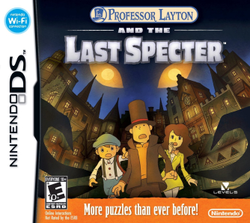










 Another SquareThought Site