

 Oct 2020
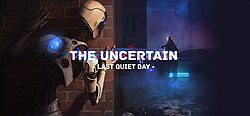

If you liked your post-apocalyptic worlds served with melancholy, a smattering of moral ambiguity, and a soundtrack that hums like a tired robot, The Uncertain: Light at the End promises all that - but it also arrives with the kind of gameplay quirks that will make you feel like you're solving a riddle written in a foreign dialect. The game, a follow-up to The Uncertain: Last Quiet Day, swaps the robot lead for a human protagonist and keeps the adventure focus: slow-burn exploration, scavenging, and puzzle-solving. On PS4 you'll be playing a narrative-driven adventure where thinking matters more than twitch reflexes, but also where the interface, camera, and writing sometimes feel like optional challenges layered on top of the actual challenges. If you enjoy scratching your head and enjoying the scenery while doing it, there's fun here. If you want tight controls and crystal-clear hints, prepare to dig deep and be patient.
Light at the End is built around the same bones as its predecessor: third-person exploration, item-based puzzles, and dialogue that nudges the story forward. The game leans heavily on scavenging - you poke through environments for parts, devices, and clues, then apply those finds to repair machinery or unlock new areas. Puzzles are rarely about lightning-fast inputs. Instead, they demand observation, pattern recognition, and a willingness to try combinations until the world grudgingly cooperates. The core set of skills the game asks of you reads like a polite checklist for patient players. Primary among them is observation. Most solutions aren't handed to you on a silver platter or spelled out in a glowing UI; the world itself is the hint book. A cracked panel, a misplaced cable, or a vague scribble on a table can be the thread that unravels a puzzle. Players who rush the rooms will miss context clues and wind up frustrated. Take your time, retrace your steps, and treat every object as potentially useful. Logical deduction and lateral thinking are next. The puzzles blend basic mechanical logic with sometimes loose internal logic stemming from the game's fictional tech. This means you must be comfortable with trial-and-error while also thinking about devices as components in a system: if A is broken and B powers C, how do you reroute power? Occasionally a solution will feel elegant; other times it feels like you guessed the right wiring because minutes of head-scratching paid off. That variability is charming when it works and annoying when it doesn't. Patience and tolerance for imperfect systems are uncomfortably high on the required-skill list. Reviewers of the previous game flagged sluggish controls, a wonky camera, and translation issues, and those criticisms bleed into the sequel's experience. On PS4, character movement can feel deliberately measured, and the camera will sometimes prefer awkward angles that make lining up interactions fiddly. These are not challenges in the game-design sense that reward mastery; they're friction. The skill here is adapting your expectations: slow your inputs, give the camera a second to breathe, and expect a small amount of positional finagling when the game doesn't quite read your intent. Dialogue choices and exploration introduce social and narrative skills into the mix. Speaking to NPCs and choosing responses matters for how you piece together the world and motivations, even if the translation and writing are inconsistent. Being a good listener - reading NPC lines closely and remembering names, factions, and locations - becomes a gameplay asset. The writing isn't always razor-sharp, so part of the player's job is to infer what the creators meant when sentences wobble. This is less about being verbally dextrous and more about pattern-matching across fragments of story. Inventory management is simple but not trivial. You won't be juggling dozens of items, but deciding which parts to use where and when can induce mild anxiety when a promising object seems to have multiple potential uses. The game rarely rails you with timers, so methodical experimentation is both safe and rewarded. If you're someone who likes to keep a mental checklist or scribble notes, you'll be at an advantage. Finally, emotional stamina is a hidden skill. The game's tone is contemplative, sometimes melancholic, and its pacing rewards players who can remain engaged without constant gameplay variety. The enemy isn't a deadly monster so much as dwindling patience and an occasionally opaque design choice. If you like to finish a puzzle in under five minutes and move on, this will frustrate you. If you enjoy the creeping satisfaction of finally unlocking a door after a half-hour of tinkering, you'll get your dopamine hit here. Because the sequel received mixed-to-negative critical responses overall, the cautious player should go in expecting unevenness: inspired moments of environmental storytelling and clever jury-rigging, interlaced with stretches where the controls, camera, or writing add an extra, unwelcome layer of difficulty. Confront these as part of the package rather than defects to be fixed mid-playthrough, and you'll salvage a decent experience.
One place Light at the End rarely disappoints is presentation. The Uncertain series has been praised for strong production values, and the sequel continues that trend with atmospheric art direction and solid textures that make the ruined world feel lived-in. Environments are detailed in a way that rewards lingering; the game expects you to look around, and gives you something worth looking at. Lighting and sound design do a lot of the heavy lifting in setting mood, which helps when the pacing is slow. On PS4, the visuals hold together well enough to forgive some mechanical roughness - the world looks like it means something, and that helps carry the narrative. That said, good graphics cannot fully paper over design annoyances. A pretty scene is still frustrating if the camera is fighting you while trying to examine it. But when the game is behaving, the art does an excellent job of encouraging you to explore, to open cabinets, and to examine the rusted innards of machines until the solution clicks.
The Uncertain: Light at the End is a love letter to methodical players who enjoy piecing things together, reading into half-sentences, and letting atmosphere do a lot of heavy lifting. On PS4 you will be rewarded for observation, patience, deduction, and a willingness to accept clunky controls and a moody camera as part of the difficulty. If those traits sound like your cup of stale instant coffee, you'll find moments of genuine satisfaction and world-building. If you want tight mechanics, crystal-clear translation, and polish in every corner, this sequel will test your tolerance. For those reasons I peg it at a 5 out of 10: interesting and occasionally brilliant, but held back by uneven execution that turns some challenges into irritations rather than elegant obstacles. Play it if you like thinking games and don't mind doing some of the game's work for it.
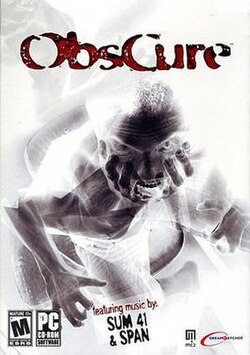
 ObsCure on PS2
 Prism: Light the Way on DS
 Tintin: Destination Adventure on PlayStation
 One Piece Grand Adventure on PS2
 Taiko no Tatsujin: Dokodon! Mystery Adventure on Switch
 Taiko no Tatsujin: Don to Katsu no Jikū Daibōken on Switch










 Another SquareThought Site