

 Aug 2018
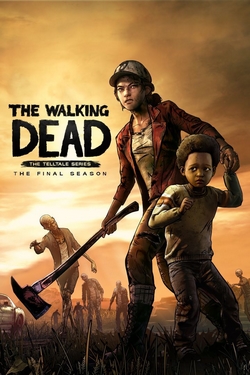

The Walking Dead: The Final Season lands on PS4 like a quietly competent rescue mission: familiar kit, a battered but serviceable engine, and a desperate aim to do right by a beloved protagonist. Technically this is Telltale's attempt to return to form - and the studio's swan song for Clementine - but it's also a story of production triage. The season shipped under two banners: Telltale did the opening beats and then folded, and Skybound Games shepherded the finish. That handoff is visible in the codebase, polish, and momentum, but what matters most to players is how the technical choices affect the run-time experience on PlayStation 4: performance, input responsiveness in action sequences, rendering, animation fidelity, and how much the upgraded Telltale Tool actually improves interactivity compared to earlier seasons. If you care about systems as much as story arcs, this review looks under the hood and tells you when the engine hums and when it coughs.
Mechanically, The Final Season is still a Telltale adventure at heart: exploration, scene-based conversation trees, collectible items, and set-piece action that relies heavily on quick-time events (QTEs). The important technical differentiator here is twofold: heavier emphasis on emergent-style action and the introduction of a collectible system tied to choices. Where older Telltale titles were largely script-driven railways with branching dialogue, this season introduces "unscripted" zombie encounters and more open-ended sequences that give the player control beyond pressing the right face button at the right millisecond. The engine attempts to synthesize scripted narrative beats with constrained improvisation, meaning that some encounters can deviate in animation and enemy positioning depending on your movement and timing. From an input and responsiveness standpoint on PS4, these changes are a mixed bag. QTEs remain the most latency-sensitive sections; the game expects crisp controller response. On stock PS4 hardware I noticed no systematic input lag in menus or dialogue selection, but the tactile feel of the QTEs varies by scene: some sequences allow forgiveness in timing windows, while others demand tight reactions to onscreen prompts. The 'open-ended' sequences put more of the framing on player movement and aim, and here the Telltale Tool's collision and animation blending are heavily exercised. Animation blending is generally competent - characters do not strewn-through-the-ground like early-gen bugs - but during peak activity (multiple walkers + physics props) you can see the seams: foot IK stretching, occasional character pops where state transitions happen, and the odd clipping with environmental geometry. The story import and Story Builder tooling are a technical highlight for continuity junkies. Because of platform transitions and save format incompatibilities (older PS3/Xbox 360 saves can't be imported), Telltale's cloud-based Story Builder provides an engineering solution to the thorny problem of cross-platform narrative state. It isn't perfect - it reduces complex histories to key toggles - but from a systems design perspective it's a practical tradeoff that preserves player agency without forcing backward compatibility on deprecated save formats. Collectibles are implemented as discrete items in the world that get cataloged and placed into Clementine's room. Technically this is a simple inventory-and-state system, but it integrates with choice gates: certain collectibles are reachable only if you made a specific decision earlier. That's a neat use of persistent state flags and shows attention to save-state serialization across episodes. The episodic release schedule and the intentional decision to craft the season's beats from the ending backward helped the designers lock in these state checks early, which reduces narrative inconsistency and save-state bugs. The season also bears the scars and strengths of its unusual production life. The Telltale team reduced their release slate in 2017 to focus on polish for this single season, which improved QA cycles for episodes 1-2. The studio implosion left the build mid-process for episode 3, and Skybound's subsequent staffing and legal work to resume development introduced delays and forced pragmatic scope choices (for example, some language localizations were cut for budgetary reasons). Skybound's approach to keep as many of the original developers as possible and to use the existing work mitigated the risk of a disruptive engine or tooling shift, but you can feel the patchwork - some scenes have sharper animation and fewer bugs, others less so. That said, the end result on PS4 is coherent: few game-breaking crashes were reported in the aggregate, and Skybound even provided post-launch console bug support. AI and encounter design are worth a note. 'Unscripted' walkers aim to introduce emergent threats, but the AI is intentionally simple: walker pathing is mostly reactive and attraction-based rather than using complex navigation heuristics. This keeps CPU overhead low on PS4 but limits unpredictability. Most of the tension comes from choreography and lighting rather than from advanced enemy AI, which is a reasonable developer choice for a story-driven game.
Graphically The Final Season benefits from the updated Telltale Tool iteration introduced in Batman: The Telltale Series, with pronounced cosmetic changes intended to mimic the comics. The studio calls the new shading 'Graphic Black' - a stylized post-process that sharpens outlines, increases high-contrast edges, and enforces a hand-inked aesthetic reminiscent of the source material. On PS4 this is a successful translation: edges pop without aliasing screaming in your face, and the cel-shaded look helps mask lower-resolution textures and geometry budget by leaning into silhouette and contour detail. Dynamic lighting improvements are also evident; scenes use directional and point lights more aggressively to shape faces and create mood, which is crucial for the game's many close-ups and emotional beats. Performance on base PS4 is generally stable. The engine keeps framerate hiccups rare during typical dialogue scenes and exploration; slowdowns can occur in larger crowd sequences with many walkers and props, where draw calls spike and animation systems are taxed. These moments are more noticeable in episodes where the action scripts push multiple entities and explodable geometry. Texture resolution is conservative compared to big-budget action titles, but because of the art direction that's hardly a complaint - the game's graphical choices prioritize style and readability over photoreal fidelity. Character facial animation and lip-sync are good; Melissa Hutchison's vocal performance is supported by competent audio mixing and Jared Emerson-Johnson's score, which dynamically underscores scenes without overpowering dialogue. There are still artifacts: occasional animation pops, clipping during rapid state transitions, and rare geometry penetration. But these are minor in the context of the game's strengths: the rendering pipeline and lighting elevate the emotional presentation, and the 'Graphic Black' pass is arguably the season's single biggest visual win.
The Walking Dead: The Final Season on PS4 is a technically thoughtful capstone that balances narrative ambition with pragmatic engineering. The upgraded Telltale Tool, Graphic Black rendering, improved lighting, and the addition of more open-ended action sequences show a studio trying to evolve its formula. The episodic architecture, Story Builder continuity tool, and collectible-state integration demonstrate design attention to long-term save-state management and player choice serialization. Production turmoil and the studio transition are visible in places - the polish level is variable from scene to scene - but Skybound's rescue job produced a finished, playable product with relatively few hard failures on PS4. If you prioritize story and character, you'll find the technical execution serves the drama well. If you demand cutting-edge animation systems or simulated enemy AI, this isn't the title for pushing PS4 to its limits. Scored at roughly 7.8/10, The Final Season is an encouraging technical course correction for Telltale's narrative engine: not flawless, but lovingly engineered where it counts to give Clementine a concluding chapter that mostly holds together under the hood.
 Theatrhythm Final Bar Line on Switch
 Dissidia Final Fantasy NT on PS4
 Tintin: Destination Adventure on PlayStation
 One Piece Grand Adventure on PS2
 Taiko no Tatsujin: Dokodon! Mystery Adventure on Switch
 Taiko no Tatsujin: Don to Katsu no Jikū Daibōken on Switch










 Another SquareThought Site