

 Mar 2017


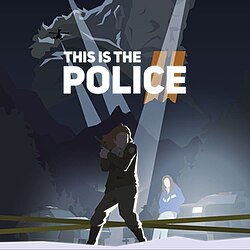
In the mid‑1990s a serious reviewer might have opened with the smell of cigarette smoke and the clack of a dot matrix printer; let's pretend this is that review. This Is the Police is a peculiar beast: a noir‑tinged, choice‑driven adventure wrapped in a real‑time management skeleton. Developed by Minsk's Weappy Studio and shepherded to consoles by Nordic Games and EuroVideo Medien, the title landed on PS4 in March 2017 after a modestly successful Kickstarter and a modestly messy release schedule. You play Jack Boyd, a sixty‑year‑old police chief with one hundred and eighty days to make half a million dollars before the mayor forces him out. He sounds like the lead in a hardboiled paperback and, thanks to Jon St. John's weathered performance, he read like one too. The game wants to be a grim parable about corruption and the rot of small‑town politics, but it also wants to be a systems puzzle where you dispatch cops to calls and balance payroll, morale and mafia payoffs. The result is as compelling as a guilty verdict and as infuriating as a mistrial: striking, occasionally brilliant, and stubbornly uneven.
Gameplay is the part of This Is the Police that will seduce the spreadsheet nerds and frustrate the melodramatic souls. The presentation is a mélange of illustrated cutscenes and a tidy isometric city map called Freeburg. Each in‑game day you field incoming calls, assign officers, manage shifts, and make decisions that will either erode or bolster your force. Calls are prioritized by severity and you decide how many officers - or whether SWAT and reinforcements are necessary - to throw at a scene. Send too few and a crime will escalate; spend too many and you leave other parts of the city vulnerable. The bookkeeping is pleasantly mean: failed responses reduce both manpower and pay, while success staves off insubordination and panic. The political and personal layer sits on top of these mechanics. Jack has a target: $500,000 in cash before he's shown the door. That number is the game's siren song. You can pursue it through legitimate overtime and careful budgeting, but the mafia will also answer your phone. Christopher Sand and later Vicus Varga offer dirty deals - turn a blind eye here, do a favor there - and those options open branching consequences in the story. Loyalty, betrayal and the loyalty‑betrayal hybrid known as 'pragmatic moral compromise' thread through the gameplay. A notable wrinkle is officer cohesion. Each cop carries political leanings and personal quirks that influence how they function together. Pair officers with clashing beliefs and your squads falter; manage them like chess pieces and they perform. Occasionally the game asks you to plant a rat for information - a move that costs money and increases the risk that an officer will die for telling you things. Crime scene investigations also exist as miniature puzzles: gather clues, reconstruct events on the isometric map and make arrests. Later stages escalate toward larger set pieces - raids, allegiances and an endgame where you must choose between supporting Mayor Rogers or the enigmatic Robespierre (Eugene Chaffee) - each choice reshaping both your bankroll and Jack's soul. This Is the Police keeps its systems accessible but stubbornly rigid; you will feel clever when you thread a slim victory from bad odds, and you will feel cheated when repetition and a lack of clear mid‑game objectives make days blur into each other. The pacing is the game's chief sin. The first act crackles with story‑fuel and mechanical novelty; by day twenty some players and reviewers reported the sensation of being dragged along. Missions begin to feel iterative: calls, allocate, watch a short scene, tally losses or gains. The narrative is strong enough to pull you back on occasion - Jon St. John's gravelly narration and some genuinely biting plot turns keep the atmosphere taut - but the management loop sometimes overstays its welcome. The balance between telling a noir tale and running a cadet academy never quite settles, which leaves the experience feeling purposeful and purposeless in equal measure.
Graphically the game is a bold postcard from an imaginary 1985 Freeburg. The art direction leans heavily on stylized illustrations, character portraits and moody, filmic panels that evoke pulp covers and late‑night animation. The isometric city map is functional and attractive: clear icons, readable information and a brooding palette that matches the story's moral greys. Reviewers praised the look and sound - the visuals are often described as 'gorgeous' - and the PS4 port preserves the aesthetic with no major hiccups. Voice work, notably Jon St. John as Jack Boyd, elevates static images and text into a proper, serialized drama. There are no flashy particle effects or cutting‑edge shaders here; This Is the Police is not trying to win a graphics arms race. Instead it succeeds at mood. On the downside, the presentation is also cashiered by repetition: the same panels and transitions recur, and the isometric scenes, while useful, are not diverse enough to feel like a living city after many hours. That sameness ties back to the gameplay complaint - the same well‑composed shot becomes less impressive the thirtieth time you see it.
If you let This Is the Police play to its strengths - voice‑driven atmosphere, moral quandaries and compact, tactical choices - you'll find a memorable game that behaves like a noir novella with a spreadsheet's spine. If you demand constant mechanical variety or pace that never lulls, you will start to glance at the calendar and realize Jack Boyd's 180 days are becoming your 180 minutes of patience. Critics were split for sensible reasons: many applauded the plot, art and design while lamenting repetition and narrative overreach. On PS4 the game earned middling scores; it's not broken, it's just insistent on being itself. For those who like their games to ask uncomfortable questions and make them balance a budget at the same time, this is a compelling, sometimes brilliant cautionary tale. For those who want uninterrupted tension or deeper simulation, it will feel like a promising detective show that occasionally forgets to write the script between episodes. Verdict: a distinctive, well‑acted experiment with serious ambitions and occasional tedium - worth a play for the story and style, but bring a notepad for the days you have to grind.
 This Is the Police on Switch
 Police 24/7 on PS2
 Tintin: Destination Adventure on PlayStation
 One Piece Grand Adventure on PS2
 Taiko no Tatsujin: Dokodon! Mystery Adventure on Switch
 Taiko no Tatsujin: Don to Katsu no Jikū Daibōken on Switch
 Rebel Cops on PS4










 Another SquareThought Site