

 Apr 2015
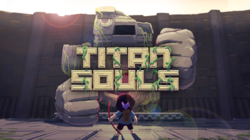

Titan Souls is the sort of game that walks into the room wearing nothing but bravado and a single arrow. Its pitch is simple and theatrical: a lone, silent protagonist, a shattered mythic power called the Titan Soul, and twenty giant, sometimes ornery, sometimes tragic, guardians standing in the way. On PlayStation 4 the experience is compact, minimalist and intentionally unforgiving - and because of that austerity it becomes easier to read the game as a gallery of characters rather than a conventional sequence of puzzles and encounters. Each Titan is less a mechanical obstacle and more a dramatic scene partner, and the hero, armed with only one arrow and the stubbornness to die a lot, undergoes an arc that's almost spiritual in its smallness. This review is deliberately an analysis of those character arcs: the protagonist, the titans, and the ruins that function as a chorus. I'll also look at how the game's rules shape those arcs - and whether the emotional beats land on the PS4.
The protagonist begins as an archetype of solitude: wordless, faceless, and equipped with one arrow that can both defeat your enemies and bore holes in your patience. That single-arrow conceit is the narrative and mechanical spine. It forces encounters to be concise, theatrical duels where timing and pattern recognition are the hero's only dialogue. The arrow must be charged while standing still; after it is fired it must be physically retrieved, again by standing still. The hero's fragility - a single hit equals death - turns every act of reloading into an intimate moment of vulnerability. When the protagonist pauses to charge, to focus, to claw back a piece of power, the camera and the player are both forced into a kind of breath-holding that reads like internal narration: this is the moment they gather themselves, remember who they are, and decide to act. The titans function like chapters in a short story collection. There are twenty of them in the base game (twenty-one in hard mode), each designed around a single winning tactic and each delivering a distinct personality through motion, attack design and environmental interaction. Some are hulking and ceremonial, frozen in poses that suggest custodianship more than aggression: idle guardians who wake with predictable, ritualistic strikes. Others are kinetic and furious, almost performative in the way they punish impatience. The joy of Titan Souls is in discerning each titan's rhythm - reading their micro-arcs from wakefulness, through provocation, to inevitable finish. There's a potency in that minimalism: rather than bloating the player with complex move lists we get vivid, memorable encounters that read like short duels in theater. You discover a titan's weakness by watching it tell its own story through movement. Because the game's open-world structure lets you choose the order of confrontations, the hero's arc isn't linear in the traditional sense. Instead, growth is experiential and cumulative. The player learns not by grinding levels but by learning to parse motion and to accept the inevitability of mistakes. Death becomes a form of punctuation, a way to return to the narrative with new knowledge and a little more humility. This creates a deceptively nuanced progression: the protagonist matures not by power scaling, but by patience and interpretation - the hallmark of the Soulslike inspiration the studio acknowledges. There are moments where the rigid design shows its teeth. The necessity to stand still to charge or retrieve leaves the hero open to feeling more like a puppeteered victim than a daring archer. Some fights can feel repetitive once you crack the pattern, and because the world outside the arenas is spare by design, the transitions between battles are short breaths rather than full scenes. Still, those breaths are purposeful. They let the player reflect on the last confrontation and pick a new way to carry forward the hero's quiet resolve.
Titan Souls wears a retro aesthetic like a mythic cloak: 16-bit inspired sprites, bold silhouettes and a top-down perspective that turns each titan into an icon. The art doesn't try to impress with hyper-detail; instead it leans on suggestion and scale. When you stand beneath a titan's shadow on the PS4 screen, the contrast between the tiny, fragile protagonist and the gargantuan guardian reads like carefully composed visual prose. Color palettes and environmental detail are used sparingly, which makes the rare visual flourish - a titan collapsing, a shard glittering - feel like narrative punctuation. The PS4 port, handled by Abstraction Games, keeps that aesthetic crisp. There's clarity in motion, and the animations are intentionally readable so that tells - the tiny cues that telegraph attack patterns - are never obscured. The environments act as stage sets: ruins, sacrificial stones and quiet plazas that imply histories without spelling them out. Some critics have called the environmental design generic or empty, and there's truth to that observation if you expect a sprawling lore-rich world. If, instead, you accept these spaces as negative space in which the titans perform, they become elegantly functional. The soundtrack from David Fenn adds emotional shading, often offsetting the sparse visuals with swells or contemplative chimes that treat the hero's journey as ceremonious rather than lonely.
If Titan Souls were a short story collection, it would be one with a rigid but brilliant conceit: each tale distilled to its core duel, each protagonist development happening in small, sharp steps. The hero's arc is subtle - not the sweeping maturation of an epic, but the cumulative hardening of someone who learns to watch, to wait and to accept death as a tutor. The titans themselves are the star turns: archetypal guardians who tell their little stories through posture and attack, and who reward players who have the patience to read motion as language. On PS4 the game's economy of gesture works well. The controls are responsive, the visuals clear, and the soundtrack gives weight to moments that might otherwise feel austere. The design trade-offs will irritate some players: the inevitable repetition, the occasional anticlimactic feeling when a boss yields to a single obvious tactic, and the world's purposeful sparseness. Those are valid complaints. For others, especially players who enjoy concise, high-stakes encounters and the satisfaction of decoding patterns, Titan Souls is a lean, memorable experience. It's tempting to wish for more story text, more environmental flourish, or a few extra arrows in the quiver. But the game's charm is that it refuses those temptations. It trusts the player to read character through action and to feel the arc of a hero who doesn't speak but whose resolve is loud enough. If you like your narratives distilled to decisive moments and your gameplay served with a side of existential stoicism, Titan Souls on PS4 is worth the arrow, the patience and the occasional, glorious death.
 Demon's Souls on PS3
 Demon's Souls on PS5
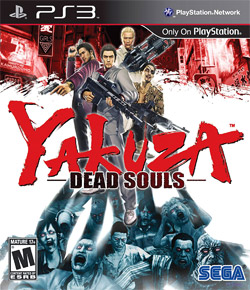
 Yakuza: Dead Souls on PS3
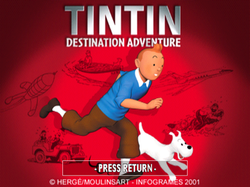
 Tintin: Destination Adventure on PlayStation
 Disney's Chicken Little: Ace in Action on PS2
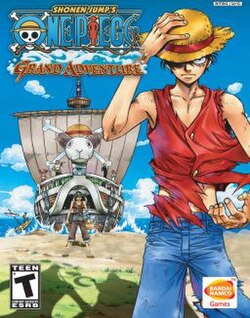
 One Piece Grand Adventure on PS2
 Taiko no Tatsujin: Dokodon! Mystery Adventure on Switch
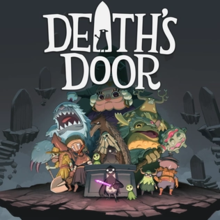 Death's Door on PS5
 Death's Door on PS4
 Death's Door on Switch










 Another SquareThought Site