

 Feb 2020
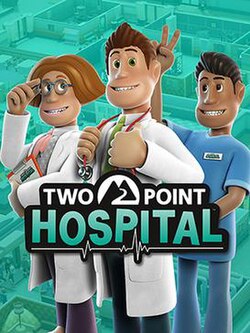

Two Point Hospital on PS4 arrives like a sitcom set in a medical wing where the cast all have ridiculous hats, even weirder maladies, and unexpectedly moving character beats. It's a management game that, on paper, asks you to build rooms, hire staff, and coax patients into leaving the hospital looking less like a walking pun and more like a functioning human. But play it long enough and you'll see it's really a story engine: the player (you) is the hospital's auteur, scripting tiny arcs for doctors with questionable bedside manner, janitors who moonlight as ghostbusters, and patients whose troubles are literally wordplay come to life. If you're the sort of person who enjoys spreadsheets and slapstick, Two Point Hospital stitches the two together with duct tape and a sense of humor that keeps the surgery light and the heart surprisingly warm.
At its core, Two Point Hospital's gameplay is the narrative scaffolding that lets characters evolve. The patient arc is the easiest to stage. They enter stage-left at the GP's office - nervous, hungry, often wearing a lampshade (that's 'Light-Headedness', the game's poster ailment) - and the GP acts like a blunt instrument of diagnosis. From the GP the patient gets sent to more specialised rooms, each one a beat in their story: diagnosis, treatment, recovery. Those beats are cinematic in miniature. A patient with 'Mock Star' arrives as a Freddie Mercury cosplayer and ends their arc either cured and grateful or dead and haunting the corridor as a ghost with one hit of comedic tragedy. Epidemics (in-game 'Pandemic' with pans on heads) provide the community drama - sudden ensemble stress tests where your hospital either becomes a triumphant hero ensemble or a melodrama of missed vaccines and reputation loss. Staff are the true recurring characters with the deepest arcs. Doctors, nurses, assistants and janitors arrive with personalities and specialisations and then grow. The training system works like character development: you spend time and resources training a GP in the 'General Practitioner' skill and watch them graduate from overenthusiastic intern to calm clinic maestro. Assistants can become marketing virtuosos, launching ad campaigns that are equal parts plot device and power-up, attracting niche patient types or talented staff. Janitors provide both comic relief and emotional stakes: the rare janitor with the 'Ghost Capture' skill goes from mop-wielding background player to frontline ghost wrangler, rescuing morale and literally exorcising the hospital. The game gives the player awards ceremonies and star ratings, which function as plot milestones. Hitting a one-star goal is the 'complete the chapter' moment enabling you to move to another hospital set with its own cast and tone. These transitions mirror TV season renewals: you can leave a hospital when the arc is 'complete', but return later to tie up dangling threads and raise the prestige - which affects staff satisfaction and patient happiness. Kudosh, the unlock currency, operates like applause: completing side-challenges gives you kudosh and new cosmetic or functional toys to decorate rooms, thus rewriting the setting in small ways that affect characters' moods. There are recurring motifs that push arcs forward. Ghosts spawn when patients die, becoming dramatic antagonists who harass staff and patients until a janitor becomes a hero. The radio DJ is an omniscient narrator who tags scenes with quips and tunes, and the soundtrack acts as ambient storytelling, changing during a Halloween update to produce a creepier tone. Multiplayer leaderboards and co-op challenges layer in asynchronous rival and ally arcs - you're not only telling the story of your hospital but comparing it to others' micro-dramas. Where the game occasionally fumbles is in repetition and room design constraints. New hospitals should feel like new seasons - but sometimes missions blend together, and building from scratch every time makes the staff feel like they're repeating the same intros rather than progressing. The developers patched this with copy/paste room options and a sandbox later, which helps future arcs feel less like groundhog-day reruns. DLC expansions (Bigfoot's snowy misadventures, Pebberley Island's tropical drama, Close Encounters' sci-fi cameo) inject fresh characters and plot devices, letting you explore tone shifts - from cozy British sitcom to pulp sci-fi farce - while keeping the emotional throughline intact: heal, manage, and earn that standing ovation at awards night.
The visual personality of Two Point Hospital is its character design distilled into claymation charm. Developers deliberately chose a claymation-like, Aardman-influenced style that resists ageing: eyes that bulge, limbs that cartoonishly flail, and expressions that read in an instant. Reviewers compared the look to Wallace and Gromit, and that's no accident - it's warm, tactile, and forgiving when the UI asks you to micro-manage a thousand tiny life stories. Animations sell the arcs; a defeated doctor slumps when skills are low, patients queue with theatrical impatience, and ghosts warp through corridors with comic hostility. Sound design furthers character. The radio DJ voice-overs (recorded by Marc Silk) and the 'elevator music with a jukebox feel' soundtrack create an atmosphere of a shared sitcom space. Sound engineers went weird and wonderful - PVC bathroom pipes and yoghurt drinks became sonic textures for illnesses like Chromotherapy - and it shows. Machines produce bubbly, non-gory noises for treatments, keeping tone buoyant even when a patient temporarily becomes a pile of cubes. The UI is crisp enough on PS4, and the controls were adjusted post-launch so navigating staff rosters and training menus feels less like spreadsheet torture and more like directing a cast with a few twitchy leads.
Two Point Hospital on PS4 is a comedic, surprisingly tender anthology series disguised as a hospital sim. Its greatest trick is making characters out of mechanics: staff progression becomes character development, patient queues become soap-opera tension, and the hospital itself is a stage that shifts tone with each expansion pack. The humour keeps things from becoming clinical; the art and sound design give emotional texture to otherwise mechanical systems. The game's faults - occasional repetition, a learning curve around room design, and the early absence of sandbox tools - are real but fixable, and many were addressed through updates and DLC. If you like games where your decisions ripple through a small human (and sometimes supernatural) cast, or you enjoy directing micro-arcs in a silly, affectionate world, this is a prescription you should fill. It's nostalgia with fresh jokes, management with a soul, and a PS4-friendly package that lets you shepherd absurd lives toward tidy, often hilarious resolutions. Scorewise it lands around an 8.2/10: not perfect, but consistently charming, often clever, and deeply watchable - like your favourite well-written sitcom that also happens to teach you how to budget a hospital wing.
 Penny Arcade Adventures: On the Rain-Slick Precipice of Darkness Episode Two on PS3
 Two Point Campus on PS4
 Two Point Hospital on Switch
 Pro Evolution Soccer 2015 on PS4
 Derby Stallion 04 on PS2
 MotoGP 19 on Switch
 Power Pro Kun Pocket 13 on DS
 Two Point Museum on Xbox Series X/S
 Two Point Museum on PS5
 Two Point Campus on PS5
 Two Point Museum on Switch 2










 Another SquareThought Site