

 Feb 2024
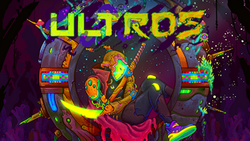

Ultros throws you into a very leafy, slightly psychotic spaceship called the Sarcophagus with one clear objective: stop a trapped demon from waking up and ruining everyone's day. It wears its Metroidvania badge proudly but swaps some of the usual exploration checklist for a time-loop trick that reshapes the map and your approach every few hours (or deaths). The game is equal parts exploration, platforming and combat, with a progression system that asks you to learn, fail, and come back smarter. If you enjoy getting better instead of just getting loot, Ultros is the kind of game that rewards stubborn practice and pattern-sleuthing. It looks like an art book fever-dream and sounds like someone pitched ancient rainforest recordings into a sci-fi blender, but under the pretty exterior there's a satisfying gorilla of challenge that will grin at you and then smash your combos if you don't adapt.
Ultros builds its challenge around a handful of interlocking systems, and mastering them is the difference between complimenting the soundtrack and crying into your controller. At the center is combat: you've got multiple kinds of attacks and a roster of advanced skills that let you string precision attacks together. The game rewards precision, not button-mashing. Landing well-timed, advanced techniques on bosses hands you the real goodies-power-ups that make later runs noticeably more interesting. Boss fights lean into pattern recognition. Some enemies are infernally puzzly thanks to the time-loop narrative that has broken the aliens' sanity; they behave like bosses that forgot their training manual. Learn the tells, punish the overreach, and don't be afraid to retreat to a save point and respec your approach. Platforming is another core source of challenge. Ultros wears its Metroidvania ancestry on its sleeve: the ship has overgrown sections, alien flora, and platform puzzles that require momentum, precision jumps, and careful route planning. Returning to previously explored areas isn't filler-it's a tactical choice. The world mutates between loops, and choices you make can open previously blocked paths, which means sometimes the solution isn't skill alone but a willingness to experiment with the loop's consequences. That creates a satisfying tension: do you grind a boss for a new skill now, or save the seed for a future loop where the world shifts and gives you a safer approach? Resource management is deceptively important. Aliens drop seeds and interacting with NPCs gives you access to plants that grow into edible, skill-boosting goodies. Eating plants and defeating bosses both increase your skill pool, so the game nudges you to mix combat proficiency with careful foraging. This adds an almost rogue-lite spin: yes, some skills reset between loops, but levels are easier to gain afterwards, and that meta-progression rewards players who can learn from failure. The reset mechanic forces you to be adaptable-what worked in life one might not in the next-so strategy flexibility becomes a direct in-game skill. Difficulty in Ultros is mercurial. Several reviewers praised its exciting combat and exploration but warned that complexity can occasionally feel frustrating; some fights feel too easy while others demand almost surgical execution. This unevenness is actually part of the design ethos: the loop and changing world mean your skill ceiling shifts as the run evolves. You'll need precision timing for advanced attacks, good spatial awareness for platforming, and the patience to read boss tells. Dying sends you back to the last save point rather than nuking your run, so risk-taking is encouraged but not blood-for-the-sacrifice-level punitive. The real skill Ultros cultivates is the ability to learn fast. The time loop turns every death into a lesson and every new path into a puzzle. Players who treat loops as experiments-trying different seeds, varying the order of boss encounters, and using newfound power-ups to test new routes-will see the most rewarding progression. On the other hand, if you approach it like a traditional linear Metroidvania and expect a static map and a steady power curve, you'll run headfirst into moments where the game's shifting rules make the difficulty spike or evaporate unexpectedly. That's not a bug; it's part of how Ultros turns exploration into gameplay-forward storytelling.
Ultros is one of those games that will make you pause and screenshot things you don't fully understand. The visual design, guided by artist Niklas Åkerblad, leans heavily on coherent, Lovecraft-tinged ecology-think tentacled plants that look like cathedral organ pipes and corridors half-swallowed by vines. The art manages to be both grotesque and beautiful, which makes the more difficult encounters feel cinematic. The soundtrack and ambient design add to the challenge by nudging your emotions without spelling out the solution: composer Oscar Rydelius recorded indigenous instruments and rainforest ambiances in Peru, then pitch-shifted and warped them until they felt otherworldly but strangely familiar. The result is audio that keeps you on edge, which is a stealth form of difficulty-when the music tightens, you know it's time to stop improvising and get serious.
Ultros is a Metroidvania with an attitude problem in the best way: it asks you to adapt, relearn, and plan like you're both a puzzle-solver and a gladiator. The time-loop mechanics make skill investment feel tactical rather than rote, and the blend of platforming, foraging, and precision combat rewards players who enjoy deliberate practice. It's not a perfectly smooth ride-some fights can feel too easy while other moments skewer you for sloppy play-but the highs are satisfying and the art and sound design make each loop worth another shot. If you like games that teach you how to win by making you lose, PS4's Ultros is worth the torment and the triumph.
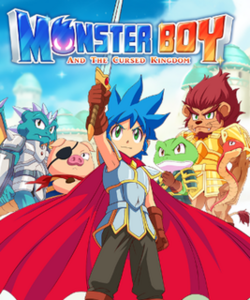
 Monster Boy and the Cursed Kingdom on Switch
 The Mummy Demastered on Switch
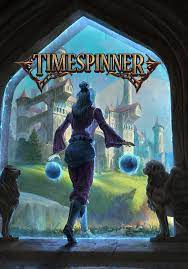
 Timespinner on Switch
 Record of Lodoss War: Deedlit in Wonder Labyrinth on PS4










 Another SquareThought Site