

 Jun 2016
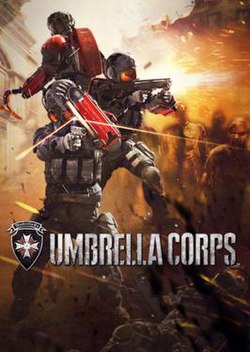

I remember a time when the Resident Evil name meant claustrophobic corridors, lumbering terror and the feeling that every unlocked door might be an insult to your survival instincts. Umbrella Corps arrives bearing that banner on its sleeve and promptly tries to remake it in the image of a twitchy, arena-style shooter. The result is a curious beast: part mercenary multiplayer, part BRAVO team party trick, and wholly at odds with expectations. Developed by Capcom's Osaka studio in Unity and released in June 2016, Umbrella Corps is a downloadable experiment dressed up in familiar Resident Evil ruins-Spencer Mansion and Raccoon City motifs reimagined as compacts battle maps-and it promptly divided critics like a sharpened crowbar splits a boarded door.
Umbrella Corps is first and foremost a competitive multiplayer shooter with zombies tacked on like a distressed leather patch. Players join mercenary teams representing rival corporations in short, compact skirmishes. Matches are fought in tightly packed, nostalgia-tinged arenas that are less about exploration and more about quick kills and zoning. If you wanted sprawling survival horror, you've boarded the wrong train; Umbrella Corps is a commuter shuttle for people who like their action short and aggressive. The game offers a handful of mechanical novelties. You can play in first- or third-person, which is nice on paper but produces awkward identity issues in practice: are you an esoteric tactical operator or a cartoonish arena duelist? Classes are divided into assault, short-range and tactical, each with distinct loadouts that include pistols, semi-automatic rifles, shotguns, grenades and the game's more eccentric choices like the Brainer combat axe. Mobility is aided by climbing gear and "Terrain Spikes" designed to speed traversal through the maps; it feels like the designers aimed for verticality but clipped the wings half-way through. A clever if polarizing gimmick is the Zombie Jammer. With it active, the shambling hordes will mostly ignore you-until you shoot them, or your opponent uses a Jammer Buster to blank you out of the protection. When the jammer fails, zombies become a second wave of pressure: not only must you contend with enemy players, you must also manage hordes with the tactical patience of someone in a cheap action movie. Zombies can even be used as shields if you're feeling sacrilegious. The cover system-dubbed "analog cover"-highlights viable cover in blue, allows players to peek and lean with precision, and cranks up weapon accuracy the more you lean. It's an attempt to graft a tactical veneer onto frantic gunplay. There is a single-player component called The Experiment: a 24-mission horde mode that sends an agent codenamed 3A-7 through waves of enemies to test gadgets like the Zombie Jammer. The mode exists more as a training dummy than a proper campaign, and its narrative-brief, functional and capsuled in the 'test-subject' trope-reads like it was scribbled on the back of a design meeting notepad. It serves its purpose for a few hours of solo practice, but it does not replace the absence of a main campaign. Where Umbrella Corps most conspicuously stumbles is in identity and scope. Critics early on likened the game to Call of Duty and Capcom's own Operation Raccoon City, and those comparisons are not flattering. Matches are small, encounters are often absurdly brief, and the level layouts frequently feel like punching bags rather than arenas. Spectator mode reveals opponents' locations to dead players, which reduces post-death mystery but also makes re-entry as a coach more useful than motivational. Progression and customization are present but mostly cosmetic-there is little in the way of meaningful unlockables that change how the game feels. Ultimately, the package suggests a studio trying experimental shortcuts to multiplayer success without the requisite polishing, balance or community hooks.
Graphically Umbrella Corps trades on brand recognition rather than technological bravado. The maps wear resident-evilian scars-burned walls, overturned furniture, and set pieces that nod to classic locales-yet everything is scaled down, compacted to fit the short, arcade-like match structure. Capcom's choice of Unity is evident: the engine gets the job done but rarely impresses, especially compared to contemporary shooters of the era. Textures and lighting are competent but rarely atmospheric. The game attempts to evoke the series' signature dread in miniature, but the effect is often eroded by cramped spaces and frenetic play, which leave atmospheric detail trampled beneath a rush of bullets. Character models and animations are serviceable; the Brainer axe and zombie grab mechanics add a grotesque flourish, but they are not enough to redeem a visual identity that seems unsure whether it wants to be homage, parody or plain re-skin. Some outlets oddly loved the Japanese Famitsu score, but Western critics were largely unconvinced that the aesthetic choices lifted the experience beyond a competent budget title.
If you read 1990s reviews for a living, you learn to separate ambition from execution, and Umbrella Corps is a case study in the difference. Capcom set out to make a compact, esports-friendly shooter wrapped in Resident Evil motifs; what arrived is a game that is earnest about its intent but thin in execution. It has interesting ideas-the Zombie Jammer and Jammer Buster interplay is clever, and the short match design can provide quick, impulsive fun-but these are not fleshed out into a cohesive, long-term multiplayer ecosystem. Reception was harsh and, in many corners, deserved. Aggregated scores landed in the 30s out of 100 on Metacritic, reviews called it a mishmash, and PC users saw the player base dwindle quickly. For all its attempts, Umbrella Corps never reconciled its identity crisis: tactical shooter wannabe, Resident Evil curio, or budget arena blip. Play it for ten-minute bursts, perhaps, if you like odd experiments and the novelty of jamming zombies to keep them at bay. Do not expect a grand return to form for the franchise or the kind of depth that keeps a community alive. Capcom's Osaka studio took a gamble with Umbrella Corps. It pays off only in small, intermittent ways. For the patient survival-horror fan seeking candlelit corridors and creeping dread, this is the wrong address. For the shooter fan who wants fast matches and quirky mechanics, there might be a few rounds of enjoyment before the matchmaking servers grow quiet. On balance, the game landed more on the wrong side of 'interesting experiment' and less on the right side of 'must-play,' which is why, measured in the currency of review scores and community life, Umbrella Corps ends up closer to a footnote than a rebirth.
 Contra: Rogue Corps on PS4
 PixelJunk Shooter 2 on PS3
 Tom Clancy's Rainbow Six: Vegas on PS3
 Conflict: Global Terror on PS2
 Raid: World War II on PS4










 Another SquareThought Site