

 Dec 2013
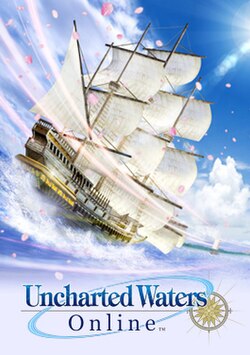

Uncharted Waters Online wears its antique nautical chart like a badge: a decades-old MMO that keeps getting new ink. Developed by Koei and expanded through a parade of DLC chapters, the Gran Atlas update is the headline feature that pushed the game's world coverage to roughly 90% and added a raft of systems (map-making, bounty/piracy, Astronomy skill, Gold Rush mechanics and more). On PS4 the title is essentially a long-lived MMO port that represents an era when MMO design favored heterogeneous systems (trade, exploration, combat, land and sea) over single-minded polish. This review focuses on the technical underpinnings and design mechanics, because if you're going to captain a brigantine you should at least understand the rigging.
Uncharted Waters Online is architecturally split into three clear domains: sea regions, land fields, and towns. That separation is important technically because it dictates most subsystem behavior (navigation and sea physics in regions, node/discovery logic on land, UI-driven commerce and menus in towns). The core progression is skill-based rather than level-gated: characters gain experience in discrete skills and levels, and occupations (adventurer, merchant, soldier) establish initial specializations while remaining interoperable - you can cross-train, but expect a higher XP cost. That design creates a multi-dimensional progression vector: not a linear grind but a matrix of skills you must manage. The nationality system (six nationalities: England, Netherlands, France, Spain, Portugal, Venice) functions like a high-level faction layer. It has tangible mechanical consequences for access to storylines and certain nation-aligned content, and it feeds into factional warfare and PvP areas. For a technical-minded player the key takeaway is that nation affiliation behaves like a persistent metadata tag on accounts/characters that gates event triggers and NPC interactions - useful if you want deterministic outcomes for nation-specific quest chains. Combat is bifurcated into sea and land systems. Sea combat carries ship selection and outfitting as its main variables: the game boasts over a hundred ship types, which implies significant balancing work on hitboxes, turn radii, speed curves, and weapon ranges. Land combat was overhauled in La Frontera into a Ranged-Shift Battle system (short/mid/long positions), which introduces positional states and counters at the tactical level rather than relying solely on raw stats. That change is a good example of iterative design responding to the need for more tactical depth without rewriting the entire combat engine. Economy and trade are central technical systems. Towns function as trading hubs with marketplaces and player-driven commerce; the addition of player housing and interactive towns (able to be flagged Merchant, Adventurer, or Navy towns) layers a player-managed persistence model on top of the existing economy. The Gran Atlas expansions introduced colony-founding mechanics for companies, honorary mayor systems, and Gold Rush mechanics (San Francisco and gold mining), which all increase the number of persistent state variables the server must track. These features are the kind of additions that stress-test an MMO's persistence, replication and concurrency models: player-owned nodes and mayorships require authoritative server state and conflict resolution to avoid race conditions during high-traffic events like gold runs. Exploration is both gameplay and system: the world is based on real Earth geography and the Gran Atlas chapter added a native map-making feature that lets players chart sea regions. From a systems perspective that's a player-driven mapping layer - client-side UI tools combined with server-side data marking - that improves immersion and invites cumulative player contributions to world knowledge. It's a clever way to let exploration retention scale without requiring vastly more dev-authored content. PvP and bounty systems are present but gated: the game offers specific PvP areas, factional warfare, as well as added Bounty Hunter and Piracy mechanics in Gran Atlas. For network and security considerations this implies the server maintains separate rule-sets for different zones (safe towns vs. contested waters) and enforces different consequences for actions. The granularity reduces griefing in safe hubs while enabling emergent risk-reward gameplay on the high seas. The expansion cadence deserves a mention because it shows an evolving tech stack. Gran Atlas is one chapter in a long stream of expansions (La Frontera, Cruz del Sur, El Oriente, 2nd Age, etc.). The 2nd Age addition of a World Clock (era changes driven by player actions) demonstrates a server-side simulation that connects player behavior to epochal state changes - a non-trivial feature from a backend perspective, requiring event triggers, voting thresholds, and global state propagation. UI and control paradigms are inherited from PC origins. The game was originally built for Windows and later ported to PlayStation consoles; that lineage matters because many MMO UI metaphors assume mouse-driven interactions. Expect a UI that's functional but not native-console-polish: menus, trade screens, and discovery interfaces are dense and information-rich, which is excellent for detail-oriented players but occasionally cumbersome on a gamepad. The documentation and in-game Beginner's Guide help, but there is an onboarding cliff because the systems are deep. Finally, connectivity and monetization: the Japanese release historically required a monthly subscription (international servers have shifted between publishers and business models, including free-to-play). That creates a bifurcated player base and has implications for population density and matchmaking quality on different servers. From a technical perspective, population fluctuations (publisher handoffs in 2013 and 2017, server resets) are the kind of operational events that can affect everything from economy stability to social graphs.
Visually the game opts for pragmatic clarity over flash. The world is an open map derived from real geography; expansions progressively filled in missing areas until Gran Atlas claimed roughly 90% world coverage. The art pipeline emphasizes readable assets for navigation and species of ship rather than photorealism. That helps performance across mixed hardware generations (Windows, PS3, PS4) because lower-detail but well-optimized assets keep memory and draw-call budgets predictable. The soundtrack receives repeated care across expansions with full albums released for major packs, which matters because audio layering is an often-overlooked technical vector for immersion. Because the game's content model is expansion-heavy, visual consistency is the practical priority. Each expansion adds new ports, fields, and region-specific props (e.g., Japanese ports in El Oriente, San Francisco in the Wild West chapter), and the engine stitches those additions into the existing world rather than replacing it wholesale. The result is a heterogeneous but serviceable visual tapestry: not cutting-edge on PS4, but stable and legible - which, for an MMO built around navigation and long-term goals, is arguably the right trade-off.
Gran Atlas is a treatise in incremental MMO engineering: rather than reinventing systems it augments them, expanding the map, introducing new roles (bounty hunter, astronomer), and adding persistence-heavy systems (colony founding, mayorships, gold rush mechanics). If you enjoy technical depth - fiddly skill trees, a layered economy, separate sea/land combat mechanics, and player-driven exploration - the game rewards study and long-term investment. The price is modern convenience: the UI and console ergonomics feel like ported heritage, and the visual engine favors clarity over spectacle. On PS4 you won't get next-gen gloss, but you will get a dense, interlocking sandbox that's still being expanded years after launch. I give it a 7.5/10: sophisticated systems and exhaustive content meet dated presentation and the occasional operational wobble from publisher transitions. Sail if you like complexity; otherwise watch from the harbor.
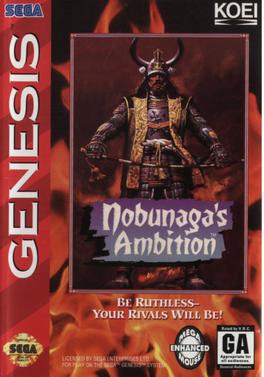 Nobunaga no Yabou Online on PS2
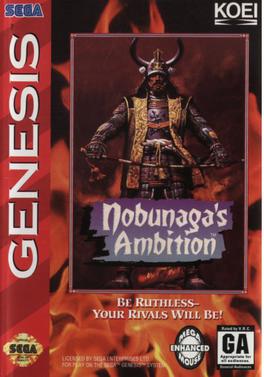 Online Pro Wrestling on PS2
 Nobunaga no Yabou Online: Tappi no Shou on PS2
 Shadow Labyrinth on Switch
 Oceanhorn: Monster of Uncharted Seas on Switch
 Age of Empires: The Age of Kings on DS










 Another SquareThought Site