

 May 2019
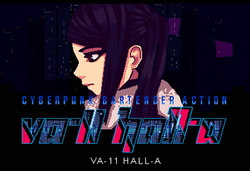

VA-11 Hall-A is a game that sells itself as "cyberpunk bartender action" and then politely refuses to fit into any action sequence you expected. On PS4 it plays like a cozy noir sitcom that occasionally wrestles you into making existential choices with a shaker tin. Instead of laser guns and epic boss fights, the stakes are personal: whether a patron gets a shot to forget, a sweet thing to remember, or just someone who listens. The result is a narrative machine disguised as a low-pressure minigame, and its heart is the people who sit at Jill's bar. If you came looking for high-octane cybernetic carnage you'll leave mildly tipsy and deeply interested in other people's baggage. If you came looking for character study, congratulations: you just walked into an unofficial masterclass.
Mechanically the game is pleasingly simple: five fictional ingredients, a drag-and-drop mixing minigame, and no dialogue choices. But don't let that simplicity fool you-it's a deliberate design sleight of hand. The only levers you get are liquids, ice, and timing; the real choices are emotional, and they come through how you read people. That reading is what turns patrons into plotlines. Jill, the bartender and your surrogate, is the central axis. She is not a heroic protagonist in any bombastic sense; she's designed as the archetypal background bartender who knows too much but changes too little overtly. Her arc is quiet but meaningful: through shifts in the conversations she absorbs, you watch a woman decide how much of the world she will carry home. The game lets Jill be human-flawed, tired, with a past offer to work at a research institute she abandoned for the grind of the bar. Your influence is subtle: keeping her home comfortable, buying a few items, even curating a playlist affects how attentive she is behind the counter and how deftly she can translate a customer's unspoken needs into a drink. That's the narrative charm-character growth isn't shouted, it's stirred. Alma's storyline is the one that wears regret like a second coat. Introduced as a hacker with the "Christmas cake" label (a wry, cultural shorthand), Alma's arc is about choices and consequences: the dream pursued at the expense of relationships, and the emotional tax that comes due later. Her anecdotes are sharp and often funny, but you can sense a slow erosion in optimism as the chapters pass. If you serve her right drinks at the right time you get small, tender revelations-serve her poorly and you witness the blunt, real cost of ambition. Dorothy, an android sex worker, provokes polarized reactions for a reason: she exists to complicate stereotypes. Sukeban Games spent effort avoiding the typical 'edgy' sex-worker trope; Dorothy has an independence and an emotional logic that doesn't beg for pity or fetish. Her arc interrogates intimacy in a world where bodies and software are commodified. Her best scenes are not about her occupation but about the ways she negotiates personhood: jokes, routine, anger, and moments of a surprising softness. Your drinks can lubricate confession or stall it; her growth is earned by repeated, empathetic exchanges. Streaming-chan is a gleefully modern tragedy: performance as personality. She lives her life in public and the plot uses her to explore authenticity versus persona. Serving her a strong drink can pry out inconvenient truths you weren't supposed to hear; keeping her sober keeps her polished and performative. The narrative around her is a comment on our own social media era and how intimacy can be monetized until there's nothing private left to protect. Sei, a 'pure-hearted' White Knight, functions as the moral counterpoint to the city's corruption. His arc complicates the black-and-white idea of law and order; he's sympathetic without being naive, and your interactions with him highlight how institutions demand sacrifices from people who, individually, just want to be decent. Kira*Miki, the idol, offers a satirical take on manufactured celebrity. Her trajectory is less melodramatic and more a study of the absurd: what it cost to be constructed as a pop product in a world that consumes the manufactured more eagerly than the real. Ingram McDougal and Donovan D. Dawson occupy the more mundane but literate corners of the cast-a grumpy regular and a demanding editor, respectively. Their arcs are slow-burns, unfolding through recurring banter. Kim, who turns up passed out one night, and Stella, the ojou-sama catgirl, represent the slice-of-life beats: small, human moments that cut through the political nonsense outside. Deal and Betty-those corgi-voiced corporate employees-are a clever bit of satire. The internal prejudices between dog breeds (and the veterinarian's mistrust of augmentation) stand in for real-world absurdities about discrimination and entitlement. It's comedy with bite but also surprising heart. The game's branching is not driven by explicit conversation trees but by whether you learn the people in front of you. There are multiple endings-around seven-tied to how well you read and cater to regulars. To unlock some of those special endings you literally must get a particular character's order right every time. That demand turns the bartender minigame into a trust test: do you pay attention enough to be the person someone needs in the moment? When you succeed, the payoff is intimate and oddly cathartic; when you fail, the consequences are small but narratively resonant. This design decision reinforces the game's thesis: lives are shaped by repeated small acts of care or neglect more than by single heroic choices.
Visually VA-11 Hall-A leans hard into retrofuturism-PC-98-era aesthetics with an anime sensibility and a vaporwave soundtrack to complement it. The pixel art is deliberate and expressive; faces don't need thousands of polygons to convey exhaustion, sarcasm, or heartbreak. The bar interiors, neon city skyline, and character portraits create a mood that balances warmth and decay. The composer Michael Kelly's music is a minimalist, bass-heavy bedrock that makes nights in Glitch City feel like a comfortable if slightly damp sweater. The result is a setting that looks like an old cyberpunk poster remembered fondly and slightly incorrectly-exactly the right tone for a game that humanizes a dystopia.
VA-11 Hall-A is a game about people pretending not to need each other in an unjust future, and about a bartender learning to be the kind of person who pays attention. Its design is quietly subversive: by stripping away traditional dialogue choices and heroic tics, it forces empathy to be a skill you acquire through repetition and listening. The cast is the game's triumph-fully formed oddballs that could have been caricatures but instead feel like neighbors you'd invite over for a late-night drink. On PS4 the experience is as cozy as pouring a good cocktail: short, thoughtful, and liable to leave you with a new favorite character to miss. If you care about narrative arcs that bloom slowly, humor that knows when to be gentle and when to sting, and the odd cat-eared pop star, this is the sort of game that will quietly rearrange your idea of what a 'choice' in a game can be.
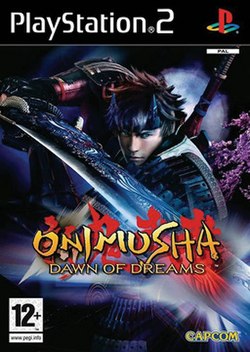
 Onimusha: Dawn of Dreams on PS2
 Tokyo Xanadu eX+ on PS4
 Action Man: Operation Extreme on PlayStation
 Tokimeki Memorial Drama Series Vol. 3 Tabidachi no Uta on PlayStation
 Root Film on PS4
 Pachislot To Heart 2 on PS3
 White Album on PS3










 Another SquareThought Site