

 Sep 2018
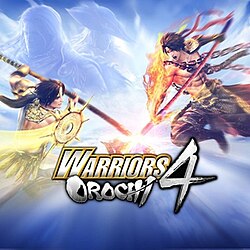

Warriors Orochi 4 is the kind of game that understands its job description and performs it with the cheerful enthusiasm of a very large axe. Developed by Omega Force and published by Koei Tecmo, this crossover of Dynasty Warriors and Samurai Warriors plops you into an improbable mash-up of Three Kingdoms generals, Sengoku warlords, and pantheons of gods - because what every historical battlefield really needs is a lightning bolt. On PS4 it arrives as a loud, generous, somewhat repetitive buffet of enemy soldiers, flashy special moves, and a roster so vast your friends will accuse you of hoarding characters like someone hoards DLC. The Ultimate edition pads the roster further, adds a couple of guest stars, and gives you slightly more reason to come back for seconds.
If you have played a Musou game before, you already know the long-form truth: challenge is not in surviving the encounters so much as in surviving the tedium of reusing the same map three different ways until you feel morally obliged to finish the story. Warriors Orochi 4 changes up the formula enough to keep things interesting. You still pick a three-man team, but classes are simplified into Power, Speed and Technique (the weirdly named Wonder type from Orochi 3 is gone, like a strange cousin nobody invited back). The novelty for this entry is the introduction of magic and "Sacred Treasures" - special abilities that let characters perform outlandish feats by holding the right shoulder button and tapping normal, charge or musou attack buttons. The musou-tier magic eats part of your musou gauge, which feels fair until you try to be a hero and run out mid-boss-fight. Fans of Dynasty and Samurai lineage will notice other trade-offs: Dynasty Warriors veterans lose their second musou attack but keep aerial musou, while Samurai Warriors reps lose special attacks but hang onto hyper attacks. Somehow this creates balance, which in Musou terms means you will still obliterate hundreds of opponents but now have slightly different ways to do it. Mounts remain, and yes, you can still ride a horse because nothing says "epic" like charging past a formation of pikemen while your teammate performs a summoning spell that levels the horizon. The Awakening and Musou Gokui systems have been unified. Obtain a rare pickup, press the left stick, and your chosen character goes into a powered-up state that lets them perform a devastating Rage attack. In a nice nod to the series' soft spot for mythology, story-important characters gain "deification" forms while they're powered up - think Greek and Norse gods dressing up over your usual armor to remind you the game has serious cosplay ambitions. Stages are mostly recycled from earlier entries and source games, but the new mashup stages - where a battlefield halfway through looks like two different games had a very rowdy baby - are a neat touch. The level design never tries to out-God-of-war God of War; rather it gives you long avenues of fodder and the occasional stronghold to capture. Multiplayer includes a three-versus-three competitive mode, which is basically the franchise promising you friendship and then offering a way to settle scores through button combos and slightly improved latency. The roster clocks in at an embarrassing number of playable fighters - 170 in the original release, 177 in Ultimate - including six brand-new originals like Zeus, Athena, Loki, Ares, Odin, and an Orochi army general named Diamondback (yes, that is a name). Unlocking and experimenting with them is the real late-game: once you've seen the same stage 12 times, the game still finds ways to keep you invested because each character comes with a different way to make enemies explode into bits that obey no laws of physics. The plot leans into mythological nonsense with the seriousness of someone reading a bedtime story to a berserker. Zeus brings the fallen heroes back for vague reasons, Perseus steals magical bracelets, Perseus is actually Loki in disguise, Odin wants to grow a world tree into a doomsday device, and the God of Destruction shows up as an existentially unsatisfying boss. The story's charm is not coherence but spectacle - it treats gods and generals like interchangeable fixtures on a chessboard meant to be smashed together. Ultimate adds alternate timelines, extra chapters, and a Final Chapter that attempts to patch up contradictions with Gaia and Hades, which mostly succeeds in making mythology feel like a late-night conspiracy theory discussed over ramen.
If Warriors Orochi 4 were a visual contestant, it would win "best at conveying the idea of a screen full of things being hit really hard." Character models are serviceable and often enjoyably over-the-top when the devs decide to dress a historically dubious warlord as an actual god. Deification effects add some sparkle and spectacle, and the animations for musou and magic attacks are satisfyingly theatrical. The downside is the environmental variety: most stages are recycled from past games, repainted, and sometimes stitched together into a Frankenstein stage that looks like two developers had different ideas about what a battlefield should be. The result is occasionally charming and occasionally lazy. Performance on the PS4 is competent - the framerate generally holds up even when the screen resembles a medieval blender. If you were hoping for next-gen fidelity, this is not the title to make you weep into your graphics card. If you wanted thousands of soldiers to explode politely on demand while you max out your kill combo, the visuals deliver with quiet, reliable enthusiasm. Audio deserves a brief nod: the ending theme by Suzuko Mimori is earworm-friendly, and the Ultimate edition's "Statice" by Saori Hayami is a pleasant new layer. Voice acting is consistent with previous entries; longtime players will notice many returning voice actors and the occasional change due to real-world reasons, but nothing here will make you reach for subtitles like they're a flotation device.
Warriors Orochi 4 on PS4 is a muscular, unapologetic fusion of mythology and historical lunacy that understands what its audience wants: a ridiculous roster, absurd special moves, and the satisfying crunch of hundreds of enemies being politely disposed of every few minutes. It does not wear subtlety, restraint, or modesty. The formula is repetitive by design, but the additions - magic, Sacred Treasures, unified Awakening, and deification - give enough mechanical variety to keep the engine humming. Reception was mixed-to-positive (PS4 Metacritic around the low 70s, Famitsu at 35/40), which feels generous for what this game is: a polished toybox for people who enjoy the simple joy of turning battlefield chaos into a combo string. If you love Musou games, buy it; if you tolerate Musou games, wait for Ultimate or a sale; if you hate Musou games, this will not cure you but it will politely try until you put the controller down. Score: 7/10.
 Warriors All-Stars on PS4
 Warriors Orochi 4 Ultimate on PS4
 Touken Ranbu Warriors on Switch
 PlayStation Home on PS3
 Gaelic Football '25 on Xbox Series X/S
 Together! The Battle Cats on Switch
 Crash Bandicoot: The Wrath of Cortex on PS2
 Wild Hearts S on Switch 2
 Dynasty Warriors 8: Empires on PS4
 Dynasty Warriors: Origins on PS5
 Attack on Titan 2 on Switch
 Attack on Titan 2: Final Battle on Switch










 Another SquareThought Site